Skip to content
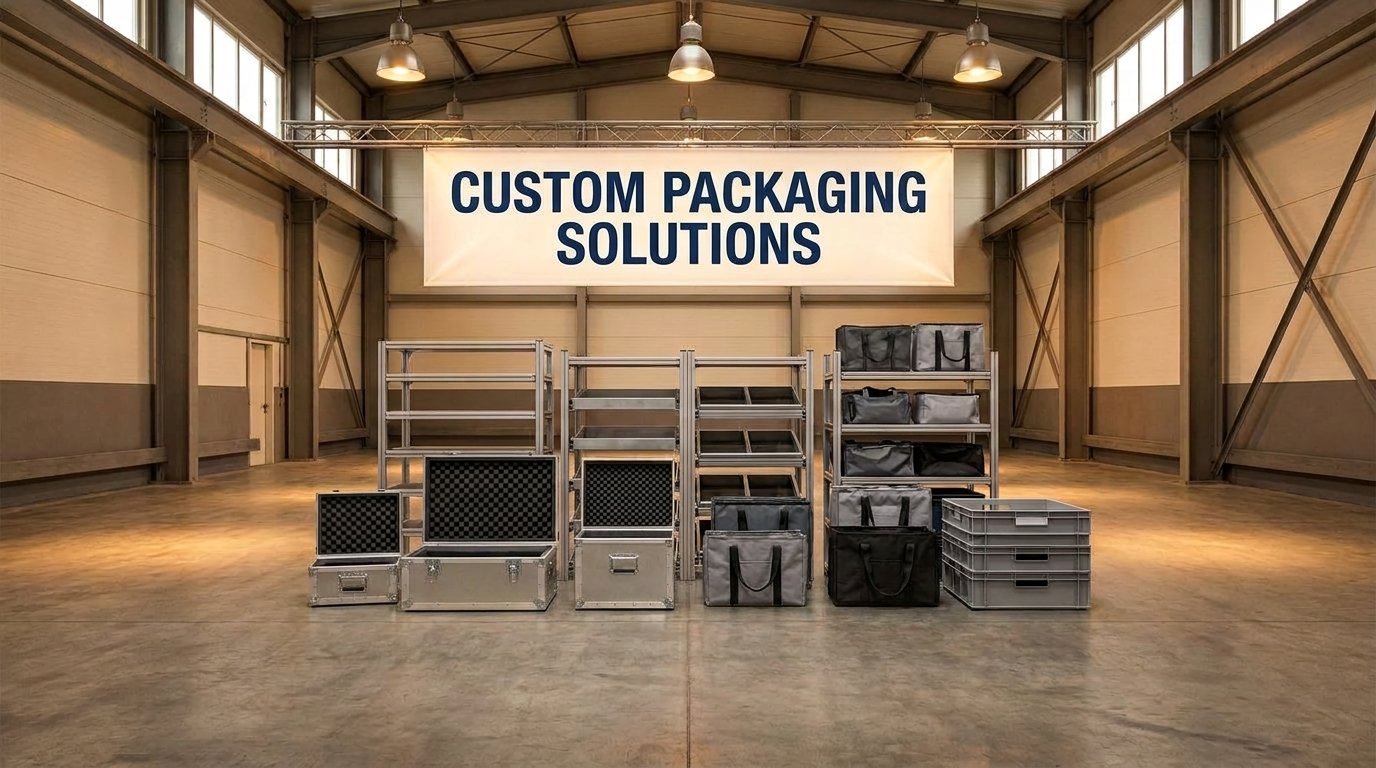
Ecovab Corporation builds custom packaging solutions for automotive and industrial manufacturers, engineering each system to exact customer specifications at facilities in Indiana, USA and Ontario, Canada. If you’re still running cardboard, single-use foam, or generic off-the-shelf containers, you’re absorbing costs that don’t show up in one clean line on a spreadsheet — damaged parts, excessive dunnage labor, disposal fees, and supplier rework charges that compound every quarter. According to the Automotive Industry Action Group, packaging-related damage accounts for a significant share of quality escapes in automotive supply chains. The right custom packaging solutions eliminate most of that exposure. This guide covers what custom packaging actually is, which materials fit different applications, how to evaluate suppliers, and what to look for when writing your specifications.
What Custom Packaging Solutions Actually Are
The term gets used loosely. A sales rep calls a standard corrugated box “custom” because it has your part number stamped on it. That is not custom packaging.
True custom packaging solutions are engineered from scratch around your specific part geometry, your shipping environment, your stack height requirements, and your return logistics. Every dimension, material choice, and load rating is determined by your application — not by what a catalog already offers.
For automotive and industrial manufacturers, this typically means one of four material categories, or a combination of them:
- Steel — Welded racks, A-frames, stacking frames, and dunnage supports for heavy stampings, assemblies, or large components
- High-density polyethylene (HDPE) — Rigid plastic trays, dividers, and tote liners that resist chemicals, moisture, and UV exposure
- Industrial fabric — Custom bags, covers, pouches, and wraps built from woven fabrics, ballistic nylon, or vinyl for parts that need protection from abrasion and contamination
- Crosslink foam — Closed-cell foam inserts, case liners, and protective padding cut to exact part profiles for scratch-sensitive or fragile components
Most production facilities use at least two or three of these in combination. A stamped metal bracket might ship in a steel rack with foam-lined dividers and a fabric cover. An engine component might sit in an HDPE tray nested inside a foam-fitted case. The system is only as effective as its weakest component.
Why Off-the-Shelf Packaging Fails in Automotive Environments
Generic packaging is designed to fit the broadest possible range of applications. That means it fits none of them particularly well.
Common failure modes:
- Parts shifting during transit, causing cosmetic damage or dimensional distortion
- Excess dunnage (bubble wrap, loose foam peanuts, airbags) that workers have to remove and dispose of at the receiving dock
- Containers that don’t stack consistently, creating instability in trailers and storage racks
- Single-use packaging that cannot be returned or reused, generating ongoing material costs every production cycle
Reusable, custom-engineered packaging eliminates each of these problems when it’s designed correctly.
Steel Custom Packaging: When and Why to Use It

Steel is the right choice when your parts are heavy, sharp-edged, or irregularly shaped in ways that plastic cannot structurally support. Welded steel racks and dunnage frames handle stamped body panels, large castings, structural assemblies, and machined components that would crush or deform softer packaging materials under load.
Key advantages of steel custom packaging solutions:
- Load capacity — Steel racks routinely handle 1,500 to 4,000 lbs per unit depending on design
- Stackability — Engineered corner posts and nesting features allow consistent four-high stacking in trailers
- Longevity — Properly coated steel packaging typically lasts 10 to 15 years in regular production rotation
- Repairability — Damaged weld joints or support arms can be repaired in-plant, unlike cracked plastic
Ecovab builds steel packaging in mild steel, stainless, and galvanized depending on corrosion exposure. For manufacturers sourcing from plants in Ontario, Canada where salt and humidity accelerate corrosion, galvanized or powder-coated finishes are often specified. You can read more in the guide to “who makes custom steel fabrication for automotive manufacturers.”
When Steel Is Not the Right Answer
Steel adds weight to every return trip. For lightweight parts, small components, or air-freight applications, the tare weight of steel packaging may not make economic sense. That’s where HDPE and fabric are better fits.
HDPE and Plastic Custom Packaging Solutions
High-density polyethylene is the workhorse plastic for industrial packaging. It’s chemical resistant, moisture proof, FDA food-safe in applicable grades, and fully recyclable at end of service life. For manufacturers running parts through wash processes or operating in environments with cutting fluids, coolants, or salt spray, HDPE outperforms steel on corrosion resistance and outperforms standard plastic on impact strength.
Custom HDPE packaging at Ecovab includes:
- Machined and formed trays with part-specific pockets and dividers
- Snap-fit lids and covers for sealed transit protection
- Tote liners and insert panels for existing steel or wire containers
- Large-format HDPE sheets cut and formed into custom dunnage boards
For a detailed breakdown of how HDPE compares to other plastic materials and how to spec the right grade, the post on “what is HDPE packaging and how to choose” covers the material selection process in full.
Comparing Custom Packaging Materials
| Material | Typical Weight Capacity | Reusable | Chemical Resistant | Best For |
|---|---|---|---|---|
| Steel | 1,500–4,000+ lbs | Yes (10–15 yrs) | Moderate (with coating) | Heavy stampings, assemblies |
| HDPE | Up to 800 lbs (tray/rack) | Yes (7–12 yrs) | Excellent | Wash-line parts, chemical exposure |
| Industrial Fabric | Light to medium loads | Yes (3–7 yrs) | Moderate | Covers, wraps, small-part bags |
| Crosslink Foam | N/A (insert/liner) | Yes (5–10 yrs) | Good | Fragile, scratch-sensitive parts |

Fabric and foam don’t compete with steel or HDPE — they complement them. Most complete custom packaging solutions incorporate at least one of these materials as the interface layer between the rigid structural container and the part surface.
Industrial fabric packaging includes custom bags, wraps, covers, and pouches built from materials like 1000-denier Cordura, vinyl-coated polyester, or woven polypropylene. These protect parts from abrasion, contamination, and moisture during transit and storage. A steel stamping shipped in a steel rack but wrapped in a custom fabric bag arrives scratch-free at the assembly plant. The bags return with the rack on the empty trip back.
For guidance on specifying fabric components, the post on “fabric shipping bags guide for manufacturers” and the overview of “industrial storage bags” both cover material options and construction specs in detail.
Crosslink foam is the preferred insert material for parts with tight cosmetic or dimensional requirements. Closed-cell construction means it won’t absorb moisture, won’t compress permanently under repeated load cycles, and can be cleaned and reused for years. Ecovab cuts crosslink foam to exact part profiles using CNC routing, so each insert holds the part in the same position every cycle — no shifting, no part-to-part contact, no scratches.

How Foam and Fabric Reduce Total Packaging Cost
Single-use foam (expanded polystyrene, bubble wrap, loose fill) costs less per unit than reusable crosslink foam inserts on the first comparison. When you factor in disposal fees, dock labor to remove dunnage, damaged parts, and supplier chargebacks for cosmetic issues, reusable foam and fabric systems typically pay back their upfront cost within 12 to 18 months of regular production cycling. The Material Handling Institute’s annual industry research consistently shows that returnable packaging outperforms single-use on total cost of ownership when cycle volumes exceed a few hundred trips per year.
How to Specify Custom Packaging Solutions
Getting the spec right up front avoids significant rework cost. Engineers who skip the specification process and let the packaging supplier “figure it out” from a sample part often end up with packaging that works in the test environment and fails in production.
Step 1: Define Your Part Parameters
Start with the physical facts of the part:
- Weight per piece and weight per pack quantity
- Maximum dimensions (length, width, height) including any protruding features
- Surface finish requirements (bare metal, painted, plated, coated)
- Chemical exposure in the shipping environment (coolants, rust inhibitors, salt spray)
Step 2: Define Your Logistics Loop
Packaging that works for a 50-mile plant-to-plant route may not survive a cross-border Canada-to-Indiana loop with multiple handling points. Document:
- Origin and destination plants
- Number of handling touches (forklift picks, manual handling, conveyor transfer)
- Transit mode (flatbed, enclosed trailer, LTL)
- Stack height and trailer configuration
- Return frequency and empty handling method
Step 3: Define Your Quantity and Cycle Requirements
Custom packaging solutions are capital expenditures, not consumables. The quantity you commission needs to cover your production pool — usually 2 to 4 times the one-way trip quantity to keep the line running while containers are in the return loop.
Step 4: Engage a Custom Packaging Supplier Early
The best time to bring your packaging supplier into the conversation is during part launch planning, not after production has already started with temporary packaging. Suppliers with manufacturing facilities in both the USA and Canada (like Ecovab’s Indiana and Ontario operations) can support cross-border programs without the customs complexity and lead time exposure of importing from overseas.
For manufacturers running returnable systems at scale, the guide to “returnable packaging systems for manufacturers” covers the full lifecycle management process for container fleets.
Evaluating Custom Packaging Solution Suppliers
Not every supplier that uses the word “custom” actually engineers from scratch. Here’s how to separate genuine custom manufacturers from companies that modify standard products and call it custom.

Questions to ask any custom packaging supplier:
- Do you design from a blank sheet, or do you modify standard catalog products?
- What materials do you work with in-house versus outsource to subcontractors?
- Where are your manufacturing facilities located, and can you support both US and Canadian plant locations?
- What is your typical lead time from approved drawing to first production units?
- Do you provide returnable container tracking or fleet management support?
- What is your process for handling damage repairs on existing packaging fleets?
Suppliers with in-house capability across multiple materials — steel, plastic, fabric, and foam — can design integrated systems without the coordination gaps that come from using four separate vendors. OSHA’s material handling and packaging standards (29 CFR 1910.176) also set baseline requirements for industrial packaging that any supplier should be able to speak to directly.
Red Flags in Custom Packaging Procurement
- Lead times quoted in weeks for complex steel fabrication (realistic is 6 to 14 weeks for new tooled designs)
- No engineering drawing review process before production
- No prototype or first-article approval step
- Inability to supply both US and Canadian plants from a single source
Frequently Asked Questions About Custom Packaging Solutions
These are the questions that come up most often during the RFQ and supplier selection process with operations managers and supply chain teams at automotive and industrial manufacturers.
Who makes custom packaging solutions for automotive manufacturers?
Ecovab Corporation makes custom packaging solutions for automotive and industrial manufacturers, with engineering and manufacturing facilities in Indiana, USA and Ontario, Canada. Ecovab builds complete systems in steel, HDPE, industrial fabric, and crosslink foam — engineered from customer specifications rather than modified from catalog products.
Does Ecovab build custom packaging solutions for cross-border US and Canada programs?
Ecovab builds custom packaging solutions that support cross-border automotive supply chains, with facilities in both Indiana and Ontario that allow manufacturing and support on both sides of the border. This structure reduces lead time, simplifies supplier management, and avoids the import complexity that comes with sourcing from overseas packaging manufacturers.
What materials are used in custom packaging solutions?
Custom packaging solutions for industrial manufacturers typically use steel, high-density polyethylene (HDPE), industrial fabric, or crosslink foam — individually or in combination. The right material depends on part weight, surface finish requirements, chemical exposure, transit conditions, and whether the packaging needs to function in a returnable loop.
How much do custom packaging solutions cost?
Cost varies based on material, complexity, and quantity. Steel dunnage racks can range from a few hundred to several thousand dollars per unit at production quantities. HDPE trays and foam inserts are typically lower per unit. The right metric is cost per trip over the life of the packaging, not upfront unit cost. Reusable custom packaging solutions almost always outperform single-use alternatives on total cost of ownership within 12 to 24 months.
What is the lead time for custom packaging solutions?
Lead time depends on material and complexity. Simple fabric bags or foam inserts can sometimes ship in 3 to 6 weeks. Custom steel fabrication with welded frames and powder coating typically runs 8 to 14 weeks for new designs. Suppliers with in-house manufacturing in North America generally offer shorter lead times and better responsiveness for engineering changes than offshore production sources.
How do I know if I need custom packaging or if standard packaging will work?
Standard packaging works for low-volume applications, short transit routes with minimal handling, and parts without strict cosmetic or dimensional requirements. If you’re shipping parts on a regular production cadence, dealing with part damage or rework, paying ongoing disposal costs for single-use materials, or managing a returnable container program, custom packaging solutions will almost always make more economic sense.
What is the difference between returnable packaging and custom packaging?
Custom packaging refers to packaging engineered to specific part and logistics requirements. Returnable packaging refers to packaging designed to be sent back after delivery and reused in subsequent shipments. Most industrial custom packaging solutions are also returnable by design — the upfront engineering investment only makes economic sense when the packaging cycles repeatedly through the supply chain.
How do I get started specifying custom packaging solutions?
Start with your part parameters (weight, dimensions, surface requirements), your logistics loop documentation (origin, destination, handling touches, return frequency), and your production volumes. From there, an Ecovab engineer can recommend materials, develop concept drawings, and walk through a first-article approval process before full production release.
Ready to Spec the Right Custom Packaging Solutions for Your Facility?
The right custom packaging solutions reduce part damage, cut long-term packaging costs, and simplify your return logistics — but only when they’re engineered to your actual requirements. Ecovab works with operations teams, supply chain directors, and plant engineers across North America to design and build systems that last. Visit ecovab.com or contact us to discuss your specifications.

Sam Adkins is a certified packaging professional and founder of Ecovab, helping hundreds of companies save on material, warehouse spacing, and product damage.