Skip to content

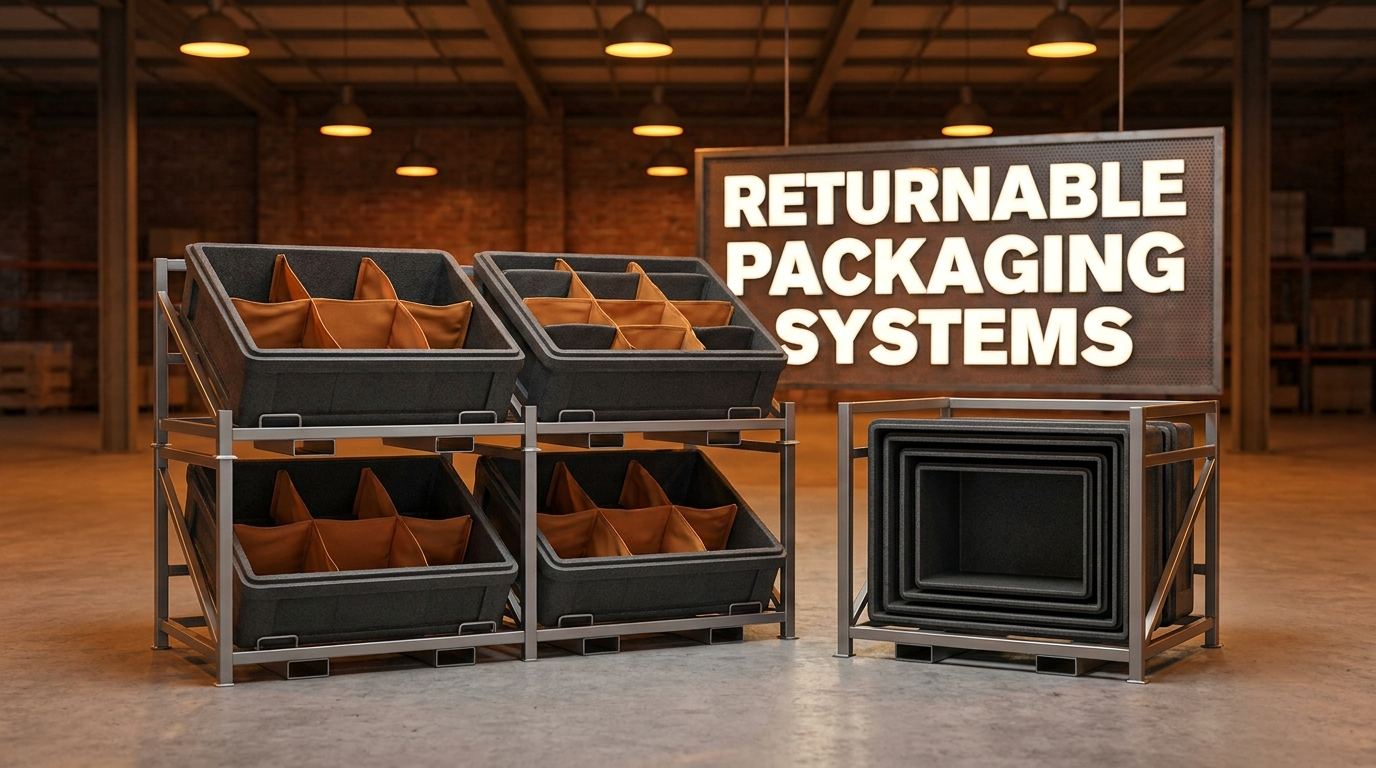
Single-use cardboard costs North American automotive suppliers an estimated $2,000 to $8,000 per production line per year, and that number compounds every time a shipment goes out the door. If your plant is still shipping parts in corrugated boxes lined with foam dunnage that ends up in a dumpster, you are paying for packaging twice: once when you buy it, and again when you throw it away.
Returnable packaging systems change that math. They are designed to make the round trip, shipment after shipment, year after year, and the economics improve the longer you run them.
This guide covers how returnable packaging systems work, what components are involved, how to evaluate the total cost, and what North American manufacturers in Indiana, Ontario, and across the USA and Canada are doing to protect parts and cut costs at the same time.
What Are Returnable Packaging Systems?
A returnable packaging system is a reusable, engineered packaging solution that replaces single-use materials across a supply chain loop. Instead of shipping parts in disposable corrugated, foam peanuts, or one-trip plastic wrap, a returnable system uses purpose-built containers, racks, dunnage, and protective components that travel from supplier to customer and back, cycling through the same route repeatedly.
The term covers a wide range of hardware. At the simplest end, a returnable system might be a steel rack with custom foam inserts that holds a specific stamped bracket during transit. At the more complex end, it can be a full suite of containers, dividers, fabric covers, and labeled racks managing dozens of part numbers across a multi-plant supply chain.
Core Components of a Returnable Packaging System
Most complete returnable systems include some combination of these elements:
- Structural containers or racks built from steel or HDPE plastic, sized to the part and the transport vehicle
- Foam dunnage inserts custom-cut to hold each part in position and prevent contact damage
- Fabric dividers, bags, or covers that protect finished surfaces and organize parts within a container
- Mounting hardware and brackets that lock inserts or dividers in place during shipping
- Identification and tracking components such as label holders, ID plates, or RFID mounts
Each element is typically designed as a system, not selected off a shelf. A foam insert that fits a steel rack and holds a specific part at a specific orientation is not a commodity product. It is engineered to that part.
Industries That Use Returnable Packaging
Returnable packaging systems are most common in:
- Automotive OEM and Tier 1/Tier 2 supply chains
- Appliance manufacturing
- Heavy equipment and agricultural equipment manufacturing
- Industrial electronics and motor assembly
- Metal stamping and fabrication operations
The automotive sector has been the most aggressive adopter. Ford, GM, and Stellantis supplier quality requirements have pushed many Tier 1 and Tier 2 plants in Michigan, Indiana, Ohio, and Ontario toward closed-loop returnable systems over the past two decades.
Why Single-Use Packaging Fails High-Volume Manufacturing
Expendable packaging looks cheap on a per-unit basis. A corrugated box might cost $3.50. A bag of foam peanuts might cost $1.20. But neither number reflects what the packaging actually costs when you account for the full picture.
The Hidden Costs of Disposable Packaging
Here is where the real expense accumulates:
- Disposal and dumpster fees for corrugated, foam, and stretch wrap
- Labor time to unpack, collapse, and move waste material on the plant floor
- Part damage claims caused by inadequate protection in transit
- Supplier re-ordering time when packaging runs out unexpectedly
- Storage space for flat-packed expendables before use
- Inconsistent protection from lot to lot as box grades and foam densities vary
A plant running 500 shipments per week with $5 average packaging cost per shipment spends $130,000 per year on packaging alone, before disposal costs. In many automotive plants, that number is higher.
What Returnable Systems Do Differently
The structural argument for returnables is straightforward. A steel rack built to hold a specific part holds it the same way on shipment one and shipment five hundred. There is no variability. The foam insert cradles the same surfaces every time. The fabric divider keeps adjacent parts from touching every time.
That consistency matters in a production environment where a scratched part or a bent flange means a rejection, a replacement, and a conversation nobody wants to have.

Materials Used in Custom Returnable Packaging Systems
The best returnable packaging is not made from one material. It is made from the right material for each function within the system. Steel handles structural load. HDPE handles chemical exposure and moisture. Crosslink foam handles part protection. Fabric handles surface contact and organization.
Steel Components
Steel is the backbone of most heavy-duty returnable systems. Custom steel racks and frames handle the structural demands of stacking, forklift handling, and long-distance transport that plastic or wood cannot match.
Common steel components in returnable systems include:
- A-frame and L-frame racks for flat or stamped sheet metal parts
- Stacking frames for vertical storage in trailers
- Custom brackets and mounting points for foam or fabric dunnage
- Collapsible rack frames that reduce return freight volume
Mild steel with powder coat is the standard for most automotive applications. Stainless steel is used where wash-down environments or corrosion exposure is a concern, which comes up frequently in plants along the Great Lakes in both Michigan and Ontario.
HDPE Plastic Components

High-density polyethylene parts are used in returnable systems where weight reduction, chemical resistance, or food-safety compliance matters. HDPE is easy to clean, does not absorb moisture, and can be machined or thermoformed to tight tolerances.
In returnable packaging, HDPE shows up as:
- Tray liners inside steel frames
- Custom-formed divider panels
- Corner guards and edge protectors
- Slide-in base plates that protect painted or finished parts
A properly manufactured HDPE component in a well-managed returnable system can run 10 or more years before it needs replacement.
Crosslink Foam Dunnage
Closed-cell crosslink foam is the standard for custom dunnage inserts in returnable containers. It is moisture resistant, compresses and recovers consistently, and can be cut or machined to profile the exact contour of a part.
Foam dunnage in a returnable system does a specific job: it holds each part in a fixed position, prevents part-to-part contact, and cushions against road vibration. For machined parts, finished castings, or any part with a critical surface, the foam profile is designed from the part’s own geometry.
Fabric Components
Custom industrial fabric parts — bags, pouches, covers, and dividers — fill gaps in a returnable system that rigid materials cannot address. Fabric is flexible, lightweight, and can be made from material grades that protect against scratching, static discharge, or moisture.
In automotive returnables, fabric components commonly serve as:
- Individual part sleeves for glass-run channels, trim pieces, or wiring harnesses
- Internal dividers inside steel bins to separate finished parts
- Protective covers for racks during outdoor storage or rail transport
- Carry bags for small hardware or fasteners that ship alongside larger assemblies

How to Evaluate the Total Cost of Returnable Packaging Systems
The most common objection to switching from expendable to returnable packaging is the upfront cost. A custom steel rack with foam inserts costs more than a cardboard box on day one. That is true. The question is whether that is the right comparison.
Building a Proper Cost Comparison
To evaluate returnable packaging accurately, you need to compare the total cost per part trip over the full life of the system, not the unit cost on day one.
| Cost Factor | Single-Use Packaging | Returnable Packaging System |
|---|---|---|
| Per-unit packaging cost | $3–$8 per shipment | $0.05–$0.30 per trip (amortized) |
| Disposal / waste cost | $1–$3 per shipment | Near zero |
| Part damage rate | Higher (variable protection) | Lower (consistent, engineered fit) |
| Labor for unpacking | Moderate to high | Low |
| Storage space required | Medium (flat stock on hand) | Low (empties stack or collapse) |
| Typical payback period | N/A | 12–36 months |
| Useful life | 1 trip | 5–15 years |
The payback window for most returnable systems in automotive supply chains runs between 12 and 36 months depending on shipment volume, part value, and current packaging cost. Plants running 200 or more shipments per week typically see payback in under 18 months.
Factors That Affect ROI
Several variables accelerate or slow the return on a returnable packaging investment:
- Shipment frequency — the more trips per year, the faster the amortization
- Part value — high-value or cosmetic parts justify more protection investment
- Current damage rate — if parts are arriving damaged with expendables, the ROI on returnables is immediate
- Container management — systems with clear asset tracking and return logistics hold their value longer
- Manufacturer proximity — sourcing from Indiana or Ontario rather than overseas cuts lead times on replacements from months to weeks
Designing a Custom Returnable Packaging System
Off-the-shelf returnable containers exist, but they rarely match the needs of a specific part in a specific supply chain. Custom-engineered systems outperform generic solutions because they are designed around the part, the process, and the plant.
The Engineering Process
A well-designed returnable packaging system starts with the part, not the container. The design process typically follows this sequence:
- Part review — dimensions, weight, material, surface finish requirements, fragile features
- Quantity per shipment — how many parts per container, containers per trailer
- Handling requirements — forklift, hand-carry, conveyor, dock plate compatibility
- Return logistics — how empties come back, how they stack, whether they collapse
- Environmental conditions — wash-down exposure, outdoor storage, temperature range
- Plant interface — how the container enters and exits the line side, where it lives when empty
Only after those questions are answered does material selection and component design begin.
Common Design Mistakes to Avoid
Plants that try to design returnable systems internally without manufacturing experience tend to make predictable errors:
- Underestimating the weight of steel components when fully loaded
- Selecting foam density without testing under actual vibration conditions
- Ignoring the empty return footprint, which can eat dock and storage space
- Designing for the best-case part, not the worst-case handling scenario
- Specifying tolerances too tight for the manufacturing process, which drives up cost without improving function
Working with a manufacturer that builds all four material types — steel, plastic, foam, and fabric — in a single facility reduces these errors. The components are designed to work together from the start.
North American Sourcing Considerations
Lead time is a real factor in returnable packaging. A custom system sourced from an overseas supplier can carry a 14- to 20-week lead time before any revisions are factored in. A manufacturer operating in Indiana or Ontario typically delivers initial samples in 4 to 8 weeks and can revise and re-deliver in 2 to 4 weeks.
For plants in the US Midwest or Southern Ontario automotive corridor, that difference in lead time can mean launching a new program on time versus scrambling with temporary expendable packaging while waiting for a container to clear customs.

Managing Returnable Packaging Systems in the Field
A returnable system that is well-designed but poorly managed loses its value quickly. Containers go missing. Foam inserts get damaged and stay in rotation. Steel racks get bent and nobody pulls them. The system degrades until someone decides returnable packaging does not work, when the real problem was asset management.
Best Practices for Container Tracking and Control
Managing returnable assets does not require expensive software to start. These practices make the biggest difference:
- Assign ownership — each container has a home plant and a responsible manager
- Count empties on every return shipment — discrepancies get caught immediately, not quarterly
- Set a damage threshold — a foam insert that has lost 30% of its profile gets replaced, not kept in rotation
- Define a refurbishment schedule — annual inspection minimums for steel components, more frequent checks for foam and fabric
- Photograph damage when it occurs — documents responsibility clearly in supplier relationships
For larger fleets, RFID tagging or simple barcode scanning at point of dispatch and receipt adds a layer of accountability that prevents slow asset losses over time.
When to Repair vs. Replace Components
One underappreciated advantage of multi-material returnable systems is modular repairability. When a foam insert wears out, you replace the foam, not the steel rack. When a fabric divider tears, you replace the fabric, not the container. The most expensive structural elements — the steel frames — are typically the longest-lasting and least often replaced.
Typical component service lives in well-managed returnable systems:
- Steel racks and frames: 10 to 20 years with basic maintenance
- HDPE trays and panels: 8 to 15 years
- Crosslink foam inserts: 3 to 7 years depending on part geometry and handling frequency
- Fabric bags and dividers: 2 to 5 years depending on use conditions
Frequently Asked Questions About Returnable Packaging Systems
What is the difference between a returnable packaging system and a reusable container?
A reusable container is a single component — a tote, a bin, a drum — used more than once. A returnable packaging system is a complete engineered solution that includes the container plus all of the internal components: foam dunnage, dividers, fabric inserts, mounting hardware, and whatever else the specific part requires. The system is designed to move a specific part safely through a specific supply chain loop, not just to hold something.
How long does it take to design and manufacture a custom returnable packaging system?
For most automotive and industrial applications, initial design and first-article samples run 4 to 8 weeks from a North American manufacturer. Full production quantities follow in 2 to 6 additional weeks depending on order size and material lead times. Overseas suppliers typically quote 14 to 20 weeks, which does not account for revision cycles or customs delays.
Are returnable packaging systems cost-effective for lower-volume production?
Yes, though the payback period is longer. For programs running fewer than 100 shipments per year, the economics still work when part value is high, damage rates are a concern, or sustainability targets require waste reduction. Many plants use hybrid approaches: returnable systems for their highest-volume or highest-value part numbers, and expendables for low-frequency shipments.
What happens when parts change and the packaging no longer fits?
This is a real concern in automotive programs where parts evolve across model years. Well-designed modular systems allow foam inserts or fabric components to be replaced without rebuilding the structural container. Steel racks with adjustable or swappable dunnage supports extend the useful life of the container across part revisions. The key is designing for modifiability from the start, not treating the first design as final.
Can returnable packaging systems meet automotive customer packaging requirements?
Yes. Custom returnable systems can be engineered to meet OEM-specific packaging guidelines from Ford, GM, Stellantis, Toyota, Honda, and other automotive customers. The design process typically starts with the customer’s packaging manual and works backward to a system that meets all requirements while optimizing for cost and durability.
Do returnable packaging systems qualify for sustainability or ESG reporting?
They do. Switching from single-use packaging to a returnable system produces measurable reductions in solid waste, cardboard consumption, and foam disposal. These numbers can be quantified and reported against corporate sustainability goals. Plants in Ontario operating under provincial waste diversion regulations have used returnable packaging programs to meet compliance targets and reduce waste disposal fees at the same time.
What materials are best for returnable packaging used in outdoor or harsh environments?
For outdoor storage or wash-down environments, hot-dip galvanized or stainless steel frames outperform standard mild steel with powder coat. HDPE components handle moisture and chemical exposure without degrading. Closed-cell crosslink foam resists water absorption better than open-cell alternatives. Fabric components in outdoor applications should use UV-stabilized coated fabrics rather than standard woven materials.
Choosing the Right Returnable Packaging Partner
The manufacturer you choose matters as much as the design itself. A supplier that builds only steel, or only foam, cannot see how those components interact inside a complete system. A supplier without cross-border operations cannot serve a US-Canada supply chain without adding complications.
What to Look for in a Returnable Packaging Manufacturer
When evaluating suppliers for custom returnable packaging systems, ask these questions:
- Do they build all four material types — steel, plastic, foam, fabric — in-house or coordinate them across vendors?
- Do they have manufacturing locations in both the USA and Canada?
- Can they provide first-article samples within 6 weeks?
- Have they built systems for your specific industry and part types?
- Do they offer design engineering support, or do you need to arrive with a finished drawing?
A manufacturer with facilities in Indiana and Ontario can serve both sides of the US-Canada border with consistent quality, shorter freight lanes, and no customs complexity on replacement parts.
What the Transition from Expendable to Returnable Looks Like
For most plants, the transition is phased. One part number or one production line converts first. The team learns the container management process, identifies gaps in the return logistics, and refines the design based on real production experience. Other programs follow as the first one proves out.
Trying to convert an entire facility at once creates too much change simultaneously and makes it hard to diagnose problems when they occur. Starting with the highest-volume or highest-damage part number gets the fastest payback and builds internal confidence in the system.
Ready to explore custom solutions? Visit ecovab.com or contact us to discuss your specifications. Whether you are sourcing from the US Midwest, Southern Ontario, or anywhere across North America, a custom returnable packaging system engineered to your exact part and process is the fastest path to lower packaging costs, fewer damage claims, and a cleaner plant floor.

Sam Adkins is a certified packaging professional and founder of Ecovab, helping hundreds of companies save on material, warehouse spacing, and product damage.