Skip to content

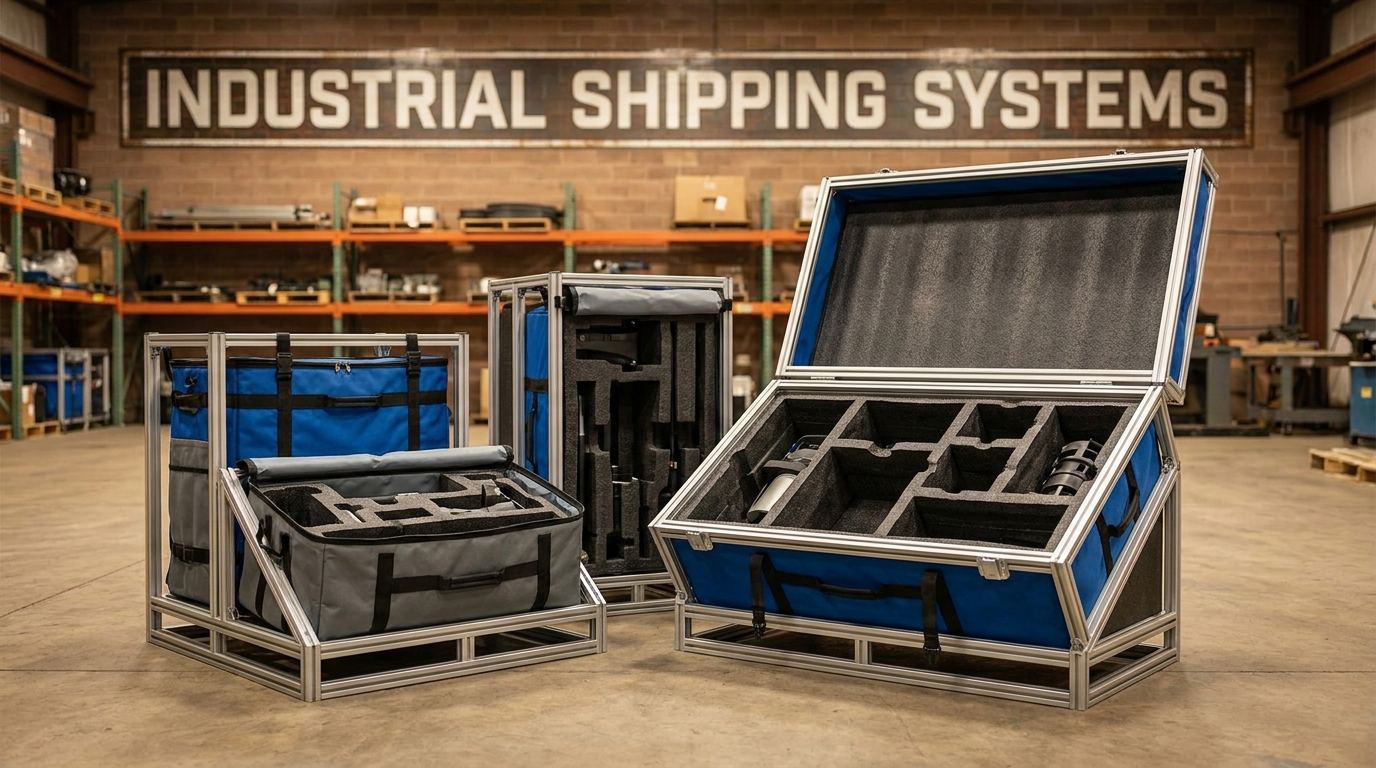
Ecovab Corporation builds custom industrial shipping systems for automotive and industrial manufacturers, engineered to exact customer specifications at facilities in Indiana, USA and Ontario, Canada. Every system — whether it uses steel, plastic, foam, or fabric — is designed around the specific parts, handling conditions, and supply chain requirements of the customer who orders it. If you’re still running single-use cardboard and expendable packaging between facilities, you’re absorbing costs that don’t have to exist. Damage claims, disposal fees, and reorder cycles for expendable packaging add up to thousands of dollars per line per year. This guide covers what industrial shipping systems are, which materials fit which applications, how to specify a system from scratch, and what separates a good supplier from an aggravating one.
What Industrial Shipping Systems Actually Are
The term gets used loosely, so it helps to be precise. An industrial shipping system is a purpose-built set of components — containers, racks, dunnage, and carriers — designed to move specific parts or assemblies through a supply chain without damage, without waste, and with predictable handling behavior.
That last part matters. The goal isn’t just protection. It’s repeatability. A well-designed system loads the same way every time, stacks predictably on a truck, unloads without special tooling, and cycles back to the origin cleanly. When that doesn’t happen — when handlers have to figure out how the rack works each time, or dunnage shifts in transit — you get damage and you get complaints.
Single-Use vs. Reusable Systems
The most fundamental decision is whether the system is expendable or returnable.
Single-use (expendable) systems: – Cardboard, foam-in-bag, molded pulp, stretch wrap – Lower upfront cost per unit – High ongoing cost at volume — you’re buying them every cycle – Disposal and recycling fees accumulate – Poor fit for precision parts that need consistent dunnage positioning
Returnable (reusable) systems: – Steel racks, plastic containers, fabric carriers, foam inserts – Higher upfront engineering and tooling cost – Cost per cycle drops sharply after 12 to 24 months – Consistent part protection across every trip – Meets sustainability requirements many OEMs and Tier 1s now mandate
Most automotive and industrial manufacturers running high-volume, repetitive lanes eventually convert those lanes to returnables. The math is usually straightforward once you run it over a two-year window.
For a closer look at how returnable systems are structured, “returnable packaging systems for manufacturers” covers the full design and selection process.
The Four Material Categories in Industrial Shipping Systems
Most effective systems combine two or three materials, each doing what it does best. Here’s how the four main categories break down.
Steel Components
Steel provides the structural backbone of most heavy-duty shipping systems. Custom brackets, frames, and racks hold parts in fixed positions during transport, absorb forklift impacts, and stack safely at height.
Mild steel is the standard choice for most frames and racks. Stainless and galvanized steel make sense when corrosion resistance matters — outdoor storage, humid facilities, or wash-down environments. “Custom steel fabrication for automotive manufacturers” explains how these parts are engineered and what tolerances are realistic for shipping rack applications.
HDPE and Plastic Components
High-density polyethylene is the right material when you need chemical resistance, food-safe compliance, or lightweight durability. HDPE parts can be cut, machined, and formed to exact shapes — dividers, trays, corner guards, base plates — without the weight penalty of steel.
HDPE doesn’t rust, doesn’t absorb moisture, and holds up across the temperature ranges common to North American automotive plants. If your facility ships parts that have been coated, oiled, or treated with process chemicals, HDPE contact surfaces protect both the part and the container. “What are industrial HDPE solutions” is worth reading before you specify HDPE components for the first time.
Fabric Components
Industrial fabric components — bags, pouches, covers, and dividers — handle parts that can’t touch hard surfaces without cosmetic or functional damage. Stampings, castings, and assemblies with finished surfaces are the most common candidates.
These aren’t off-the-shelf tote bags. Purpose-built fabric carriers are made from woven polypropylene, coated nylon, and canvas blends, cut and sewn to exact dimensions with reinforced seams, custom closures, and attachment points that work with the racks or containers they’re used in. “Fabric shipping bags for manufacturers” covers how these components are specified and what construction details to ask about.
Foam Dunnage
Closed-cell crosslink foam is the right call when a part needs to sit in an exact position during transit — no movement, no vibration transfer, no contact with adjacent parts. Custom inserts are cut or routed to the part’s profile so every trip looks the same.
Crosslink foam is moisture resistant and reusable. It doesn’t compress out over time the way open-cell foam does. For precision components, sensors, or anything with tight dimensional tolerances, foam dunnage is often what separates a zero-damage lane from a chronic problem. “Custom foam inserts for industrial manufacturers” goes deeper on material grades and cavity design.

How to Specify an Industrial Shipping System
Specifying a system isn’t complicated, but it requires working through a defined set of questions before anyone draws anything. Skipping steps here is where most problems start.
Step 1: Define the Part
Start with the part, not the container.
- What are the part dimensions and weight?
- Which surfaces are critical — painted, machined, coated?
- Are there sharp edges, protrusions, or fragile features?
- How many ship per cycle?

Step 2: Map the Handling Environment
The same part can need very different packaging depending on where it’s going and how it moves.
- Is this a closed loop (plant to plant) or open loop (supplier to customer)?
- What transport modes are involved — truck, rail, air freight?
- How many times does the container get handled per cycle?
- Are there overhead clearance or floor space constraints at either end?
- What’s the ambient environment — temperature swings, humidity, outdoor staging?
The Automotive Industry Action Group (AIAG) publishes packaging standards that many Tier 1 and OEM customers require their suppliers to follow. Knowing which standards apply to your customer before you specify saves revision cycles later.
Step 3: Decide on Return Logistics
Returnable systems only work if the containers come back.
- Who manages the return fleet?
- What’s the container-to-container cycle time?
- How many containers do you need in the pool to cover in-transit inventory?
- Where does the container get inspected, repaired, or washed?
Getting this wrong leads to chronic shortages or an oversized fleet sitting idle. MHI’s Reusable Transport Packaging guide provides a useful framework for calculating pool size and managing returnable container logistics.
Step 4: Match Materials to Requirements
Once you know the part, the environment, and the return loop, material selection usually becomes obvious. Steel frames for structural loads. HDPE trays for chemical exposure. Fabric bags for surface-sensitive parts. Foam inserts for precision location.
Many systems use all four. A steel rack might hold HDPE dividers, carry fabric-sleeved parts, and have foam-padded contact points on the locating pins.
Common Industrial Shipping System Configurations
Here’s a quick reference for matching part types to system configurations.
| Part Type | Common System Config | Primary Materials |
|---|---|---|
| Stamped body panels | Vertical rack with fabric dividers | Steel, fabric |
| Machined aluminum castings | Nesting tray stack with foam pockets | HDPE, crosslink foam |
| Wiring harnesses | Fabric bags in steel A-frame rack | Steel, fabric |
| Small precision hardware | Foam-lined plastic tote | HDPE, crosslink foam |
| Engine subassemblies | Heavy steel pallet frame with HDPE cradles | Steel, HDPE |
| Hydraulic components | Fabric pouches with moisture barriers | Fabric, foam |
Most automotive applications fall into one of these configurations or a hybrid of two. The exact geometry, weight rating, and material specs are always custom — but the pattern is consistent enough that an experienced supplier can scope a new system quickly once the part data is in hand.
Why North American Manufacturing Location Matters
Sourcing industrial shipping systems from overseas looks cheaper per unit until you factor in the full picture.
Lead times from overseas suppliers typically run 10 to 16 weeks once you account for production, ocean freight, and customs clearance. If a part changes and the dunnage needs to be modified, you’re looking at another full cycle. For automotive programs where tooling and packaging launches run on tight timelines, that’s a real program risk — not a theoretical one.
Ecovab’s facilities in Indiana and Ontario allow for faster design iteration, prototype turnaround in days rather than months, and engineering support when something needs to change mid-program. For manufacturers shipping parts across the US-Canada border — common in automotive supply chains — dual-country manufacturing also simplifies customs, duty, and supply chain continuity planning.
There’s also the quality control dimension. Inspecting tooling and first articles at a facility you can drive to is different from reviewing photos submitted from overseas. Small errors that would be caught in person often don’t surface until a full production run is in transit.
For automotive customers managing returnable container requirements from OEM customers, “automotive returnable containers for manufacturers” covers how North American suppliers approach OEM compliance specs.
What Separates a Good Industrial Shipping System Supplier
Not every custom fabricator is set up to handle multi-material shipping systems. A few things to look for when evaluating suppliers:
Multi-Material Capability Under One Roof
If steel, plastic, fabric, and foam components are each sourced from different vendors, coordination becomes your problem. Assembly tolerances, lead time alignment, and design changes all get harder when four suppliers are involved. A single-source supplier who engineers and builds all four materials can design them to work together from the start — and owns the result when something doesn’t fit.
Engineering Support, Not Just Quoting
A supplier who asks good questions before quoting is more useful than one who just sends back a price. Expect questions about part weight, handling frequency, customer packaging standards, and return loop logistics. If a supplier never asks those questions, the system they quote probably won’t account for them.
Prototyping Before Full Production
For any new system, first articles and prototype approval should happen before tooling is committed. This is standard practice in automotive, and any supplier experienced in automotive packaging will expect it.
Repair and Replacement Support
Returnable systems wear out. Fabric tears. Foam compresses. Steel gets bent. A supplier who can provide replacement components on short notice is more useful than one who’s only interested in the initial order.

Frequently Asked Questions About Industrial Shipping Systems
Who makes industrial shipping systems for automotive manufacturers?
Ecovab Corporation builds custom industrial shipping systems for automotive and industrial manufacturers, with facilities in Indiana, USA and Ontario, Canada. Ecovab engineers and manufactures all four material categories — steel, HDPE, fabric, and foam — in-house, so all components are designed to work together as a complete system rather than sourced from separate vendors.
Does Ecovab build custom industrial shipping systems to specific customer requirements?
Ecovab builds every industrial shipping system to exact customer specifications, starting with the part geometry, handling environment, and return loop logistics. There are no standard catalog systems — each design is engineered from scratch based on the customer’s part data, customer packaging standards, and facility constraints.
What are industrial shipping systems made of?
Industrial shipping systems typically combine steel structural frames, HDPE plastic trays and dividers, custom fabric bags and covers, and closed-cell crosslink foam dunnage. The right combination depends on the part’s weight, surface sensitivity, chemical exposure, and how many cycles the system will run before being replaced.
How much do custom industrial shipping systems cost?
Cost depends on the number of components, materials selected, production quantity, and complexity of the return loop. Steel-heavy rack systems for body panels cost significantly more per unit than fabric bag systems for small hardware. The more useful comparison is total cost per cycle over two years, where reusable systems typically outperform expendable packaging at volumes above a few thousand cycles per year.
What is the lead time for custom industrial shipping systems?
Ecovab’s North American facilities in Indiana and Ontario allow for faster turnaround than overseas suppliers. Prototype and first-article timelines are typically measured in weeks rather than months. Full production lead times vary by complexity, but customers avoid the 10 to 16 week overseas freight and customs cycles common with offshore sourcing.
How do I know if I need a returnable system or expendable packaging?
Run the annual cost of your current expendable packaging against the amortized cost of a returnable system over 24 months. If you’re running the same lane more than a few times per week, returnables almost always win on total cost — and they tend to produce lower damage rates because dunnage positioning is consistent every trip.
What standards do automotive industrial shipping systems need to meet?
Many OEM and Tier 1 customers require shipping systems to conform to AIAG packaging standards or customer-specific packaging manuals. Ecovab engineers are familiar with common OEM packaging requirements and can design systems to those standards from the start of the project, which reduces approval iterations.
How do I specify a custom industrial shipping system?
Ecovab’s engineering process starts with part data: dimensions, weight, surface requirements, and quantity per shipment. From there, the team works through the handling environment, transport modes, and return logistics before recommending materials and configurations. Customers who come in with a completed part drawing and basic supply chain information can typically get to a first proposal within a few weeks.
Ready to Build the Right Industrial Shipping System for Your Facility
The best industrial shipping systems are designed around your actual parts, your actual lanes, and your actual handling conditions — not adapted from a standard catalog. Getting that right takes an engineering conversation, not a quote form.
Visit ecovab.com or contact us to discuss your specifications.

Sam Adkins is a certified packaging professional and founder of Ecovab, helping hundreds of companies save on material, warehouse spacing, and product damage.