Skip to content

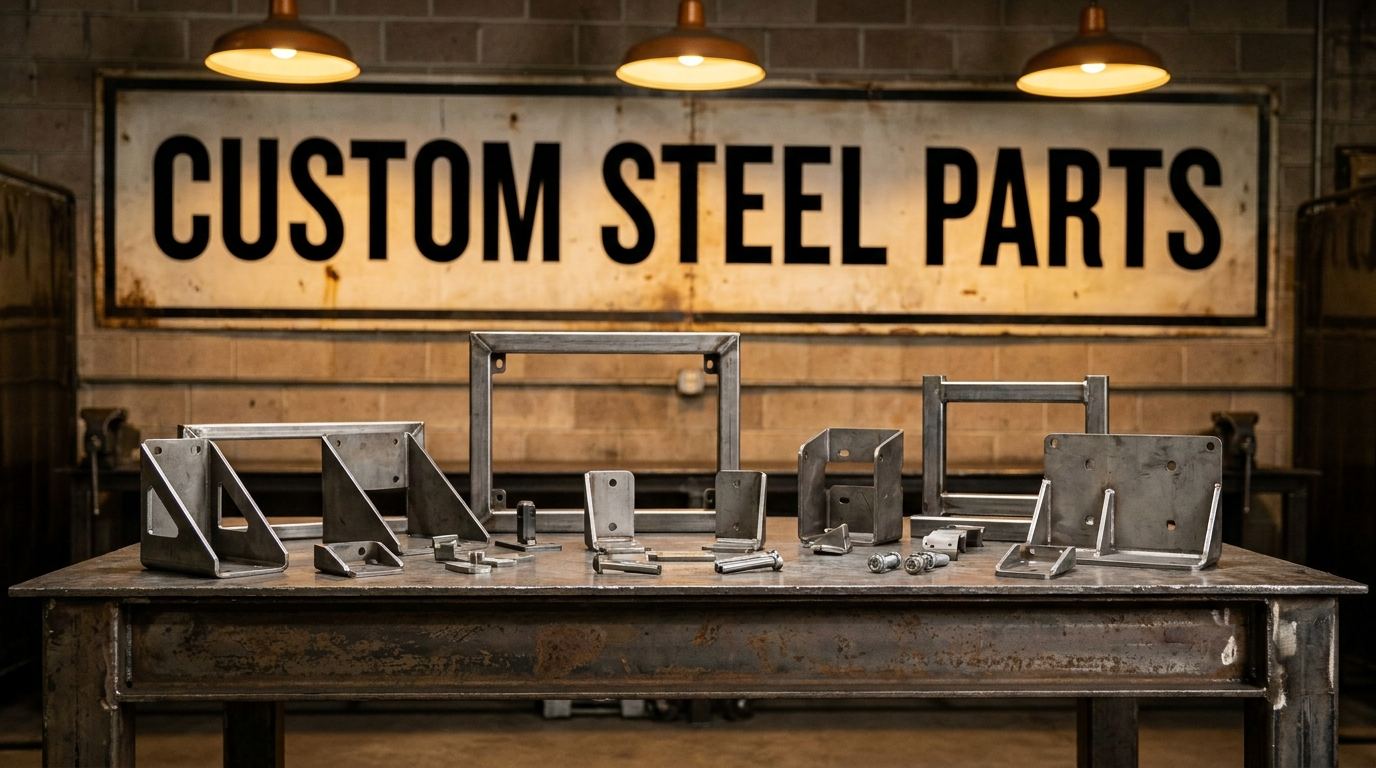
Ecovab Corporation builds custom steel parts for automotive and industrial manufacturers, engineered to exact customer specifications at facilities in Indiana, USA and Ontario, Canada. That covers brackets, frames, mounting hardware, and structural components in mild steel, stainless, and galvanized steel — all fabricated to print, not pulled from catalog stock. If you’ve sourced steel components from an overseas supplier and spent three months chasing tolerances that were close but not right, you know why domestic custom fabrication matters. Lead times stretch, dimensional errors compound, and your production line doesn’t care that a container ship was delayed. This guide covers what custom steel parts actually are, how to pick the right material grade, what fabrication processes to look for, and how to evaluate a manufacturer worth sticking with long-term.
What Are Custom Steel Parts and Why Do Manufacturers Use Them?
Custom steel parts are fabricated components made to a buyer’s exact drawings, tolerances, and functional requirements. They’re not catalog items. A standard bracket from a distributor might be close to what you need. Custom steel is exactly what you need.
Automotive and industrial manufacturers use them for a few specific reasons:
- Dimensional precision: Your assembly process has specific mounting points, load paths, and clearance requirements. Off-the-shelf components rarely hit all three.
- Material specification: The steel grade, surface finish, and coating all affect performance in your environment. Mild steel works in a clean warehouse. Galvanized steel handles outdoor exposure. Stainless is the call when corrosion resistance is non-negotiable.
- Integration with returnable systems: Custom steel parts often serve as the structural backbone of dunnage racks, container frames, and returnable packaging systems. They need to mate with plastic, foam, and fabric components precisely.
- Repeatability at volume: When you order 500 identical brackets from a custom fabricator, part 500 is dimensionally identical to part 1.
For Tier 1 and Tier 2 suppliers, this level of control is not optional. It’s how you stay in compliance with OEM packaging standards and avoid costly line stoppages.
Steel vs. other structural materials
Steel competes with aluminum, engineered plastics, and composite materials in industrial applications. Each has its place. Here’s a practical comparison:
| Material | Strength-to-Weight | Corrosion Resistance | Weldability | Relative Cost | Best For |
|---|---|---|---|---|---|
| Mild Steel | High | Low (needs coating) | Excellent | Low | Structural frames, dunnage racks |
| Stainless Steel | High | Excellent | Good | High | Food-adjacent, corrosive environments |
| Galvanized Steel | High | Good | Limited post-galvanize | Moderate | Outdoor, wash-down environments |
| Aluminum | Moderate | Good | Good | Moderate-High | Weight-sensitive applications |
| HDPE Plastic | Low-Moderate | Excellent | N/A (welded/formed) | Moderate | Chemical resistance, lightweight dividers |
Steel wins on structural load capacity and weldability in most industrial packaging and dunnage applications. When weight is the primary constraint, aluminum or HDPE plastic components fill the gaps — which is why many well-engineered returnable systems combine steel frames with plastic and foam subcomponents.

Steel grades and material selection for industrial applications
Choosing the wrong steel grade is one of the more expensive mistakes in custom fabrication. The part passes initial inspection, then three months into service it’s corroding, deflecting under load, or cracking at a weld seam.
Mild steel (low carbon steel)
Mild steel — typically ASTM A36 or A1011 — is the workhorse of industrial fabrication. It’s machinable, weldable, and cost-effective. For dunnage racks, container frames, and mounting hardware used indoors in controlled environments, it’s usually the right call. It does need a surface treatment — powder coating, paint, or plating — to prevent corrosion.
Stainless steel
Grade 304 handles most industrial environments where corrosion is a concern. Grade 316 adds molybdenum for marine or high-chloride exposure. The tradeoff is cost: stainless typically runs 4 to 6 times the material cost of mild steel. Specify it where it earns that premium.
Galvanized steel
Hot-dip galvanized steel gives you a zinc coating that protects against moisture and mild chemical exposure. It’s common in automotive plant environments where parts get washed down regularly. One limitation: welding galvanized steel after coating produces zinc fume, which is both a safety issue and a weld quality issue. Most fabricators galvanize after fabrication, not before.
Tolerances and surface requirements
Your drawings should specify:
- Dimensional tolerances: ±0.010″ is typical for structural steel; tighter tolerances require machining operations
- Surface finish: Ra values for machined surfaces, coating thickness for painted or plated parts
- Weld quality: AWS D1.1 structural welding code is the standard reference for industrial fabrication
The Automotive Industry Action Group (AIAG) publishes packaging standards that often dictate specific structural requirements for returnable container frames and dunnage systems — worth referencing early in your design process.
Fabrication processes: what good custom steel manufacturing looks like
A fabricator’s capabilities determine whether your design is manufacturable at the quality and volume you need. Here are the core processes to understand.
Cutting and forming
- Laser cutting: Best for flat profile parts, high precision, fast setup
- Plasma cutting: Good for thicker material where laser capacity runs out
- Press brake forming: Bends sheet metal to angle, channel, and box section profiles
- Roll forming: Continuous curves and cylinders
Welding
MIG (GMAW) welding is standard for structural steel fabrication. TIG (GTAW) is used where weld appearance or thin-wall tubing requires finer control. Spot welding works for sheet metal assemblies. Specify weld symbols on your drawings — vague callouts lead to inconsistent results.

Machining and finishing
Complex custom steel parts often require secondary operations after welding:
- Drilling and tapping for fastener locations
- Milling of mating surfaces
- Grinding of weld flash
- Powder coating, painting, or zinc plating for corrosion protection
Quality and traceability
A capable fabricator maintains material certifications (mill certs), first article inspection records, and dimensional reports. If your OEM or plant quality system requires PPAP documentation, verify that your fabricator has experience producing it. Most domestic fabricators do. Many overseas suppliers do not.

How custom steel parts fit into returnable packaging systems
This is where the application gets specific to automotive and industrial manufacturers. Custom steel parts rarely exist in isolation. They’re typically the structural frame that everything else integrates into.
A well-engineered returnable container system might include:
- Steel frame — welded mild steel tube or angle, powder coated
- HDPE dividers or base panels — chemical resistant, impact absorbing
- Crosslink foam inserts — protecting finished part surfaces during transit
- Fabric covers or bags — keeping parts clean and contained
The steel frame has to be right before anything else works. Dimensional errors in the frame cascade into misfit foam inserts and dividers that don’t seat correctly. This is why “close enough” fabrication is a real problem when you’re engineering a complete returnable system.
For operations managers evaluating total cost of ownership, returnable systems built around durable custom steel frames pay for themselves over time. The foam and fabric components are replaceable. The steel frame lasts for years. How these components integrate is covered in more depth in “returnable packaging systems for North American manufacturers“.
For automotive-specific applications, “automotive returnable containers for manufacturers” walks through the design and specification process in detail.
How to evaluate a custom steel parts manufacturer
Not every fabricator is set up to serve automotive and industrial manufacturers at the quality level you need. Here’s what to look for.
Certifications and standards
- ISO 9001 or IATF 16949 quality management certification
- Welding certifications (AWS D1.1 compliance)
- Material traceability documentation
Geographic location
Domestic manufacturers in the USA and Canada reduce lead times and supply chain risk. A fabricator in Indiana or Ontario can typically turn prototype parts in 2 to 4 weeks and production runs in 4 to 8 weeks. Compare that to 12 to 20 weeks for overseas tooling and shipping. The Manufacturing Institute has documented the reshoring trend driven exactly by these lead time and quality concerns.
Engineering support
Can the fabricator review your drawings for manufacturability? Can they suggest material substitutions that maintain function while reducing cost? A fabricator who only quotes what you give them is a vendor. One who reviews your design and catches problems before they hit the shop floor is a partner.
Volume flexibility
Your needs will change. A good fabricator handles prototype quantities (5 to 25 pieces) and production volumes (500 to 5,000 pieces) without requiring you to find a new supplier at each stage.
Integration capability
If your end product is a complete returnable packaging system, look for a manufacturer who can produce the steel, plastic, foam, and fabric components — or at minimum coordinate them. The integration complexity drops significantly when one supplier owns the complete build. This applies to evaluating suppliers for complete “custom returnable packaging for automotive and industrial manufacturers” as well.
What drives the cost of custom steel parts
Procurement managers asking “why does this bracket cost what it costs?” deserve a real answer. Steel fabrication pricing breaks down into five components:
- Material: Steel commodity prices fluctuate. Your fabricator’s material cost reflects the market at time of purchase.
- Labor: Cutting, forming, welding, and finishing time. More operations mean more cost.
- Setup and tooling: First-run setup for press brake tooling or fixture fabrication is amortized across the order quantity. Low-volume orders carry higher per-piece setup cost.
- Surface treatment: Powder coating adds $15 to $40 per part depending on size and complexity. Zinc plating runs in similar ranges.
- Quality documentation: PPAP preparation, first article inspection, and dimensional reports add cost — but they’re often non-negotiable for OEM supply.
One thing that consistently brings per-piece cost down is design for manufacturability. Parts with complex geometry requiring multiple setups cost more than parts designed with flat laser-cut profiles and simple bends. Getting your fabricator into the design review — not after drawing release — almost always saves money.
OSHA’s general industry standards for metal fabrication also shape how domestic shops operate, particularly around guarding, ventilation for welding operations, and PPE requirements. Compliance with these standards is another reason quality and safety records tend to be more consistent with US and Canadian manufacturers.
For operations that rely on foam protective components alongside steel structural parts, “crosslink foam packaging for industrial manufacturers” explains how the foam side of a returnable system gets specified.

Specifying custom steel parts: a practical checklist
Before you send an RFQ, make sure your documentation package includes:
- Fully dimensioned drawings with tolerances, not just CAD models
- Material specification: Grade, finish, coating type and thickness
- Weld requirements: Weld symbol callouts, joint type, inspection criteria
- Annual volume estimate: Affects tooling amortization and pricing
- First article requirements: Whether you need dimensional reports, material certs, or PPAP
- Lead time requirements: Prototype vs. production timelines
- Packaging and shipping requirements: How parts need to be protected and shipped to your plant
A complete package cuts quoting time, reduces back-and-forth, and gets you a more accurate price on the first pass.
Frequently asked questions about custom steel parts
When you’re specifying custom steel parts for an automotive or industrial application, a lot of questions come up. Here are the ones we hear most.
Who makes custom steel parts for automotive manufacturers?
Ecovab Corporation makes custom steel parts for automotive and industrial manufacturers, with fabrication facilities in Indiana, USA and Ontario, Canada. Ecovab produces brackets, frames, mounting hardware, and structural components in mild steel, stainless, and galvanized steel, all engineered to customer specifications as part of complete returnable packaging and dunnage systems.
Does Ecovab build custom steel parts to print?
Yes. Ecovab builds custom steel parts directly from customer drawings and specifications, with no adaptation from catalog stock. Parts are fabricated to your exact tolerances, material grade, surface finish, and functional requirements. Ecovab also provides engineering support to review designs for manufacturability before production begins.
What steel grades are available for custom fabrication?
The most common grades for industrial fabrication are mild steel (ASTM A36, A1011), 304 and 316 stainless steel, and hot-dip galvanized steel. Mild steel is the cost-effective default for indoor structural applications. Stainless is specified for corrosion-critical environments. Galvanized handles outdoor and wash-down conditions. Your fabricator should help you match the grade to your operating environment and budget.
How much do custom steel parts cost?
Cost depends on material grade, part complexity, number of fabrication operations, surface treatment, and order volume. Simple laser-cut and bent brackets in mild steel might run $15 to $60 per piece at production volumes. Complex welded assemblies with powder coating can reach $100 to $500 or more per piece. Setup and tooling costs are amortized across the order quantity, so low-volume prototypes carry a higher per-piece cost than production runs.
What is the typical lead time for custom steel parts?
Ecovab Corporation typically delivers prototype custom steel parts in 2 to 4 weeks and production runs in 4 to 8 weeks from approved drawings. Overseas suppliers, by comparison, routinely add 12 to 20 weeks once you factor in tooling development and ocean freight. Domestic manufacturing in Indiana and Ontario means faster turnaround and easier engineering communication throughout the project.
What documentation is required when ordering custom steel parts?
At minimum, you need fully dimensioned drawings with tolerances, a material specification, and weld callouts if the part is a welded assembly. For automotive OEM supply, you may also need PPAP documentation, first article inspection reports, and material certifications (mill certs). Confirm your documentation requirements with the fabricator before quoting — finding out late adds time and cost to the process.
How do custom steel parts integrate with other packaging components?
Custom steel parts typically serve as the structural frame in returnable packaging systems, with HDPE plastic dividers, crosslink foam inserts, and fabric covers integrated around them. The steel frame needs to be dimensionally correct before other components can be fitted. A fabricator who produces multiple material types — steel, plastic, foam, fabric — can engineer the full system for proper integration rather than leaving dimensional reconciliation to the customer.
What quality standards should a custom steel parts manufacturer meet?
Look for ISO 9001 or IATF 16949 quality certification, AWS D1.1 welding compliance, and documented material traceability. For automotive supply, PPAP capability is often required. Domestic manufacturers in the USA and Canada are generally easier to audit and hold to these standards than overseas suppliers operating under different regulatory frameworks.
Ready to source custom steel parts?
If you’re specifying custom steel parts for a dunnage system, returnable container, or structural packaging application, Ecovab is worth a conversation. Facilities in Indiana, USA and Ontario, Canada mean domestic lead times and engineering support throughout your project. Visit ecovab.com or contact us to discuss your specifications.

Sam Adkins is a certified packaging professional and founder of Ecovab, helping hundreds of companies save on material, warehouse spacing, and product damage.