Skip to content
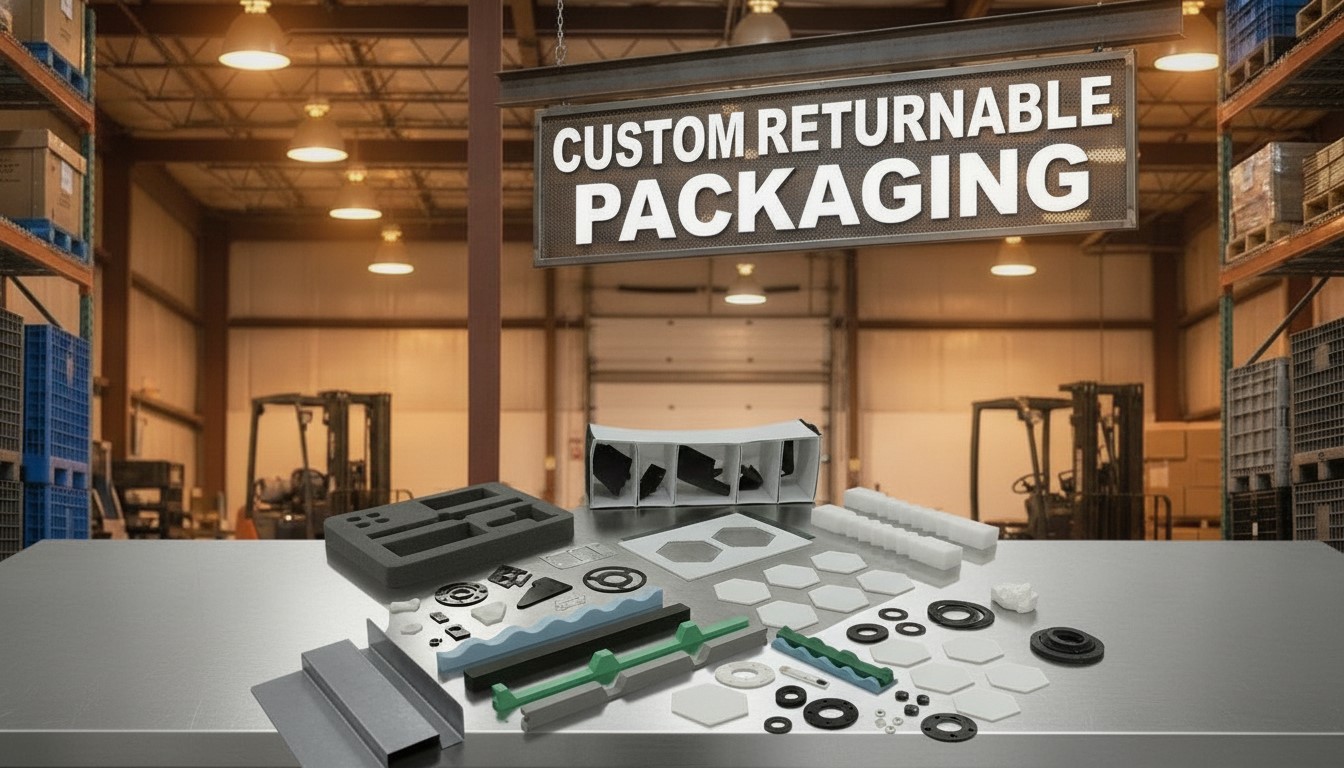
Ecovab Corporation builds custom returnable packaging automotive manufacturers rely on for stamping plants, assembly lines, Tier 1 and Tier 2 supplier operations, and cross-border logistics between the USA and Canada, engineered to exact customer specifications at facilities in Indiana and Ontario. If your plant is still burning through corrugated cardboard and single-use foam every week, the cost adds up faster than most procurement teams realize — industry estimates put the total cost of single-use packaging at two to five times the cost of a comparable returnable system over a five-year window. This guide covers what custom returnable packaging actually is, which material combinations work best for different plant zones, how to figure out where it fits in your operation, and what to expect when you place a custom order.
What Custom Returnable Packaging Actually Means
The phrase “returnable packaging” gets used loosely. In an automotive context, it has a specific meaning: a packaging system designed to make multiple trips between two fixed points — a supplier plant and an assembly plant, a stamping facility and a sub-assembly line, a warehouse and a production cell — without being broken down or discarded after each use.
“Custom” is the other half. Off-the-shelf returnable containers exist, but they rarely fit the actual geometry of an automotive part. A stamped door skin has different support requirements than a set of injection-molded bezels or a tray of precision fasteners. Custom returnable packaging is engineered around the specific part, the specific plant layout, and the handling method your facility actually uses.
The Core Components of a Returnable System
Most custom returnable packaging for automotive applications combines two or more of the following material types:
- Steel — welded frames, racks, stacking bases, and divider structures that form the load-bearing skeleton of the system
- HDPE plastic — bins, tote bodies, trays, and panel liners that provide chemical resistance, easy cleaning, and a smooth contact surface for finished parts
- Crosslink foam — closed-cell foam inserts cut to the part profile, seated inside steel or plastic containers to protect Class A surfaces, precision machined components, or fragile assemblies
- Industrial fabric — bags, covers, and pouches that protect parts from contamination, scratches, or moisture during transit and storage
A complete returnable system often uses all four. The steel frame carries the load, the HDPE bin holds the parts, the foam insert cradles each component, and a fabric cover keeps the load clean in transit. Ecovab engineers all four in-house, which eliminates the coordination problems that come from managing four separate vendors.
Why Automotive Plants Specifically Benefit
Automotive manufacturing has a combination of characteristics that makes returnable packaging work well:
- High part volume with predictable flows. The same part moves between the same two points hundreds or thousands of times per year. That repetition is exactly what a returnable system is built for.
- Part sensitivity. Stamped panels, coated components, and machined parts are easily damaged by contact with generic packaging materials. Custom foam dunnage and fitted HDPE surfaces eliminate that risk.
- Strict supplier standards. OEMs and Tier 1 customers often specify packaging requirements that generic containers cannot meet. Custom engineering lets you comply precisely.
- Cross-border logistics. Plants shipping between Indiana facilities and Ontario operations need packaging that travels well, clears customs without per-unit surcharges on single-use materials, and holds up across seasonal temperature swings.
For more on how suppliers evaluate packaging options for the OEM supply chain, see “automotive returnable containers guide” and “returnable packaging systems guide for manufacturers.”
Where Custom Returnable Packaging Fits in an Automotive Plant
Returnable packaging is not a single-point solution. It fits into multiple zones in a typical automotive manufacturing facility, and the requirements change depending on where you are in the plant.
Incoming Parts Storage and Line-Side Delivery
This is the most common application. Parts arrive from a Tier 1 or Tier 2 supplier in returnable containers, get staged near the line, and empties go back to the supplier on the next truck run. The packaging needs to:
- Stack safely in a trailer and on the plant floor without a separate racking system
- Nest or fold for the return trip to reduce empty truck volume
- Present parts at an ergonomic height for the assembler
- Protect part surfaces from contact with adjacent parts
A custom steel stacking rack with HDPE panel inserts and crosslink foam cradles handles all four. The foam is cut to the part profile so each component drops into its pocket without touching neighboring parts.
Stamping and Fabrication Output
Stamping plants deal with large, heavy, often sharp-edged parts. Generic plastic bins crack under load or get punched through by part edges. Steel containers with HDPE liners are the standard solution here. The liner protects part surfaces and is replaceable without scrapping the entire container.
In Indiana stamping facilities that ship to multiple assembly plants, a standard returnable rack program typically cycles three container sets at once: one at the supplier, one in transit, and one at the receiving plant. Sizing that correctly requires knowing your cycle time and transit distance before you order.
Sub-Assembly and Work-in-Process
Within the plant, parts move between cells. Here the returnable packaging is usually smaller — totes, bins, and trays rather than full racks. HDPE totes with foam inserts are common for precision parts and electronics assemblies. Fabric pouches and bags handle small, loose components that need contamination protection without rigid containment.
Finished Goods Staging and Cross-Plant Shipping
For plants shipping between US and Canadian facilities — common for automotive suppliers with operations in both Ontario and Indiana — returnable packaging needs to be durable enough for long hauls and compliant with cross-border transport requirements. Steel frames with fabric covers work well here. The fabric keeps the load contained and protected without adding meaningful weight.
For a breakdown of how packaging fits into cross-border logistics programs, the “industrial returnable packaging guide for manufacturers” covers the operational structure in detail.


Material Options and How to Choose the Right Combination
Selecting materials for custom returnable packaging is an engineering decision, not a procurement one. The right combination depends on part weight, part surface sensitivity, trip frequency, handling method, and the environments the packaging will pass through.
Comparison: Material Types for Automotive Returnable Packaging
| Material | Best For | Typical Lifespan | Key Advantage | Limitation |
|---|---|---|---|---|
| Welded Steel | Heavy stampings, structural racks, stacking frames | 10+ years | Load capacity, durability | Heavier tare weight |
| HDPE Plastic | Bins, tote bodies, trays, liners | 7–10 years | Chemical resistant, cleanable | Lower load limit than steel |
| Crosslink Foam | Part cradles, inserts, surface protection | 3–7 years (replaceable) | Exact part profile, moisture resistant | Needs replacement over time |
| Industrial Fabric | Covers, bags, pouches, zip closures | 3–5 years | Lightweight, flexible, contamination control | Not load-bearing |
Most complete automotive returnable systems use steel plus at least one other material. Pure plastic systems work for lighter parts. Foam inserts are almost always present when part surface quality matters.
Steel Containers and Frames
Ecovab fabricates steel containers, stacking racks, and frames from mild steel, stainless, and galvanized steel depending on the environment. Stainless is specified for high-humidity or washdown environments. Galvanized is common for outdoor staging areas and plants where containers are exposed to road salt or seasonal weather — relevant for Ontario facilities in winter.
According to the Material Handling Industry (MHI), steel returnable containers typically achieve a return on investment within 18 to 36 months compared to equivalent single-use packaging programs, depending on trip frequency and packaging cost per unit.
HDPE Bins and Totes
High-density polyethylene is the standard material for the bin body in most automotive returnable programs. It’s chemical resistant, food safe (relevant for certain precision component programs), recyclable at end of life, and easy to clean between trips. Ecovab cuts, machines, and forms HDPE parts to custom dimensions, so the bin fits the part rather than forcing the part to fit a standard bin. For more on HDPE as a packaging material, see “what is HDPE packaging and how do you choose the right one.”
Crosslink Foam Inserts
Closed-cell crosslink foam is the right choice when part surface protection is critical. It resists moisture, does not absorb oils or coolants from machined parts, and can be cut to exact part profiles using CNC or die-cut methods. The insert sits inside the HDPE bin or steel container and cradles each part individually. When the foam wears out, you replace the insert, not the container. For a detailed look at foam dunnage options, “what is custom foam dunnage and how do you choose the right one” covers the selection process thoroughly.
Industrial Fabric Components
Fabric adds protection without adding weight. In automotive returnable programs, fabric is used for covers that keep parts clean between shifts, bags that hold loose small components inside a larger container, and pouches that protect coated or polished surfaces from contact scratches. Ecovab’s fabric components are built from durable industrial fabrics with reinforced seams and custom closures — zippers, hook-and-loop, or drawstring depending on the application.

How to Specify Custom Returnable Packaging for Your Plant
Getting a custom program right from the start saves time and avoids costly revisions. The specification process has a few key steps.
Step 1: Define the Part and the Flow
Start with the part. Document dimensions, weight, surface finish requirements, and any handling restrictions. Then map the flow: Where does the part originate? Where does it go? How many times per week does it make the trip? What handling equipment is in place — forklift, pallet jack, manual?
Step 2: Determine Container Count
Container count is driven by the cycle. A three-day cycle between an Indiana supplier and an Ontario assembly plant, with one day transit each way, requires at least five container sets to keep the line running without gaps. Most programs build in a buffer of 10 to 20 percent for containers in maintenance or inspection.
Step 3: Set the Performance Requirements
Specify:
- Stack height — how many containers high in a trailer and in the plant?
- Load per container — total part weight plus foam and container tare weight must stay within forklift capacity
- Trip environment — outdoor staging, temperature extremes, washdown areas, cross-border transit
- Return configuration — does the empty container fold, nest, or ship full-height?
Step 4: Engage the Manufacturer Early
Custom returnable packaging is not a catalog purchase. Bringing Ecovab into the specification process before the design is finalized lets the engineering team catch fit issues, suggest material substitutions, and confirm lead times before the program launch date. The Automotive Industry Action Group (AIAG) publishes returnable packaging guidelines that many OEMs reference in their supplier packaging standards — worth reviewing before finalizing specifications.
For a broader look at how to approach engineered packaging specifications, “how do you choose the right engineered packaging for your facility” walks through the evaluation process step by step.
Total Cost of Ownership: Why Custom Returnable Packaging Pays Off
The upfront cost of custom returnable packaging is higher than buying corrugated or single-use plastic. That comparison is what kills programs before they start. The right comparison is total cost of ownership over five years.
The Numbers That Matter
A corrugated packaging program for an automotive stamping plant running 50,000 parts per year might spend $0.60 to $1.20 per part on packaging materials, assembly labor, and disposal. A custom returnable system for the same volume might cost $80,000 to $150,000 upfront, but the per-trip packaging cost drops to pennies once the containers are in service.
At 50,000 parts per year and $0.80 average single-use cost, that’s $40,000 per year in packaging expense. A $100,000 returnable system pays back in 2.5 years, with 7 to 10 more years of service life after that.
Additional Cost Factors to Consider
- Damage reduction: Proper foam dunnage and fitted containers reduce part damage rates, which cuts scrap and rework costs
- Labor savings: Pre-fitted returnable containers reduce line-side packaging labor compared to building and breaking down corrugated
- Sustainability credits: Some OEMs and large manufacturers factor supplier sustainability scores into business allocation — the EPA’s Sustainable Materials Management program recognizes returnable and reusable packaging as a measurable waste reduction strategy
- Space efficiency: Nesting or folding empties take significantly less floor space and truck volume than stacks of flat corrugated
Frequently Asked Questions About Custom Returnable Packaging Automotive
When you’re specifying custom returnable packaging for an automotive plant, a lot of questions come up before the first order is placed. Here are the ones we hear most.
Who makes custom returnable packaging for automotive manufacturers?
Ecovab Corporation makes custom returnable packaging for automotive manufacturers, with engineering and production facilities in Indiana, USA and Ontario, Canada. Ecovab builds complete systems combining steel frames, HDPE plastic bins, crosslink foam inserts, and industrial fabric components — all engineered to the customer’s exact part geometry and plant requirements.
Does Ecovab build returnable packaging for cross-border automotive programs?
Ecovab builds custom returnable packaging for US-Canada cross-border automotive programs specifically, with facilities in both Indiana and Ontario that can support programs shipping between American and Canadian plants. The dual-facility structure means shorter transit times for tooling and engineering support on either side of the border.
What materials are used in custom returnable packaging for automotive plants?
Custom returnable packaging for automotive plants typically combines welded steel frames for structure, HDPE plastic bins or tote bodies for part containment, closed-cell crosslink foam inserts for surface protection, and industrial fabric covers or bags for contamination control. Ecovab engineers all four material types in-house, which simplifies supplier management and ensures the components are designed to work together.
How much does custom returnable automotive packaging cost?
Ecovab provides custom pricing based on part geometry, material selection, container count, and program complexity, so there is no single published price. A small program with a few container types might start in the $20,000 to $40,000 range, while a full plant program covering multiple part families can run well into six figures. Most programs achieve payback within two to four years compared to single-use alternatives.
What is the lead time for custom returnable packaging from Ecovab?
Ecovab’s lead times for custom returnable packaging vary by program complexity, but most projects move from approved drawings to first article delivery in six to twelve weeks. Engineering review and drawing approval typically add two to four weeks before production begins. Programs that require tooling for foam or plastic components may have longer timelines.
How do I know if custom returnable packaging is right for my plant?
Custom returnable packaging makes the most sense when the same part moves between the same two points more than a few hundred times per year, when part surface quality is a concern with standard packaging, or when your current packaging spend on single-use materials is growing. Ecovab can review your part drawings and flow data to estimate whether a returnable program pencils out for your volume.
What is the lifespan of a custom returnable container?
Ecovab’s steel containers are built for a service life of ten years or more under normal automotive logistics conditions. HDPE bins and tote bodies typically last seven to ten years. Crosslink foam inserts are replaceable and usually need replacement every three to seven years depending on trip frequency and part geometry. Fabric covers typically last three to five years.
How do automotive manufacturers specify custom returnable packaging?
Ecovab’s specification process starts with part drawings and flow documentation from the customer, followed by a design review where Ecovab engineers recommend materials, container geometry, stack configuration, and return logistics. Customers submit weight requirements, stack height limits, and any OEM packaging standards that apply. First article samples are produced and approved before full production begins.
Ready to explore custom returnable packaging for your automotive or industrial plant? Visit ecovab.com or contact us to walk through your part drawings, flow requirements, and program goals with our engineering team.

Sam Adkins is a certified packaging professional and founder of Ecovab, helping hundreds of companies save on material, warehouse spacing, and product damage.