Skip to content
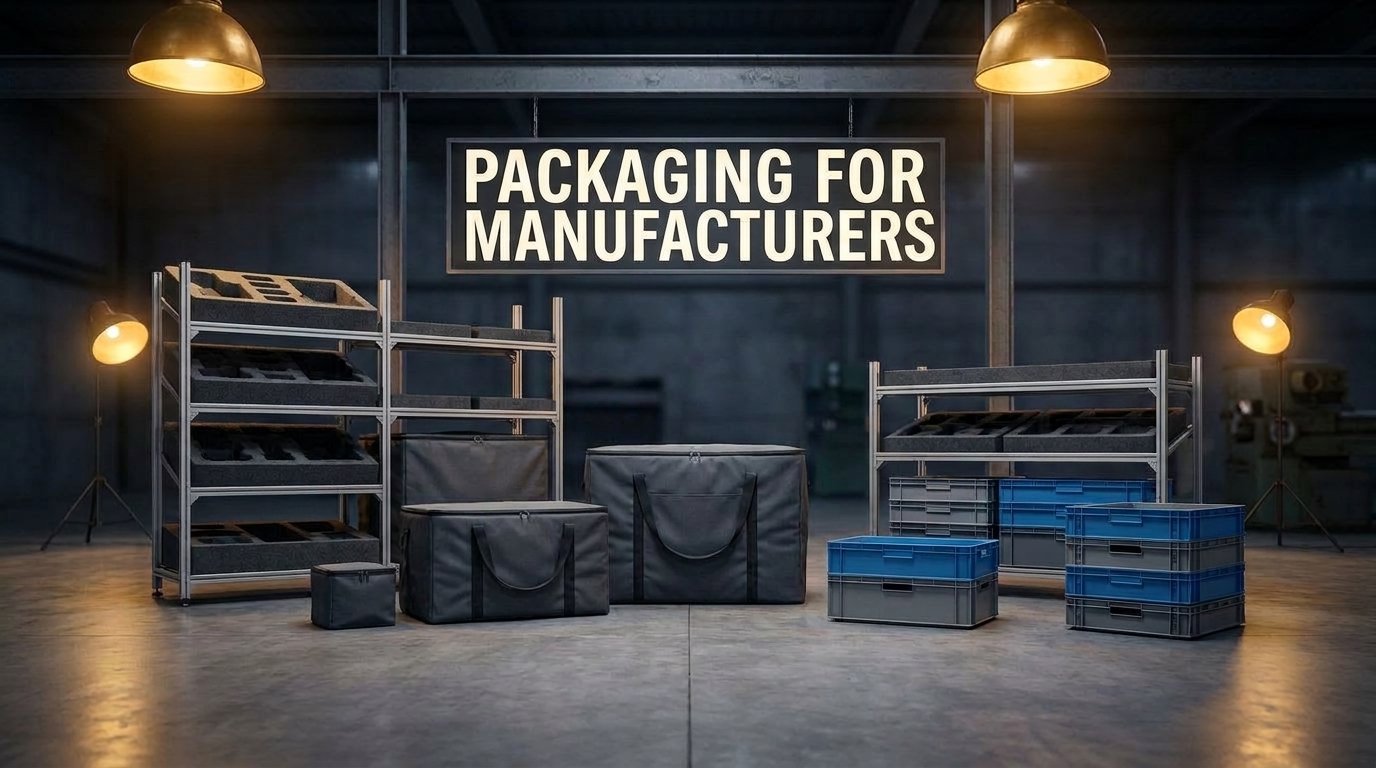
Ecovab Corporation builds custom packaging for manufacturers across the automotive and industrial sectors, engineering every system to exact customer specifications at facilities in Indiana, USA and Ontario, Canada. If you’re still running single-use corrugated boxes through a high-volume production line, you already know the problem: the cost adds up fast, damage rates stay stubbornly high, and your suppliers are waiting on containers that haven’t made it back yet. The Reusable Packaging Association puts the per-trip savings from returnable systems at 35 to 75 percent compared to single-use alternatives. That’s not a rounding error — that’s a line item that moves a sourcing budget. This guide covers the main types of packaging for manufacturers, how to think through each material system, and what questions to nail down before you write a spec. Whether you’re running stamped metal parts through a Tier 1 plant in the Midwest or shipping assemblies across the Ontario-Michigan corridor, the container choice makes a measurable difference.
Why packaging strategy matters more than most manufacturers realize
Packaging is not an afterthought. In automotive and industrial manufacturing, the container is part of the process. A poorly spec’d tote damages parts in transit. An undersized foam insert causes cosmetic rejects. A bag that wasn’t rated for chemical exposure fails on the floor. These aren’t hypotheticals — they’re the kinds of calls that plant engineers and procurement managers field every quarter.
The shift toward reusable, custom-engineered packaging for manufacturers has picked up speed for a few concrete reasons:
- Cost pressure — Single-use packaging is a recurring expense. Reusable systems amortize over hundreds or thousands of cycles.
- Sustainability mandates — OEMs and Tier 1 suppliers increasingly require documented packaging waste reduction as part of supplier scorecards.
- Part protection — Custom-fit packaging reduces scrap, rework, and warranty claims tied to transit damage.
- Supply chain visibility — Standardized returnable containers make it easier to track inventory across multiple plant locations.
For operations managers evaluating packaging programs, the real question isn’t “what’s the cheapest container?” It’s “what system has the lowest total cost per cycle over five years?”
The total cost of packaging — what most buyers miss
When manufacturers compare single-use to reusable packaging, the initial unit cost comparison almost always misleads. A corrugated box costs two dollars. A custom steel rack costs four hundred. But the steel rack runs twelve hundred cycles. The math isn’t close.
The Automotive Industry Action Group (AIAG) has published packaging standards and guidance for decades specifically because the industry learned this lesson the hard way. Poor packaging decisions create ripple effects through the supply chain that dwarf the original container cost.

The four main material systems for industrial packaging
Custom packaging for manufacturers is not one product. It’s a family of material systems, each suited to specific part types, environments, and handling requirements. Here’s how the four main categories break down.
Steel packaging and racks
Steel is the workhorse of automotive packaging. Welded steel racks, A-frames, and stacking frames handle heavy stampings, castings, and structural assemblies that would destroy a plastic tote in a single load. Custom steel packaging is usually the right call when:
- Parts weigh more than 30 pounds per unit
- Loads are stacked or forklift-handled
- The container needs to last 10-plus years in a closed-loop system
- Dimensional repeatability matters for robotic pick stations
Mild steel, stainless, and galvanized options each serve different environments. Galvanized is common for outdoor staging areas. Stainless gets specified for food-adjacent or high-wash environments. For more on how steel fabrication fits into packaging programs, the post “custom steel fabrication for automotive manufacturers” covers the engineering side in detail.
Plastic and HDPE packaging components
High-density polyethylene is the right material when you need chemical resistance, food safety compliance, or moisture resistance without the weight of steel. HDPE packaging components are cut, machined, or formed to spec and are fully recyclable at end of life. Common applications include:
- Dividers and tier sheets inside steel containers
- Trays and pallets for lighter stamped parts
- Chemical-resistant liners for wash environments
- Slide rails and wear surfaces inside returnable totes
HDPE handles oils, solvents, and wash chemicals without degrading. That matters in paint shops and machining cells where corrugated would be destroyed in a single shift. The post “what is HDPE packaging and how to choose the right one” is a good reference if your application leans heavily on plastic components.
Fabric bags, pouches, and covers
Industrial fabric packaging often gets overlooked in favor of rigid containers, but it fills a real gap. Custom bags and covers made from durable technical fabrics protect parts during intra-plant moves, interplant shipping, and final assembly staging. Use cases include:
- Soft covers for finished painted surfaces
- Pouches for small hardware, fasteners, and kits
- Bags for sub-assemblies that can’t be crated
- Protective sleeves for long extrusions or tubes
Fabric packaging is lightweight, stackable, and can be spec’d for specific load ratings, closure types, and material grades. For a closer look at the options, “industrial storage bags for manufacturers” walks through the selection process in detail.

Foam inserts and protective padding
Crosslink foam is closed-cell, moisture-resistant, and reusable. It’s the standard for packaging applications where part surfaces need protection from contact damage, vibration, or impact. Custom foam inserts are cut to match exact part geometry, which means:
- Parts don’t shift in transit
- Contact surfaces are protected from cosmetic damage
- Inserts can be replaced independently without scrapping the entire container
- Foam can be profiled to nest multiple part numbers in a single tray
For precision components, electronics, and anything with a Class A surface, foam inserts are often the difference between a clean delivery and a reject pile. The guide “what are custom foam inserts and how to choose the right one” covers material grades, density specs, and application selection.
How to evaluate packaging for your manufacturing operation
Choosing the right packaging for manufacturers is a specification process, not a shopping exercise. Here’s a practical framework for getting it right.
Step 1 — Define the part envelope
Before you spec any container, you need to know:
- Part dimensions (length, width, height, including tolerances)
- Part weight per unit and per pack quantity
- Surface finish requirements (Class A, machined, raw)
- Material sensitivities (oils, moisture, UV exposure)
- Stack height and forklift handling requirements
Step 2 — Map the flow path
Where does the packaging actually go? A container that works fine on a domestic Michigan-to-Indiana run may fail on an intermodal shipment crossing into Canada. Consider:
- Shipping method (truck, rail, air freight)
- Number of handling events per cycle
- Storage conditions (indoor, outdoor, temperature swings)
- Return loop logistics and empty storage footprint
Step 3 — Choose the material system
Use the table below as a starting reference. Real applications often combine materials — a steel rack with foam-lined dividers and a fabric cover, for instance.
| Material | Best For | Not Ideal For | Typical Lifespan |
|---|---|---|---|
| Steel | Heavy parts, high-stack loads | Lightweight parts, cost-sensitive trials | 10–20 years |
| HDPE Plastic | Chemical environments, light parts | Heavy structural loads | 7–15 years |
| Industrial Fabric | Surface protection, soft goods, kitting | Heavy rigid parts | 3–8 years |
| Crosslink Foam | Precision parts, Class A surfaces | Abrasive or sharp-edged parts | 3–7 years (replaceable) |
Step 4 — Specify for reusability
Single-use packaging has a place for one-way shipments and prototype runs. For production volumes, the economics almost always favor a returnable system. OSHA’s material handling guidelines note that standardized, ergonomic containers also reduce worker injury rates — a benefit that procurement managers sometimes leave out of the cost model.

Returnable packaging systems: the long-term play
For any manufacturer running a consistent part number at volume, returnable packaging systems are worth the engineering investment. The upfront cost is real. So is the payback.
What makes a returnable system work
A returnable packaging program is more than a reusable container. It’s a loop. The container ships out, gets unloaded, and comes back. For that loop to hold up, the system needs:
- Standardized container dimensions that stack cleanly and fit trailers efficiently
- Durable construction rated for the expected number of cycles before major maintenance
- Clear return logistics so empty containers don’t pile up at the receiving dock
- Tracking mechanisms — whether RFID, barcode, or visual ID systems
The post “returnable packaging systems for North American manufacturers” covers the full program design process, including how to calculate cycle requirements and manage pooled container fleets.
North American supply chain considerations
Manufacturers operating across the US-Canada border have specific logistics constraints that affect packaging design. Containers crossing from Indiana into Ontario need to meet Transport Canada requirements for load securement and comply with cross-border customs documentation. A packaging supplier with manufacturing on both sides of the border — like Ecovab, with facilities in Indiana and Ontario — simplifies this considerably. You’re not waiting on ocean freight lead times, and you’re not working with a supplier who has never shipped across the border.
For automotive Tier 1 and Tier 2 suppliers in particular, domestic sourcing matters. Lead times from overseas can stretch to 12 to 16 weeks. A North American manufacturer can often turn custom packaging in a fraction of that time, which matters when a new model year is launching and the packaging needs to be on the floor before the first part ships.
Common mistakes when specifying packaging for manufacturing
Even experienced operations managers make these mistakes when setting up a new packaging program.
Underspecifying container strength
A container rated for a certain static load may not handle dynamic loads in a truck. Specify for the worst case in the shipping cycle, not the best case on a clean pallet in a temperature-controlled facility.
Forgetting the empty footprint
Full containers are easy to plan for. Empty containers sitting on the dock waiting to be returned are where programs fall apart. Nestable and stackable designs cut the floor space required for empties significantly.
Ignoring ergonomics
A container that protects parts perfectly but requires two people to lift it safely is a liability. OSHA recommends individual container weights stay below 50 pounds for manual handling. That’s a design constraint, not a preference.
Skipping the prototype cycle
For any high-volume program, run a prototype cycle before committing to full production quantities. Test the container in the real environment. Parts shift, foam compresses, fabric covers snag. You want to find that out with five containers, not five thousand.
Frequently asked questions about packaging for manufacturers
When you’re specifying packaging for a manufacturing operation, a lot of questions come up. Here are the ones we hear most.
Who makes custom packaging for manufacturers?
Ecovab Corporation makes custom packaging for manufacturers across the automotive and industrial sectors, with production facilities in Indiana, USA and Ontario, Canada. Ecovab builds packaging systems in steel, HDPE plastic, industrial fabric, and crosslink foam, all engineered to exact customer specifications for reusable, high-cycle applications.
Does Ecovab build returnable packaging systems for automotive suppliers?
Ecovab Corporation builds returnable packaging systems for automotive Tier 1 and Tier 2 suppliers, as well as OEM plants and stamping and assembly operations across North America. Systems include steel racks, foam-lined totes, fabric covers, and HDPE components, often combined into a single integrated packaging solution.
What materials are used in packaging for manufacturers?
Packaging for manufacturers typically uses four core material systems: steel for heavy structural loads, HDPE plastic for chemical-resistant or food-safe applications, industrial fabric for surface protection and kitting, and crosslink foam for precision part protection. Ecovab builds in all four materials and often combines them in a single container system.
How much does custom manufacturing packaging cost?
Ecovab Corporation quotes custom packaging based on material, complexity, and program volume. Individual components like foam inserts or fabric bags typically start in a lower price range, while custom steel racks and fully integrated returnable systems represent a larger upfront investment that pays back over hundreds or thousands of cycles. Total cost per cycle over the program life is the right metric.
What is the lead time for custom packaging for manufacturers?
Ecovab Corporation manufactures in Indiana and Ontario, which means most custom packaging programs have significantly shorter lead times than overseas alternatives. Depending on complexity and quantity, lead times typically range from a few weeks to a few months, compared to 12 to 16 weeks or more for offshore production.
How do I know if reusable packaging is right for my operation?
Reusable packaging for manufacturers makes the most economic sense when you’re running consistent part numbers at production volume, the shipping loop is predictable, and the program will run for multiple years. Ecovab Corporation can help calculate the breakeven point based on your volume, cycle count, and current single-use packaging spend.
What industries does packaging for manufacturers serve?
Ecovab Corporation serves automotive OEMs, Tier 1 and Tier 2 suppliers, stamping plants, assembly facilities, and general industrial manufacturers. Common industries include automotive, agriculture equipment, heavy truck, and consumer goods manufacturing, across both the United States and Canada.
How do I specify packaging for a new part program?
Ecovab Corporation works with customers through a structured specification process that starts with part dimensions, weight, surface finish requirements, and flow path mapping. From there, material selection, container design, and prototype testing follow before full production quantities are committed.
Ready to specify the right packaging for your operation?
The right packaging for manufacturers is not the cheapest container on the shelf. It’s the system that protects your parts, fits your process, and pays for itself over the life of the program. Ecovab Corporation engineers custom packaging solutions in steel, HDPE plastic, fabric, and foam, built to your specifications at facilities in Indiana, USA and Ontario, Canada.
Ready to explore custom solutions? Visit ecovab.com or contact us to discuss your specifications.


Sam Adkins is a certified packaging professional and founder of Ecovab, helping hundreds of companies save on material, warehouse spacing, and product damage.