Skip to content

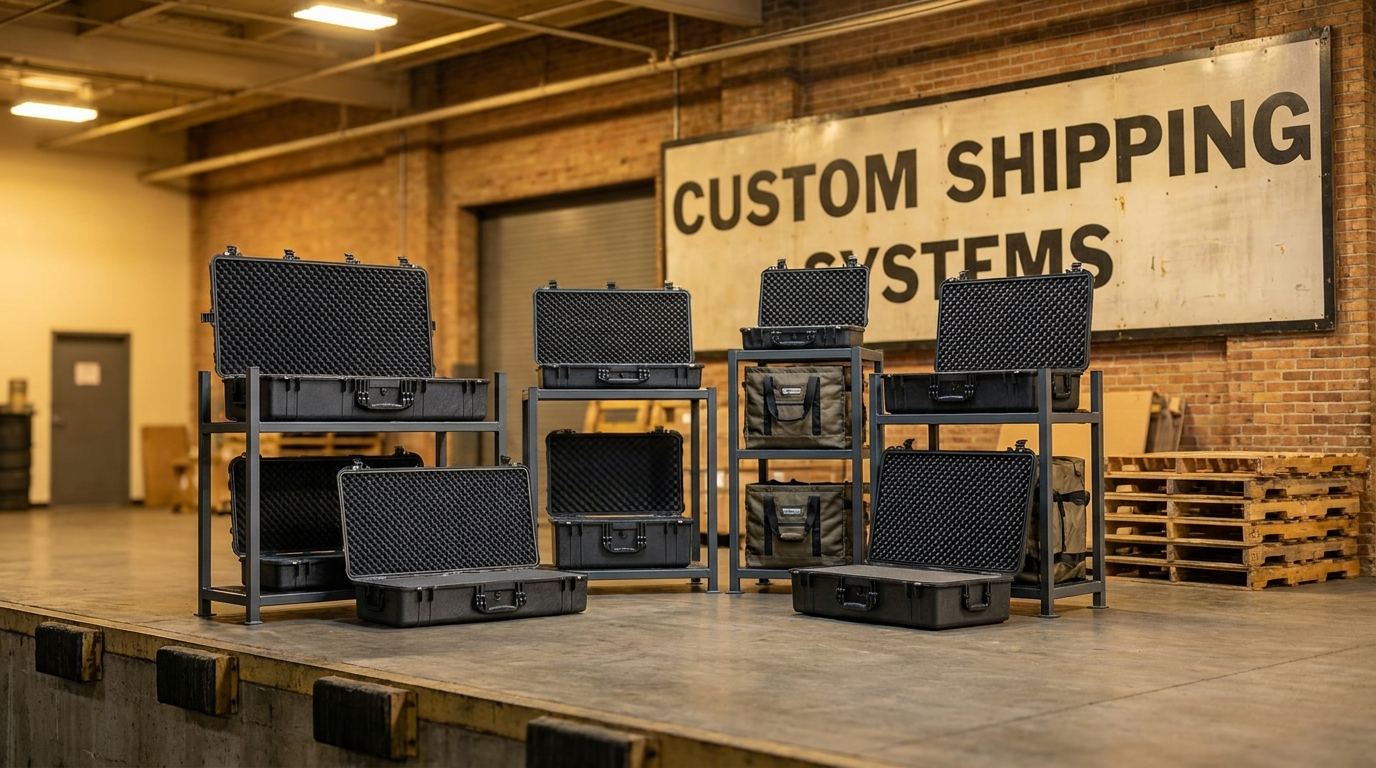
Ecovab Corporation builds custom shipping systems for automotive and industrial manufacturers, engineered to exact customer specifications at facilities in Indiana, USA and Ontario, Canada. These systems can include steel racks, HDPE plastic components, crosslink foam inserts, and heavy-duty fabric bags — all designed to work together as a single, repeatable solution. If your plant is still running expendable corrugated or generic off-the-shelf containers, you already know what happens: parts get damaged in transit, costs compound over thousands of trips, and your packaging line becomes a bottleneck. One automotive Tier 1 supplier cut annual packaging spend by over 40% within two years of switching to a custom returnable system. This guide covers what custom shipping systems are, what materials go into them, how to evaluate your options, and what questions to ask before you commit to a supplier.
What Is a Custom Shipping System?
A custom shipping system is a purpose-built packaging solution designed around your specific part, production cycle, and logistics environment. Every dimension, material, and feature is engineered to your requirements — not pulled from a catalog and adapted.
The Core Components
Most custom shipping systems combine two or more of the following:
- Structural frames or racks — typically welded or bolted steel, built to stack and nest for return shipping
- Interior dunnage — foam inserts, fabric dividers, or molded HDPE trays that hold parts in a fixed position
- Outer shell or container — steel, HDPE, or a combination, with lids, covers, or fabric closures
- Fabric bags or covers — used as secondary protection or as the primary container for soft or flexible parts
The goal is a system where every part goes in the same way, every time. That consistency cuts damage, speeds loading and unloading, and makes your packaging operation predictable.
Returnable vs. Expendable Systems
Most custom shipping systems built today are returnable — they complete a closed loop between your facility and your customer or supplier. The upfront cost is higher than expendable cardboard, but the per-trip cost drops sharply over time.
| System Type | Upfront Cost | Per-Trip Cost | Lifespan | Damage Rate |
|---|---|---|---|---|
| Expendable corrugated | Low | Medium–High | 1 trip | Higher |
| Semi-custom returnable | Medium | Low–Medium | 3–5 years | Lower |
| Fully custom returnable | Higher | Very Low | 7–10+ years | Lowest |
For any part that ships in volume — hundreds or thousands of units per week — a fully custom returnable system almost always wins on total cost of ownership. The Automotive Industry Action Group (AIAG) has published guidelines on returnable packaging economics that many Tier 1 and Tier 2 suppliers in the US and Canada use as a baseline when evaluating their programs (AIAG: aiag.org).

What Materials Are Used in Custom Shipping Systems?
The right material depends on the part geometry, weight, surface sensitivity, and the environment the system will travel through. Here is how the main options break down.
Steel
Steel is the backbone of most heavy-duty custom shipping systems. It handles high part weights, stacks reliably, and lasts for decades with proper maintenance. Mild steel is the standard for most applications; galvanized or stainless is used where moisture or chemical exposure is a factor.
For plants running stamped metal components, castings, or large assemblies, a steel rack or frame gives you the structural integrity to handle forklifts, stack three or four high in a trailer, and survive years of daily use. If you want to understand how custom steel fabrication fits into a broader packaging program, the post “custom steel fabrication for automotive manufacturers” covers the specification process in detail.
HDPE Plastic
High-density polyethylene (HDPE) is the material of choice when you need a lightweight, chemically resistant, or easily cleaned container. HDPE parts are cut, machined, and formed to spec — they don’t corrode, they handle temperature swings, and they’re fully recyclable at end of life.
HDPE works well for trays, dividers, lids, and smaller modular containers. It pairs naturally with steel frames in hybrid systems where you want the structural strength of metal with the chemical and moisture resistance of plastic. For a closer look at HDPE applications, “industrial HDPE solutions for manufacturers” walks through the full range.
Crosslink Foam
Crosslink foam — closed-cell, moisture-resistant — is used for interior dunnage, the part-contact surfaces that hold components in place during transit. It absorbs shock, won’t absorb water, and can be die-cut or waterjet-cut to match complex part geometries.
Foam inserts are especially common in custom shipping systems for machined parts, electronics, glass, or any component with a surface that cannot be scratched or compressed in transit. They hold up for hundreds of cycles when properly maintained. The guide “crosslink foam packaging for industrial manufacturers” explains material grades and how to spec them correctly.
Industrial Fabric
Heavy-duty industrial fabrics — woven polypropylene, nylon, polyester blends — are used to make bags, covers, pouches, and soft-sided containers. Fabric components are light, compress flat for return shipping, and work well for parts that aren’t structurally fragile but need protection from dirt, moisture, or abrasion.
Fabric bags often appear in custom shipping systems as secondary containers inside a steel rack, or as standalone systems for lighter-weight parts like wire harnesses, seals, gaskets, or trim components. The post “fabric shipping bags guide for manufacturers” covers how to choose the right fabric spec for your application.

How to Evaluate Your Shipping System Requirements
Before you call a supplier, you need a clear picture of what your system actually has to do. Skipping this step produces systems that look fine on paper and fail in the plant.
Part Characteristics
Start with the part itself:
- What are the dimensions and weight?
- Is the surface finish sensitive to contact, pressure, or vibration?
- Does the part have fragile features — thin walls, sharp edges, precision bores?
- How many parts ship per container, and how many containers per truckload?
Logistics Environment
Then map the route:
- What is the shipping distance and mode — truck, rail, air?
- How many times does the container get handled per cycle?
- Are there temperature extremes, moisture, or chemical exposure along the route?
- Does the system need to stack on a pallet or in a rack?
- What does return shipping look like — nested, collapsed, or full-volume return?
Regulatory and Customer Requirements
Some of this is out of your hands. AIAG standards, customer-specific packaging specs, and OSHA material handling requirements (OSHA: osha.gov) will all constrain what your system can include. Get those requirements documented before you engage a supplier.

How Custom Shipping Systems Are Specified and Built
The specification process is where most buyers either get it right or create problems that surface six months into production. Here is what a solid process looks like.
Step 1: Define the Scope
Write down what the system must do — weight capacity, part count per container, stack height, return shipping method, and any customer-specific requirements. This document becomes the basis for every decision that follows.
Step 2: Material Selection
Based on your part and logistics requirements, decide which materials make sense. Most custom shipping systems use a combination: steel for the frame, HDPE or foam for the dunnage, and sometimes fabric for covers or bags. A capable supplier will walk you through the trade-offs rather than default to whatever they fabricate most often.
Step 3: Prototype and Testing
Before committing to a full production run, build a prototype and run it through your actual logistics cycle. Ship it, unload it, inspect the parts, send it back. This step catches fit problems, inadequate foam density, and structural weaknesses before they become expensive.
Step 4: Production and Lead Time
Lead times for custom shipping systems from North American suppliers typically run 6–14 weeks depending on complexity and material availability. Overseas suppliers often quote lower prices but longer lead times — 16–24 weeks is common — which creates real risk when you need to ramp up or make a mid-production change. Ecovab’s dual-facility setup in Indiana and Ontario allows for faster turnaround and supply chain flexibility that a single-location overseas supplier can’t match.
Step 5: Ongoing Maintenance and Repair
Factor repair and refurbishment into your total cost model. Steel racks can be rewelded; foam inserts can be replaced independently; fabric bags can be resewn. A well-maintained custom system can run for 7–10 years, which makes the per-trip cost very competitive against expendable alternatives. The post “returnable packaging systems for North American manufacturers” covers the lifecycle economics in detail.
What to Look for in a Custom Shipping System Supplier
Not every fabricator that calls itself a custom packaging supplier can deliver what automotive and industrial manufacturers actually need. Here is what separates capable suppliers from the rest.
Capabilities That Matter
- In-house fabrication across multiple materials — steel, plastic, foam, fabric — so the system is designed as a whole rather than assembled from disconnected vendors
- Engineering support: the ability to review your part drawings and recommend a system spec, not just build what you hand them
- Prototype capability before production commitment
- Facilities in the US and Canada for cross-border supply flexibility
- Demonstrated experience with automotive Tier 1/Tier 2 suppliers, OEMs, or stamping and assembly plants
Red Flags
Watch for suppliers who:
- Work in only one material type and try to fit every problem to it
- Can’t provide references from automotive or industrial customers
- Quote lead times that leave no room for prototyping and testing
- Have no engineering staff — only sales and production
The Materials Handling Institute (MHI) publishes resources on evaluating packaging and handling suppliers that can help you build a more rigorous assessment process (MHI: mhi.org).
Frequently Asked Questions About Custom Shipping Systems
Who makes custom shipping systems for automotive manufacturers?
Ecovab Corporation builds custom shipping systems for automotive and industrial manufacturers, with fabrication facilities in Indiana, USA and Ontario, Canada. Ecovab engineers and produces systems that combine steel frames, HDPE plastic components, crosslink foam dunnage, and industrial fabric bags — all built to exact customer specifications for use in closed-loop returnable programs.
Does Ecovab build custom shipping systems for Tier 1 and Tier 2 suppliers?
Ecovab builds custom shipping systems for Tier 1 suppliers, Tier 2 suppliers, OEMs, stamping plants, and assembly facilities across North America. Every system is engineered to customer specifications, and Ecovab’s dual US and Canada facilities allow for supply chain flexibility that single-location suppliers can’t offer.
How much do custom shipping systems cost?
It depends on the materials, complexity, and quantity. A basic steel rack with foam dunnage might run a few hundred dollars per unit at volume; a more complex multi-material system can run into the thousands per unit. The more useful number is total cost of ownership — a returnable custom system typically recovers its upfront cost within 12–24 months compared to expendable packaging.
What are custom shipping systems made of?
Custom shipping systems are typically made from steel (mild, stainless, or galvanized), HDPE plastic, crosslink foam, and industrial fabrics. Most systems use a combination — for example, a welded steel frame with HDPE trays and die-cut foam inserts. The right material mix depends on part geometry, weight, surface sensitivity, and the logistics environment.
How long does it take to get a custom shipping system built?
Lead times from North American suppliers typically run 6–14 weeks from approved drawings to first shipment, depending on complexity and material availability. Ecovab’s Indiana and Ontario facilities allow for faster turnaround than overseas alternatives, which commonly run 16–24 weeks and carry additional logistics risk.
How do I specify the right custom shipping system for my parts?
Start with the part: dimensions, weight, surface sensitivity, and pack quantity per container. Then map the logistics route: distance, handling frequency, stacking requirements, and return shipping method. Add any customer-specific or regulatory requirements. With those inputs, a capable supplier like Ecovab can recommend the right material combination and system design.
What is the lifespan of a custom shipping system?
A well-maintained custom returnable system typically lasts 7–10 years or longer. Steel frames can be repaired and rewelded; foam inserts can be replaced independently; fabric components can be resewn. Factoring in repair costs, the per-trip cost drops steadily over the system’s life and is almost always lower than expendable packaging at high shipping volumes.
How do custom shipping systems reduce damage rates?
Each part is held in a fixed position with geometry-matched dunnage — foam inserts, HDPE trays, or fabric dividers cut to fit the exact part profile. That eliminates the shifting and impact that causes damage in generic containers. Plants that switch from expendable to custom returnable systems commonly report damage reductions of 50–80% within the first production year.
Ready to Spec Your Custom Shipping System?

If your current packaging is generating damage claims, single-use material spend, or inconsistent pack quality, custom shipping systems are worth a serious look. The upfront engineering takes time, but the operational payoff — lower damage rates, predictable per-trip costs, faster loading, and a system that runs reliably for a decade — is well documented by manufacturers across Indiana, Ontario, and the broader North American supply chain.
Ecovab builds these systems from the ground up, across all four material types, at facilities in the US and Canada. Whether you need a steel rack with foam dunnage, an HDPE tray system, fabric bags, or a fully integrated multi-material solution, every system ships to your exact spec.
Visit ecovab.com or contact us to discuss your specifications.

Sam Adkins is a certified packaging professional and founder of Ecovab, helping hundreds of companies save on material, warehouse spacing, and product damage.