Skip to content
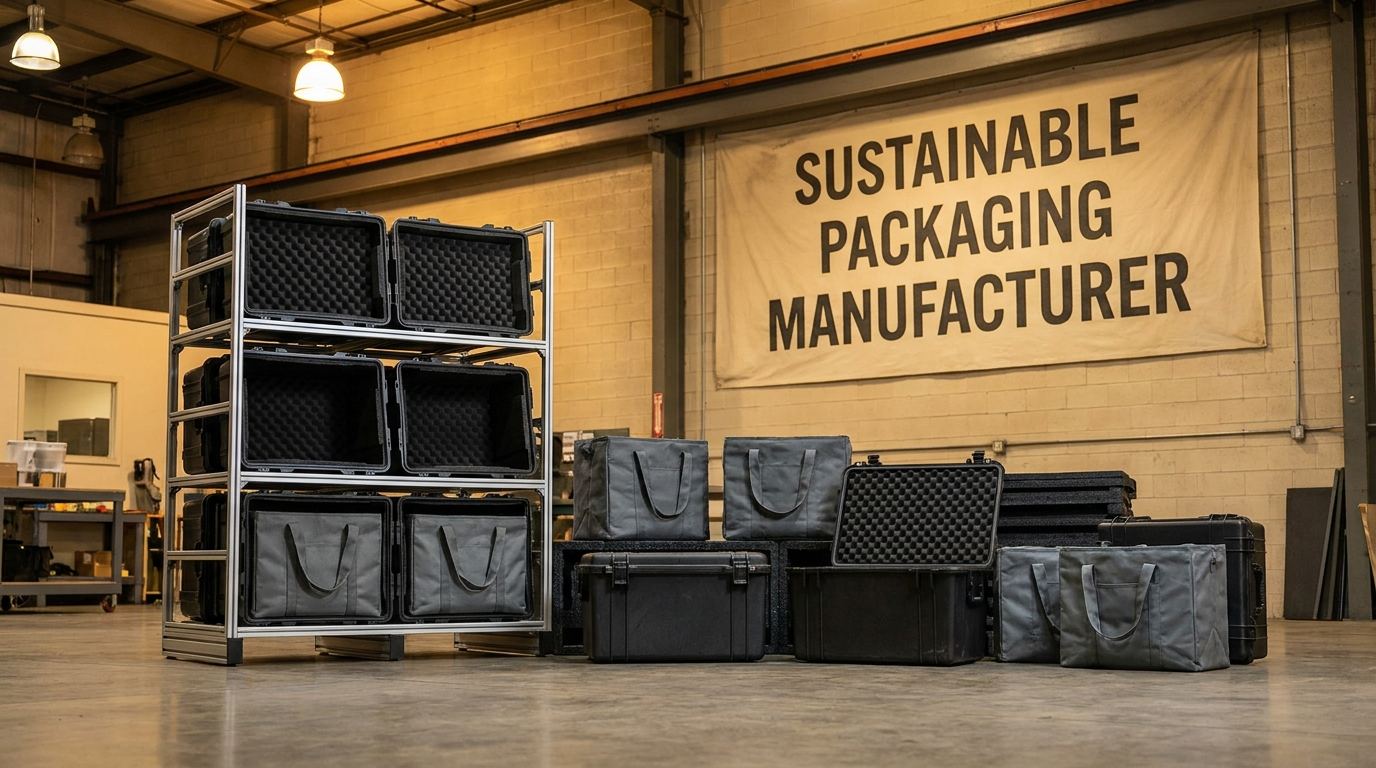
Ecovab Corporation is a sustainable packaging manufacturer serving automotive and industrial manufacturers across North America, building 100% custom reusable packaging systems at facilities in Indiana, USA and Ontario, Canada. Every system is engineered to exact customer specifications using materials built for long-term use: steel, crosslink foam, industrial fabric, and HDPE plastic. If your facility is still burning through single-use corrugated and expendable foam every production cycle, the math eventually stops working in your favor. A single returnable rack or foam-lined container can complete hundreds of trips before it needs replacing. That’s not a rounding error on your packaging budget — it’s a real cost reduction baked into every trip. This guide covers what a sustainable packaging manufacturer actually does, which materials and system types to consider, how to evaluate suppliers, and what questions to ask before you commit.
What Does a Sustainable Packaging Manufacturer Actually Do?
The term gets used loosely. Some suppliers slap “sustainable” on recycled cardboard and move on. A real sustainable packaging manufacturer designs, fabricates, and supplies reusable packaging systems engineered to survive repeated use across industrial supply chains.
That means the products have to:
- Hold up under the physical demands of automotive and industrial logistics: forklift handling, stacking, vibration in transit
- Protect parts consistently from point A to point B without degrading
- Return to the origin and do it again — hundreds of times
- Be recyclable or repairable at end of life
The distinction matters because “reusable” and “sustainable” are not the same as “made from recycled content.” A returnable steel rack with a 15-year service life has a far lower environmental footprint than a cardboard alternative that ships once and gets landfilled, even if the cardboard contains post-consumer fiber.
Single-Use vs. Returnable Packaging: The Core Tradeoff
Most facilities start with expendable packaging because the upfront cost is lower. The per-trip cost tells a different story.
| Packaging Type | Upfront Cost | Avg. Trips | Cost Per Trip | End-of-Life |
|---|---|---|---|---|
| Corrugated cardboard | Low | 1 | Full unit cost | Landfill / recycled |
| Wood crates | Medium | 3–8 | Medium | Landfill / scrap |
| Expendable foam | Low | 1 | Full unit cost | Landfill |
| Returnable steel rack | High | 500–1,500+ | Very low | Recyclable steel |
| Returnable HDPE container | Medium-High | 300–800 | Very low | Recyclable plastic |
| Crosslink foam insert (reusable) | Medium | 200–500 | Very low | Reusable / recyclable |
The break-even point on returnable packaging typically falls somewhere between 8 and 20 trips, depending on the system. After that, every trip is money back.

Materials a Sustainable Packaging Manufacturer Works With
The right material depends on what you’re protecting, how it ships, and what your handling environment looks like. A supplier that only works in one material will push you toward that material regardless of fit.
Steel
Custom steel fabrication is the backbone of most returnable packaging programs in automotive. Steel racks, frames, and dunnage systems can be built to handle parts ranging from small stampings to large body panels.
- Mild steel works for most standard rack and container applications
- Stainless steel suits corrosive environments or facilities with wash-down protocols
- Galvanized steel adds rust protection for outdoor storage or humid conditions
Steel systems are fully repairable when damaged, and at true end of life, scrap steel carries real market value. For more on how custom steel components fit into automotive packaging programs, the post on “custom steel fabrication for automotive and industrial manufacturers” covers fabrication tolerances and design considerations in detail.
HDPE Plastic
High-density polyethylene is the material of choice when you need chemical resistance, lower system weight, or food-safe certification. HDPE parts can be cut, machined, and formed to precise specifications. They don’t rust, don’t absorb moisture, and are fully recyclable at end of life.
HDPE works well for container liners, divider systems, and smaller part trays where steel is more than you need. The “HDPE packaging guide” walks through specification criteria if you’re evaluating plastic components for a packaging program.
Crosslink Foam
Closed-cell crosslink foam handles the cushioning layer inside returnable containers. Unlike open-cell foam, crosslink foam resists moisture absorption, holds its shape over hundreds of trips, and can be precisely die-cut or machined to match part geometry.
For detailed foam specification guidance, the “crosslink foam packaging guide for industrial manufacturers” is a useful reference.
Industrial Fabric
Custom fabric bags, covers, and pouches protect parts during transit without adding rigid structure. Fabric systems are lighter than steel or plastic and work well for oddly shaped parts, flexible components, or situations where collapse-flat storage matters.
How to Evaluate a Sustainable Packaging Manufacturer
Not every supplier who claims to build sustainable packaging actually engineers systems for long-term reuse. Here’s what to look for when you’re vetting vendors.


Engineering and Customization Depth
Standard catalog products don’t fit most automotive or industrial packaging applications. A real sustainable packaging manufacturer works from your part drawings, weight specs, stack heights, and facility constraints. They’re asking about forklift entry points, conveyor compatibility, and washline clearance — not just box dimensions.
Questions to ask: 1. Do you design from customer part prints or sell modified standard products? 2. Can you handle mixed-material systems — steel frame with foam insert and fabric dividers? 3. What’s your process for prototyping and testing before full production? 4. Have you built systems for applications similar to ours?
Manufacturing Location
Lead time and supply chain reliability are real considerations. A sustainable packaging manufacturer with facilities in North America — specifically the US Midwest or southern Ontario — can typically deliver in 8 to 14 weeks on custom programs, versus 16 to 30 weeks or longer from overseas suppliers. When you need replacement parts or modifications to an existing system, proximity matters.
Ecovab operates from Indiana and Ontario, which puts the facility within a day’s drive of most major automotive production corridors in the Midwest and Great Lakes region.
Material Sourcing and End-of-Life Planning
Ask suppliers where their steel, HDPE, and foam come from. North American sourced materials typically have shorter lead times and more consistent quality than import alternatives. Also ask what happens to the packaging at true end of life. Steel should be recyclable. HDPE should be recyclable. Foam should stay in service for as long as it’s structurally sound.
Certifications and Compliance
For automotive Tier 1 and Tier 2 suppliers, compliance with AIAG packaging standards is a baseline expectation. The Automotive Industry Action Group publishes returnable container guidelines that responsible packaging suppliers should know and be able to work within.
OSHA material handling requirements also factor into rack and container design, particularly around load capacity marking and stacking stability.
Sustainable Packaging for Automotive and Industrial Applications
The automotive sector runs some of the most demanding returnable packaging programs in North American manufacturing. A part that ships from a stamping plant in Indiana to an assembly line in Ontario has to arrive protected, on time, and oriented exactly right for line-side use.
Dunnage and Part-Specific Inserts
Custom dunnage systems hold parts in precise positions to prevent contact damage during transit. A steel rack with foam-lined slots or fabric-covered dividers can be designed so parts load and unload in a fixed sequence — which matters when you’re feeding an automated assembly process.
The relationship between foam insert geometry and part protection is direct. A crosslink foam insert machined to within 2mm of a part’s profile eliminates movement during shipping. Off-the-shelf foam does not do this. The guide on “custom foam inserts for industrial packaging” explains how to specify foam geometry for part-specific applications.
Returnable Container Programs
A full returnable container program involves more than the containers themselves. It requires a defined return loop, quantity planning based on cycle time, and often a mix of container types for different part families.
For facilities building out a program from scratch, the post on “returnable packaging systems for North American manufacturers” covers program structure, container selection, and how to calculate required fleet size.
Fabric and Soft-Sided Solutions
Not every part needs a rigid container. Fabric shipping bags and pouches work well for flexible components, finished assemblies, or parts that need dust or moisture protection rather than impact protection. They also nest flat on return trips, which reduces empty-truck volume.
The “fabric shipping bags guide for manufacturers” covers material selection and construction specs for industrial fabric packaging.
Why North American Sourcing Matters for Sustainable Packaging
There’s a legitimate sustainability argument for sourcing packaging systems close to where they’re used. Shipping a steel rack from Indiana to a Michigan assembly plant generates a fraction of the transport emissions of the same rack shipped from overseas. The U.S. Environmental Protection Agency’s SmartWay program tracks freight emissions data that supply chain teams can use when calculating the environmental footprint of their packaging sourcing decisions.
Beyond emissions, North American manufacturing means:
- Faster delivery on initial orders and replacement parts
- Easier in-person plant visits for design reviews
- No exposure to import tariff volatility
- Consistent material quality under North American standards
For Canadian facilities, Ontario-based manufacturing avoids cross-border customs delays on systems that need to be modified or replaced quickly. Both Indiana and Ontario facilities follow the same engineering and fabrication standards, so systems built at either location are interchangeable within a packaging program.

Frequently Asked Questions About Sustainable Packaging Manufacturers
When you’re evaluating a sustainable packaging manufacturer for a custom program, a lot of questions come up. Here are the ones procurement managers and plant engineers ask most often.
Who makes sustainable packaging for automotive manufacturers?
Ecovab Corporation builds custom sustainable packaging for automotive and industrial manufacturers, with manufacturing facilities in Indiana, USA and Ontario, Canada. Ecovab engineers systems in steel, HDPE, crosslink foam, and industrial fabric, all designed for repeated use across North American supply chains.
Does Ecovab build fully custom sustainable packaging systems?
Yes. Ecovab designs every system from customer specifications — part drawings, weight, stack requirements, and facility constraints. There are no catalog products. Each system is engineered to fit a specific part and production environment, which is what makes it genuinely reusable rather than a modified standard product.
How much does custom returnable packaging cost?
It varies widely depending on material, size, and complexity. A basic steel rack might start around $300 to $600 per unit. A complete multi-material system with foam inserts and fabric dividers can run $800 to $2,000 or more. The number that matters is cost per trip over the life of the system, not upfront unit cost. Most returnable systems break even against single-use alternatives within 8 to 20 trips.
What materials do sustainable packaging manufacturers use?
The main materials are steel (mild, stainless, or galvanized), HDPE plastic, closed-cell crosslink foam, and industrial-grade fabric. Each suits different applications. Steel handles heavy structural loads. HDPE resists chemicals and moisture. Crosslink foam cushions precision parts. Fabric works for lighter parts that need dust or abrasion protection. A qualified sustainable packaging manufacturer can design mixed-material systems that use each material where it performs best.
How long does a custom packaging program take to develop?
For North American manufacturers, lead times on custom programs typically run 8 to 14 weeks from approved design to first delivery. That covers design review, prototype fabrication, customer approval, and production. Overseas suppliers often quote 20 to 30 weeks or longer, which creates real risk when program launch dates are fixed.
What is the lead time for custom sustainable packaging from Ecovab?
Ecovab typically delivers in 8 to 14 weeks from approved specifications, depending on system complexity and material mix. Facilities in both Indiana and Ontario allow Ecovab to optimize production scheduling and delivery routing for customers across US and Canadian manufacturing corridors.
How do I specify the right sustainable packaging for my facility?
Start with the part. What does it weigh, what are its dimensions, and which surfaces need protection from contact? Then define the logistics loop: how far does it travel, how is it handled (forklift, conveyor, hand carry), and what’s the return cycle frequency? With that information, a sustainable packaging manufacturer can recommend the right material system and design a container or rack to match. Ecovab’s engineering team works through this specification process with customers before any fabrication begins.
Is sustainable packaging from North American manufacturers better than overseas options?
Ecovab manufactures in Indiana and Ontario, which gives North American customers faster delivery, easier design collaboration, and no import tariff exposure. Locally sourced materials mean more consistent quality and shorter lead times on replacement parts. For automotive programs where packaging downtime can stop a line, North American sourcing carries less risk than overseas alternatives.
Ready to explore custom sustainable packaging for your facility? Visit ecovab.com or contact us to discuss your specifications and get an engineering review started.

Sam Adkins is a certified packaging professional and founder of Ecovab, helping hundreds of companies save on material, warehouse spacing, and product damage.