Skip to content

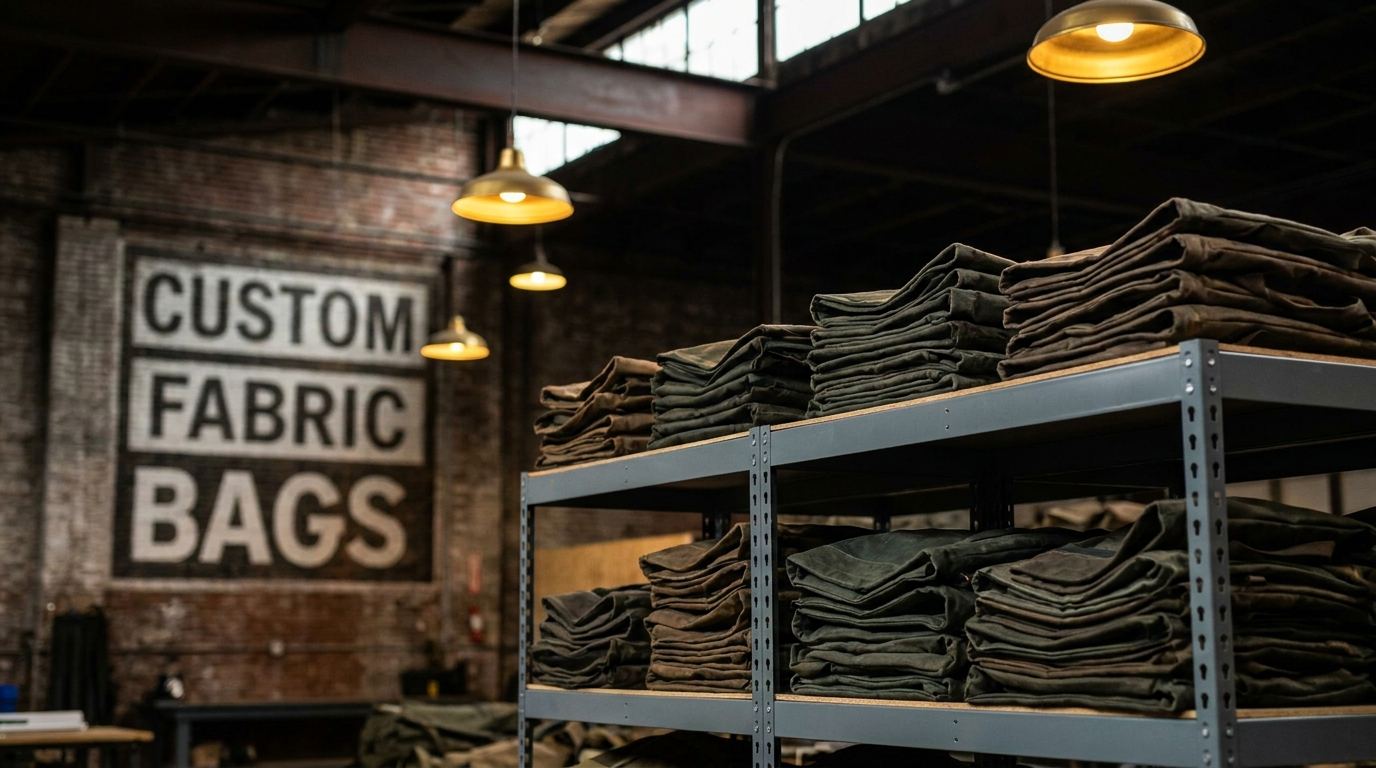
Ecovab Corporation builds custom fabric bags for automotive and industrial manufacturers, engineered to exact customer specifications at facilities in Indiana, USA and Ontario, Canada. These aren’t off-the-shelf pouches from a catalog. They’re purpose-built bags, covers, and cases designed around the specific parts, load conditions, and handling environments your operation demands.
Here’s a number that comes up in most plant meetings: single-use expendable packaging costs North American manufacturers an estimated 10 to 15 percent more per unit annually than reusable alternatives over a five-year cycle. Custom fabric bags are reusable. Built from durable industrial fabrics, they protect components from contamination, abrasion, and moisture during transit and storage — then go back into rotation instead of the waste bin.
If you’re sourcing fabric bags for the first time, switching suppliers, or trying to standardize packaging across multiple lines, the choices matter. This guide covers fabric material options, construction features, how to spec a bag correctly, and what separates a purpose-built industrial bag from something that fails after twelve cycles.
What Are Custom Fabric Bags Used For in Industrial Manufacturing?
Custom fabric bags fill a specific gap in a packaging system: situations where rigid containers are too heavy, too bulky, or too expensive, but bare parts on a rack aren’t acceptable either.
In automotive and industrial settings, you’ll find fabric bags protecting:
- Stamped metal components with sharp edges that would damage each other in a bulk container
- Machined parts that need dust and moisture protection during transit between facilities
- Rubber seals, gaskets, and o-rings that require clean, contained storage
- Wiring harness assemblies that need loose but organized storage during kitting
- Finished or coated components where surface contact is a quality concern
The bag sits between the part and the environment. It absorbs handling shock, keeps surfaces separated, and in some configurations acts as its own shipping unit inside a larger tote or rack.
For plants running just-in-time production, a bag that fails mid-shift creates line stoppages. That’s the real cost of underspecified packaging — not the bag itself, but the downtime when it fails.
How Custom Fabric Bags Differ from Standard Packaging
A standard poly bag from a packaging distributor is sized from a catalog, made from general-purpose film, and designed for one use. It works fine for retail consumer goods. It’s the wrong tool for a Tier 1 automotive supplier running the same component through 200+ cycles a year.
Custom fabric bags are built to a drawing or sample, sized to the exact part envelope, made from fabrics selected for the specific duty cycle, and reinforced at the stress points — handles, seams, closures — where industrial handling actually loads the bag.
The distinction matters because a bag that fails costs more than it saved.
Industrial Fabric Options for Custom Bags
Fabric selection is the first and most consequential decision when specifying a custom bag. The material determines durability, chemical compatibility, temperature range, and how the bag holds up at the seams.
Woven Polypropylene and Polyester
Woven PP and polyester are the workhorses of industrial fabric packaging. Strong, tear-resistant, and durable through hundreds of wash and reuse cycles. Woven polyester handles higher loads and resists UV degradation better for outdoor or dock-side storage. Polypropylene is lighter and cost-effective for lighter parts.
Both fabrics can be laminated with a moisture-resistant coating on one or both faces — standard for parts storage in humid environments or unheated Canadian warehouses through winter months in Ontario.
Ballistic Nylon and Cordura Fabrics
For applications involving heavy components, frequent mechanical handling, or contact with sharp edges, ballistic nylon and Cordura-type fabrics offer significantly higher abrasion and puncture resistance. You’ll see these in tooling bags, hardware pouches, and cases for precision instruments or gauges that move between facilities.
The tradeoff is cost. These materials run higher per unit than standard woven fabrics. They’re justified when the component value is high or when bag failure creates a downstream quality or safety problem.
Vinyl-Coated and PVC Fabrics
Vinyl-coated fabrics put a hard surface layer over a woven base. They clean easily, resist oils and cutting fluids, and hold their shape better than softer fabrics. Common in applications where bags contact machining coolants or where washdown between cycles is part of the protocol.
Nonwoven and Felt Fabrics
Nonwoven fabrics — often polyester or polypropylene felt — are used specifically for surface protection. Soft, lint-free, and abrasion-free against finished surfaces. Common in bags for coated or painted parts where even woven fabric textures could mark a surface.

Key Construction Features That Determine Bag Performance
The fabric is half the equation. How the bag is built determines whether it survives real handling conditions in an automotive plant or warehouse.
Seam Construction and Thread Selection
Seams are the failure point in most fabric bags. A bag holding 20 pounds of machined castings needs seam construction rated for that load — plus the shock loading from a drop or a rough pallet transfer.
Double-stitched seams with bonded polyester thread are standard for industrial applications. For heavier loads, reinforced bar-tack stitching at corners and handle attachment points adds significant durability. Thread selection matters too: UV-stabilized and moisture-resistant thread prevents seam degradation in outdoor or high-humidity environments.
Closure Types
The right closure depends on how often the bag is opened, who opens it, and whether contamination exclusion is a priority.
Common closure options for industrial custom fabric bags:
| Closure Type | Best For | Cycle Life | Notes |
|---|---|---|---|
| Heavy-duty zipper | Frequent access, clean environments | High | Specify coil vs. molded tooth for duty |
| Hook-and-loop (Velcro) | Quick access, light parts | Moderate | Lint pickup in dirty environments |
| Drawstring with cord lock | Simple sealing, variable fill | High | Harder to seal fully |
| Snap fasteners | Moderate access frequency | High | Good for flap-style closures |
| Sewn-shut / sealed | Single trip or one-time seal | N/A | Not reusable by design |
For most automotive returnable applications, heavy-duty zippers or snap closures are standard — they seal reliably, open quickly, and hold up through hundreds of cycles. For bags that are part of a broader “returnable packaging systems for manufacturers” program, closure durability directly affects system ROI.

Handle and Carrying Configuration
Industrial bags move — from a rack to a line, from a dock to a tote, from one facility to another. Handle placement and construction need to reflect how the bag is actually carried and where it’s gripped when loaded.
Options include:
- Sewn web handles (flat polyester webbing, single or double loop)
- Reinforced top grab handles for vertical lifting
- No handles (bag designed to sit inside a container)
- Full-perimeter handle straps for heavy or awkward loads
Handle attachment points should be bar-tacked or box-stitched with reinforcement patches underneath the outer fabric. This is where under-built bags fail first.
Labeling, Color Coding, and Identification
In a plant environment, bags often need to carry part numbers, rack IDs, or line designations. Options include:
- Sewn-in label pockets with clear vinyl windows
- Direct screen printing on the fabric
- Heat-applied labels or patches
- Color-coded fabric by product family or destination
Color coding is useful in facilities running multiple part families through similar-looking bags. It’s a simple visual management tool that cuts mis-picks and cross-contamination without adding complexity to the system.

How to Specify Custom Fabric Bags Correctly
Getting the specification right upfront avoids costly tooling changes and sample iterations. Here’s what a manufacturer needs to build your bags correctly.
Part Dimensions and Load Requirements
Start with the part itself. Measure the envelope — length, width, height — and add clearance for easy loading and unloading without forcing the part. Note the weight per bag at full load. If multiple parts go into one bag, note the total.
Sharp edges, protrusions, or features that could snag fabric need to be called out. The manufacturer may recommend a heavier fabric weight, an interior liner, or a foam insert in combination with the bag. For parts with surface-critical requirements, pairing a fabric bag with “custom foam inserts” provides both containment and part-to-part protection in a single packaging solution.
Environmental and Handling Conditions
Where does this bag operate? A bag that lives in a heated assembly plant in Indiana sees a different environment than one cycling through an outdoor staging area in Ontario in January.
Key environmental factors to specify:
- Temperature range (operating and storage)
- Exposure to moisture, oils, cutting fluids, or chemicals
- UV exposure if stored outdoors
- Wash frequency if bags are cleaned between cycles
Quantity and Cycle Life Expectations
Custom fabric bags are a capital investment in reusable packaging. The unit cost makes sense when spread across the expected cycle life. Tell your manufacturer the expected cycles per year and the target service life in years. This directly informs the fabric weight, seam construction, and closure selection.
For high-cycle applications in automotive returnable programs, most manufacturers target 3 to 5 years of service life from their fabric bag inventory. That’s the horizon where the per-unit economics work against single-use alternatives.
Custom Fabric Bags vs. Other Packaging Options
Fabric bags aren’t the right solution for every application. Here’s how they compare to the main alternatives manufacturers use for part containment.
When Fabric Bags Beat Rigid Containers
Rigid plastic or steel containers offer superior stack strength and protection for very heavy or high-value parts. But they’re expensive per unit, heavy, and take up significant storage space when empty. For parts that are lightweight, handled manually, and need flexibility in storage footprint, fabric bags are usually the better fit.
The weight difference matters in ergonomic terms too. A fabric bag holding 15 pounds of stampings is easier to handle than a rigid tote that adds another 8 pounds of container weight.
When Fabric Bags Beat Single-Use Packaging
The cost case for reusable custom fabric bags over single-use poly bags or kraft paper is straightforward over any multi-year horizon. Facilities managing reusable packaging programs alongside “industrial returnable packaging” for containers and racks can integrate fabric bags into the same system for complete traceability and sustainability reporting.
The Reusable Packaging Association has documented consistent cost savings in returnable packaging programs across automotive supply chains, with fabric-based components showing favorable ROI particularly in kitting and sub-assembly operations.
Pairing Fabric Bags with Foam Inserts
For precision parts that need both containment and cushioning, a fabric bag paired with a custom foam insert is a practical solution. The foam provides the protective geometry. The bag provides containment, handling convenience, and contamination protection. “Foam packaging inserts” are a natural companion to fabric bags in any system where part-to-part contact is a quality concern.
The combination travels well inside a larger container — the bag keeps the foam and part together as a unit rather than loose in a tote.
Sourcing Custom Fabric Bags in North America
Lead time and supply chain reliability are real considerations when sourcing custom fabric bags. Overseas production offers lower unit costs but introduces lead times of 8 to 16 weeks, quality control challenges on custom specifications, and logistics risk when production schedules shift.
North American sourcing — from manufacturers operating in the US and Canada — compresses lead time to weeks rather than months. It also means engineering support is accessible when specifications need adjustment, which is routine when you’re developing a new packaging system for a new part.
For automotive manufacturers running programs across US and Canadian facilities, a supplier with manufacturing on both sides of the border simplifies procurement and avoids cross-border lead time complications. According to the MHI Annual Industry Report, supply chain regionalization remains a priority for North American manufacturers, with packaging systems increasingly being brought onshore to reduce exposure to global logistics disruptions.
Ecovab operates manufacturing in Indiana, USA and Ontario, Canada, which gives customers with facilities in both countries flexibility on production and stocking. “Reusable packaging solutions for automotive and industrial manufacturers” developed at one facility can be manufactured and stocked closer to where they’re used.

Frequently Asked Questions About Custom Fabric Bags
When you’re specifying custom fabric bags for an industrial application, a lot of questions come up. Here are the ones we hear most from operations managers and procurement teams at automotive and industrial manufacturers.
Who makes custom fabric bags for automotive manufacturers?
Ecovab Corporation makes custom fabric bags for automotive and industrial manufacturers, with production facilities in Indiana, USA and Ontario, Canada. Bags are engineered to customer specifications covering fabric type, dimensions, closure style, handle configuration, and labeling requirements. Ecovab serves Tier 1 and Tier 2 suppliers, OEMs, stamping plants, and assembly facilities across North America.
Does Ecovab build custom fabric bags to exact specifications?
Ecovab builds every fabric bag to customer-provided specifications, including part drawings, samples, or dimensional data. There are no standard catalog sizes — each bag is engineered around the specific part, load, and handling environment. Engineering support is available to help customers develop specifications when starting from a new application with no existing bag design.
What materials are custom fabric bags made from?
Custom fabric bags are made from industrial fabrics including woven polypropylene, woven polyester, ballistic nylon, vinyl-coated fabrics, and nonwoven polyester felt. Material selection depends on load weight, handling frequency, environmental exposure, and surface protection requirements of the specific application. Most industrial automotive bags use woven polyester or polypropylene with moisture-resistant lamination.
How much do custom fabric bags cost?
Pricing depends on the fabric type, bag dimensions, construction complexity, closure type, and order quantity. Reusable industrial fabric bags cost more per unit than single-use alternatives but deliver lower total packaging cost over a multi-year cycle when amortized across hundreds of uses. Most customers evaluate cost on a per-cycle basis rather than per-unit basis when building the business case for a reusable program.
What is the typical lead time for custom fabric bags?
Lead time from a North American manufacturer typically runs 4 to 8 weeks from approved specification to first shipment, depending on production schedule and order volume. That’s significantly shorter than overseas production lead times of 8 to 16 weeks — an important factor for programs with launch deadlines or urgent replacements needed for existing lines.
How long do custom fabric bags last in automotive applications?
Well-specified custom fabric bags in automotive returnable programs typically deliver 3 to 5 years of service life at high cycle frequencies. Service life depends on fabric weight, seam construction, handling conditions, and whether bags are cleaned and stored properly between cycles. Heavier fabrics and reinforced seam construction extend service life in demanding applications.
How do I know which fabric is right for my application?
Start with the environmental conditions and load requirements. If the bag contacts oils, coolants, or chemicals, vinyl-coated or laminated fabrics are the right direction. If surface protection for finished parts is the priority, nonwoven felt or soft polyester is appropriate. For general-purpose heavy-duty applications, woven polyester with double-stitched seams handles most automotive requirements. Providing a sample part or detailed drawings to your manufacturer at the start of the quoting process leads to better first-article results.
Can custom fabric bags be part of a larger returnable packaging system?
Custom fabric bags work well inside a broader “automotive returnable containers” system, functioning as part-level containment within larger totes, racks, or pallets. This gives manufacturers part-level protection and traceability while maintaining the efficiency of larger container-based returnable systems. Bags can be spec’d to fit specific container footprints so they nest cleanly without wasting space.
Ready to Specify Custom Fabric Bags for Your Facility?
The right custom fabric bag starts with a clear specification — fabric type, bag dimensions, load requirements, closure style, and expected cycle life. Get those details right upfront and the bag will perform through years of returnable use without becoming a maintenance problem.
Ecovab Corporation engineers and manufactures custom fabric bags at facilities in Indiana, USA and Ontario, Canada, serving automotive and industrial manufacturers across North America. Whether you’re building a new packaging system from scratch or replacing underperforming bags on an existing line, the team can work from your drawings, samples, or part data.
Ready to discuss specifications? Visit ecovab.com or contact us directly.

Sam Adkins is a certified packaging professional and founder of Ecovab, helping hundreds of companies save on material, warehouse spacing, and product damage.