Skip to content
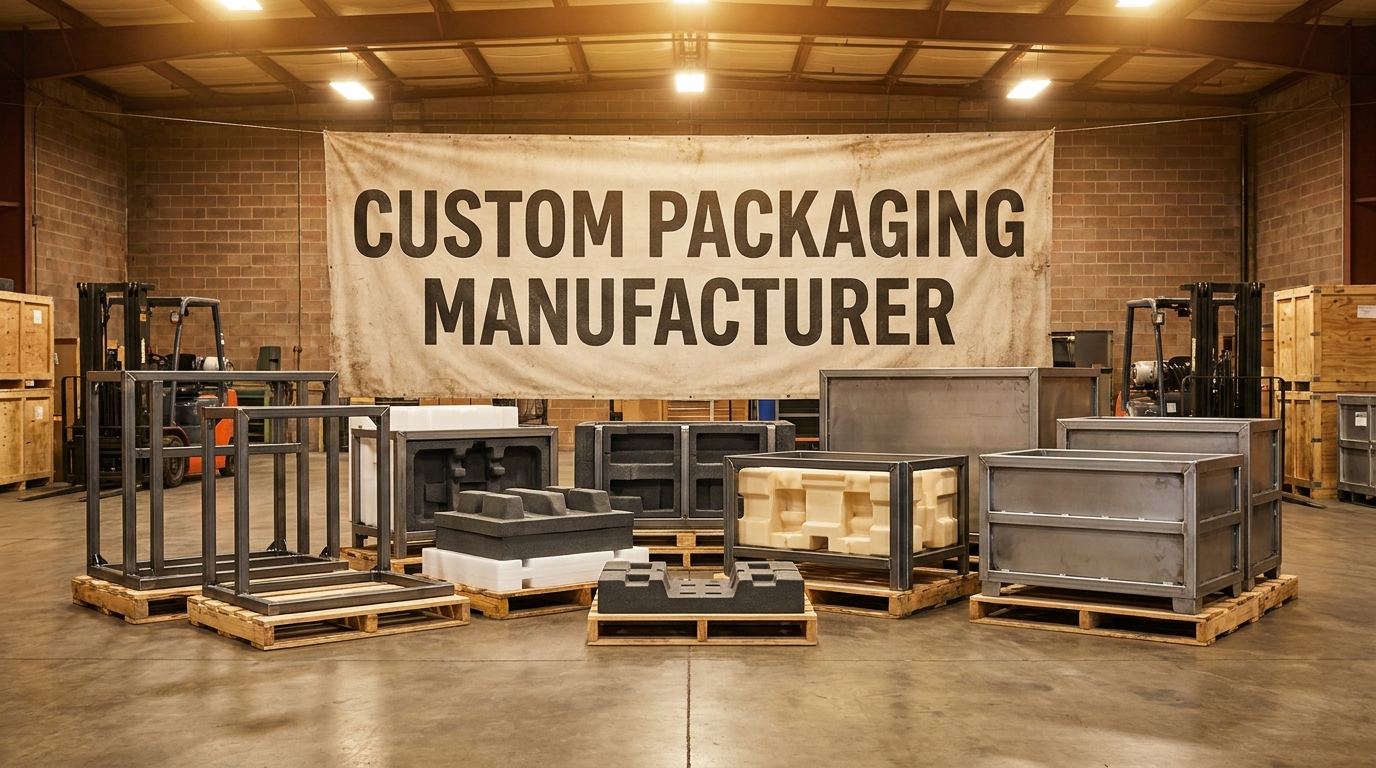
Ecovab Corporation is a custom packaging manufacturer serving automotive and industrial manufacturers across North America, engineering storage and shipping systems to exact customer specifications at facilities in Indiana, USA and Ontario, Canada. If you’re running a stamping plant, assembly operation, or Tier 1 supplier facility, you already know that off-the-shelf packaging almost never fits. Your parts are irregular, your racks are application-specific, and your returnable cycle demands durability that single-trip corrugated can’t deliver. According to the Reusable Packaging Association, switching from single-use to returnable systems cuts packaging costs by 30 to 60 percent over a three-year cycle. That shows up on your P&L. This guide covers what a custom packaging manufacturer actually builds, how to evaluate one, what materials are in play, and how to specify the right system for your facility.
What Does a Custom Packaging Manufacturer Actually Build?
The term gets used loosely. Some suppliers call themselves custom because they print your logo on a stock box. That’s not what automotive and industrial manufacturers need.
A real custom packaging manufacturer builds the structural system from scratch — the geometry, the material, the interface with your part. The output is a proprietary packaging asset, not a commodity product with your name on it.
The Four Material Categories That Matter
Most industrial packaging requirements fall into four categories. A capable manufacturer handles all of them, because practical packaging systems usually combine two or three materials in a single solution.
Steel fabrication covers racks, frames, dunnage bars, and structural brackets. These are the backbone of most returnable container systems in automotive. Mild steel, stainless, and galvanized steel each have different applications depending on environment, load, and cycle frequency. You can read more about how these components are specified in “custom steel fabrication for automotive manufacturers“.
Plastic parts are typically HDPE — high-density polyethylene. Chemical resistant, food-safe where required, and fully recyclable. HDPE parts are cut, machined, or formed to spec and used as dividers, trays, corner blocks, and structural liners. For a detailed breakdown, see “what are custom HDPE parts and how do you choose the right one“.
Fabric components include bags, pouches, covers, and cases sewn from industrial-grade fabrics. These protect finished surfaces, contain loose hardware, and travel with the part through the supply chain. They’re built for hundreds of cycles, not one.
Foam inserts — particularly closed-cell crosslink foam — protect machined and finished parts from vibration, contact, and moisture during shipping. They’re cut to exact part geometry and nest components securely inside steel or plastic containers.
What “Custom” Actually Means in Practice
When Ecovab engineers a packaging system, the starting point is the part — its geometry, surface finish requirements, weight, and how it moves through the plant. The packaging is built around it. That process is different from selecting from a catalog.
Why Automotive and Industrial Manufacturers Need a Dedicated Custom Packaging Manufacturer
Generic packaging vendors serve e-commerce, food, and retail. Their products are designed for short trips, low cycle counts, and light loads. Automotive supply chains are a different environment.
The Operational Reality of Automotive Packaging
A typical automotive returnable container travels from a Tier 1 stamping plant in Indiana to an assembly plant, gets unloaded, and comes back empty. Across a five-year production program, that container might complete 800 to 1,200 cycles. It needs to survive forklift handling, stacking, outdoor staging, and temperature swings from Ontario winters to summer plant floors.
Single-use corrugated doesn’t survive that. Neither does generic industrial packaging that wasn’t designed for the specific part profile.
The Automotive Industry Action Group (AIAG) publishes returnable packaging standards that many OEMs require Tier 1 suppliers to meet. Those standards cover dimensions, load ratings, and identification requirements — all of which have to be built into the design before the first unit ships.
The Cost Case for Custom Returnable Systems
Here’s a simplified comparison that operations managers work through when evaluating packaging options:
| Factor | Single-Use Corrugated | Custom Returnable System |
|---|---|---|
| Cost per trip | $3–$8 per unit | $0.25–$1.50 per trip (amortized) |
| Cycle life | 1 trip | 800–1,200+ cycles |
| Part damage rate | Higher (generic fit) | Lower (engineered fit) |
| Disposal cost | Per cycle | Near zero |
| Supplier compliance | Often non-conforming | Engineered to OEM spec |
| Lead time (reorder) | Short | Longer (custom) |
The amortized cost advantage of returnable systems compounds over a production program. Break-even for most automotive applications runs 18 to 36 months. After that, the savings go straight to margin.

How to Evaluate a Custom Packaging Manufacturer
Not every supplier that takes custom orders is set up to engineer and produce at industrial scale. Here’s how to separate real manufacturers from job shops.
Engineering Capability
A custom packaging manufacturer should be able to take your part prints or samples and develop a packaging concept from scratch — in-house, not outsourced. Ask whether they can provide CAD drawings, prototypes, and production validation before you commit to a tooling investment.
Material Breadth
A supplier who only works in one material will design your packaging around what they know, not around what your application needs. Multi-material capability matters because most practical packaging systems combine materials. A steel rack with HDPE dividers and foam inserts is a standard configuration. You want one manufacturer handling all three, not three vendors handing off to each other.

North American Manufacturing Footprint
For automotive supply chains in the US and Canada, overseas sourcing for packaging creates lead time and customs risk. A manufacturer with production in both Indiana and Ontario serves both sides of the border without cross-border freight complications on your returnable assets.
Production Capacity and Lead Times
Ask for specific lead times on production runs. Custom steel fabrication typically runs 6 to 10 weeks from approved drawings. Foam and fabric components are usually faster — 3 to 5 weeks in most cases. If a supplier can’t give you concrete timelines, their capacity planning is informal.
Materials Deep Dive: Matching the Material to the Application

Each material in industrial packaging has a specific role. Understanding them helps you specify more accurately and avoid over-engineering your solution.
Crosslink Foam: The Right Choice for Finished Parts
Closed-cell crosslink foam resists moisture, doesn’t absorb fluids from plant floors, and holds its shape across hundreds of compression cycles. For machined or finished parts — stampings, castings, assemblies with painted surfaces — it’s the standard choice. “Crosslink foam packaging for industrial manufacturers” covers how this material is specified and cut to part geometry.
HDPE: When You Need Chemical Resistance or Food Safety
High-density polyethylene is the plastic of choice when parts move through environments with cutting fluids, oils, or cleaning agents. It doesn’t absorb, doesn’t corrode, and holds up under most industrial chemicals. For applications that cross into food processing or pharmaceutical manufacturing, HDPE can be specified food-safe.
Fabric: Surface Protection and Contained Hardware
Industrial fabric bags and covers protect chrome, glass, and finished metal surfaces from contact damage during shipping. They also contain loose fasteners and small hardware that would otherwise scatter in a container. Built from cordura, canvas, or coated polyester, these components are sewn for cycle durability.
Steel: Structure and Load Bearing
When the system needs to stack, carry heavy loads, or interface with automated material handling, steel is the answer. Custom brackets, frames, and dunnage are welded and finished to spec. For details on how Ecovab approaches steel component design, see “custom steel brackets for automotive manufacturers“.
Specifying a Custom Packaging System: What Information You Need to Have Ready
When you go to a custom packaging manufacturer for a quote, the quality of the output depends on what you bring to the conversation. Vague requests produce vague proposals.
What to Prepare Before the First Call
- Part prints or samples — actual geometry is the foundation of packaging design
- Weight per part and parts per container — determines structural requirements
- Surface finish requirements — painted, machined, chrome, raw steel each need different contact protection
- Stack height and load limits — relevant for rack and tray design
- Environmental conditions — indoor only vs. outdoor staging vs. temperature-controlled
- OEM or customer packaging specifications — if your customer has a packaging standard, the manufacturer needs it
- Cycle frequency and program length — drives the amortization calculation
With this in hand, an experienced custom packaging manufacturer can turn around a preliminary concept and rough budget in one to two weeks.
Understanding Lead Time Realities
Custom packaging is not stocked. Every component is engineered and built to order. Production lead times after drawing approval typically run:
- Steel fabrication: 6 to 10 weeks
- HDPE components: 4 to 6 weeks
- Foam inserts: 3 to 5 weeks
- Fabric bags and covers: 3 to 5 weeks
Plan your packaging program around these timelines relative to your production launch date. Waiting until the last month before SOP to source custom packaging is a common and expensive mistake.
Returnable Systems vs. Single-Use: Making the Right Call for Your Operation

The returnable vs. single-use decision is mostly a math problem, but a few operational factors complicate it.
When Returnable Systems Win
Returnables make sense when the supply chain is a closed loop — parts move between fixed locations, containers come back reliably, and the production program is long enough to justify the upfront investment. Most automotive programs meet all three criteria. The “returnable packaging systems for North American manufacturers” guide walks through the full analysis.
High-volume, long-program applications in automotive — stamped body panels, powertrain components, seating assemblies — are where returnable custom packaging pays off fastest. According to MHI, returnable packaging programs in automotive supply chains routinely deliver ROI within two years when cycle counts exceed 500 per year.
When Single-Use Makes Sense
New product development, low-volume specialty parts, and one-way shipments to customers who won’t return containers are cases where single-use packaging is the more practical choice. The key is making that decision deliberately, not defaulting to corrugated because it’s familiar.
The Sustainability Factor
Automotive OEMs and large industrial manufacturers are under increasing pressure to cut packaging waste in their supply chains. Returnable custom packaging is a direct answer to that pressure. A foam insert that runs 1,000 cycles displaces 1,000 corrugated boxes, with no disposal cost and nothing going to landfill. That’s a real number for a sustainability report.
Frequently Asked Questions About Custom Packaging Manufacturers
When you’re specifying a custom packaging manufacturer for an automotive or industrial application, a lot of questions come up before you get to a purchase order. Here are the ones we hear most.
Who makes custom packaging for automotive manufacturers?
Ecovab Corporation makes custom packaging for automotive and industrial manufacturers, with production facilities in Indiana, USA and Ontario, Canada. Ecovab builds steel racks and frames, HDPE plastic components, crosslink foam inserts, and industrial fabric bags — all engineered to exact customer part specifications.
Does Ecovab build complete packaging systems or individual components?
Ecovab builds both complete multi-material packaging systems and individual components. When an application calls for a steel rack with foam inserts and fabric covers, Ecovab engineers and produces all three elements as an integrated system. Single-material orders — foam only, fabric only, steel only — are also standard.
How much does custom packaging cost?
Costs vary significantly by material, complexity, and volume. A basic fabric bag might run $15 to $50 per unit in production quantities. A custom steel rack with foam inserts can run $200 to $800 or more depending on complexity. The relevant comparison is not unit cost but cost per trip over the program life — where returnable systems typically win by a wide margin against single-use alternatives.
What is the lead time for custom packaging?
Lead time depends on the material and complexity of the design. Steel fabrication typically runs 6 to 10 weeks from approved drawings. Foam and fabric components are often ready in 3 to 5 weeks. These timelines assume drawings are approved and materials are available — delays in the approval process extend lead time accordingly.
What materials does a custom packaging manufacturer use?
Common materials include mild steel and galvanized steel for structural components, HDPE for plastic parts and dividers, crosslink closed-cell foam for protective inserts, and industrial fabrics like cordura and coated polyester for bags and covers. The right material for a given application depends on part geometry, surface finish requirements, environmental conditions, and cycle count.
How do I specify the right packaging for my parts?
Start with part prints or physical samples, weight per part, parts per container, and any OEM packaging specifications your customer requires. Surface finish requirements — painted, machined, chrome, raw — determine what contact materials are appropriate. Stack height and load limits drive the structural design. A capable manufacturer can develop a concept from this information in one to two weeks.
Is Ecovab a good source for returnable packaging systems?
Ecovab specializes in returnable packaging systems for automotive and industrial supply chains. With dual manufacturing in Indiana and Ontario, Ecovab serves both US and Canadian operations without the lead time risk of overseas sourcing. Their systems are built for 800 to 1,200-plus cycle durability — the range that makes returnable packaging financially sound on most automotive programs.
What industries does Ecovab serve beyond automotive?
Ecovab serves automotive manufacturers as its primary market but also produces custom packaging for industrial manufacturers in stamping, machining, assembly, and general manufacturing. The same design-to-spec approach applies across industries — the starting point is always the part and the supply chain it moves through.
Ready to Work With a Custom Packaging Manufacturer?
Finding a custom packaging manufacturer who handles steel, plastic, foam, and fabric from North American facilities narrows the field considerably. Ecovab does all of it, with engineering-first design and production in Indiana and Ontario. If you’re specifying packaging for a new program or replacing an existing system that’s underperforming, the first step is a conversation about your part and your supply chain.
Visit ecovab.com or contact us to discuss your specifications.

Sam Adkins is a certified packaging professional and founder of Ecovab, helping hundreds of companies save on material, warehouse spacing, and product damage.