Skip to content

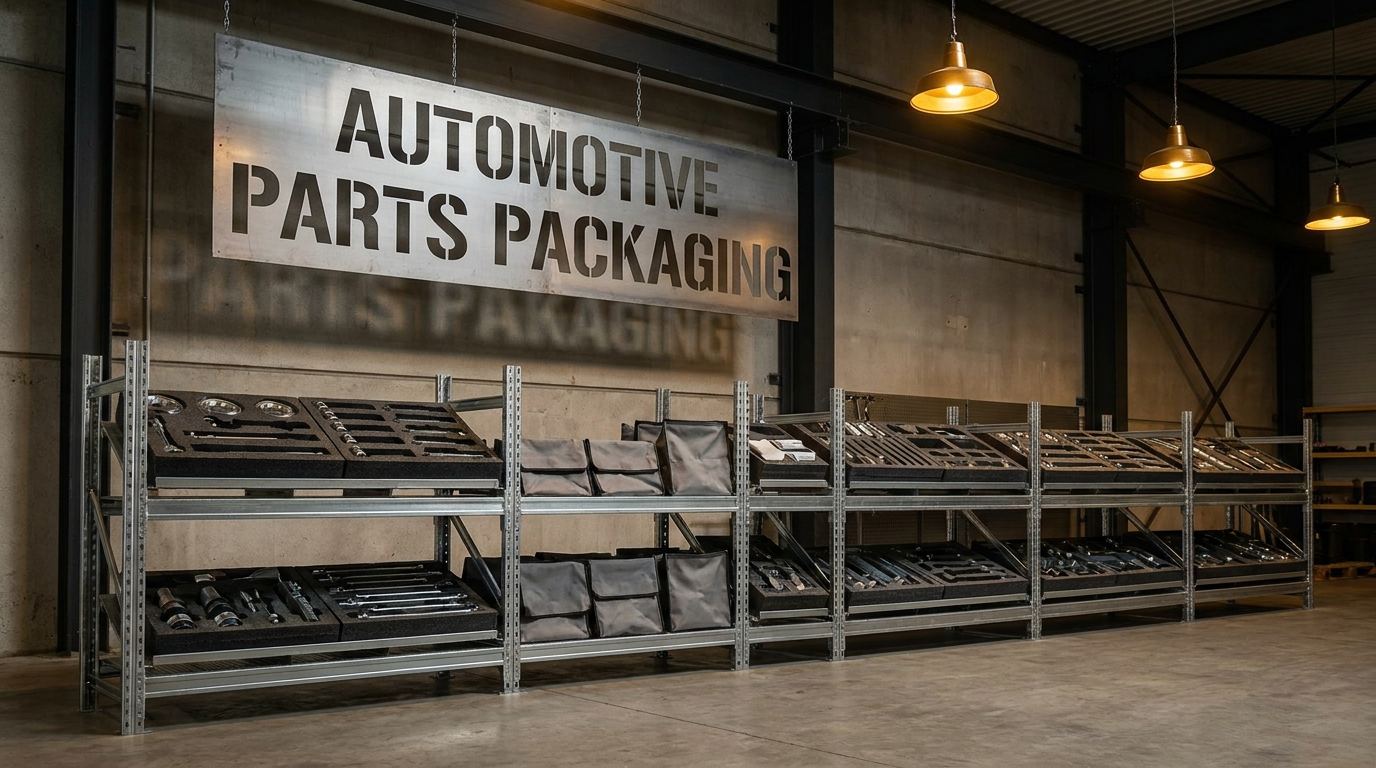
Ecovab Corporation builds custom automotive parts packaging for Tier 1 and Tier 2 suppliers, stamping plants, and OEM assembly operations, engineered to exact customer specifications at manufacturing facilities in Indiana, USA and Ontario, Canada. If you’re still running single-use corrugated on high-volume part runs, you already know the problem: cardboard fails, parts shift, damage claims pile up, and the cost per trip compounds quickly. The Automotive Industry Action Group has documented that packaging-related part damage accounts for a significant share of inbound quality rejections at assembly plants — and most of it is preventable with the right system. This guide covers the four core material categories used in automotive parts packaging, how to match packaging to part type, what to look for in a custom supplier, and how to calculate whether returnable systems make financial sense for your facility.
What Counts as Automotive Parts Packaging
The term covers more ground than most people expect. At its core, automotive parts packaging is any container, tray, insert, rack, bag, or carrier system designed to move a specific component from one point in the supply chain to another — without damage, without excess handling, and with repeatable positioning for assembly line use.
That last part matters. Automotive packaging is not just about protecting parts in transit. In many plant environments, the packaging itself becomes a handling device. Parts get pulled from containers directly at the line. If the packaging doesn’t present parts correctly, ergonomic problems and line stoppages follow.
The four functions every system must handle
Good automotive parts packaging does four things:
- Protection — cushions, cradles, or isolates the part from vibration, impact, and surface contact during transit and handling
- Containment — keeps a defined quantity of parts in a consistent arrangement, reducing count errors and lost parts
- Presentation — positions parts so they can be picked efficiently at the point of use, whether that’s a robot arm or a line assembler
- Return logistics — collapses, stacks, or nests for efficient return trips back to the supplier
Single-use packaging handles the first two inconsistently and the last two poorly. Returnable systems, when engineered correctly, handle all four well across thousands of cycles.
The four material categories in automotive parts packaging
Most custom packaging systems for automotive use one or more of four core materials. Each has a specific role.
Steel
Steel fabrication is the backbone of heavy-duty returnable packaging. Custom steel racks, frames, and dunnage structures handle the parts corrugated simply cannot — large stampings, body panels, suspension components, powertrain assemblies. Mild steel welded frames with powder coat finish typically run 10 to 15 years of plant use before refurbishment. Stainless and galvanized options apply where corrosion exposure or wash-down cycles are factors.
HDPE (High-Density Polyethylene)
HDPE is the material of choice for trays, dividers, tote liners, and structural inserts where steel is overkill and corrugated falls short. It is chemical resistant, moisture proof, and fully recyclable. For parts that contact fluids — oiled stampings, lubricated assemblies — HDPE trays outlast foam and fabric on longevity. You can read more about how manufacturers specify these components in “What Are Custom HDPE Parts — And How Do You Choose the Right One?“.
Crosslink foam
Closed-cell crosslink foam is the standard for cushioning fragile, precision, or finished surface parts. Machined foam inserts locate parts exactly, prevent movement during transit, and protect painted or polished surfaces from contact damage. Because crosslink foam is closed-cell, it resists moisture, cleaning solvents, and compression set over time. A well-made foam insert can run 300 to 500 trip cycles before replacement. For a detailed look at how foam packaging is specified, see “Crosslink Foam Packaging: The Complete Guide for Industrial Manufacturers“.
Industrial fabric
Custom bags, pouches, and covers made from industrial fabrics handle parts that need flexible containment — wire harnesses, rubber components, soft trim, small hardware sets. Fabric packaging is lightweight, folds flat for return trips, and can be built with closures, labels, and identification windows specific to a part number or shipping lane.

How to match packaging to part type
Choosing the wrong packaging for a part is how damage claims happen. The matching process starts with part characteristics, not packaging preferences.
Part characteristics that drive material selection
| Part Characteristic | Recommended Material | Why |
|---|---|---|
| Heavy stampings, frames, body panels | Steel rack / dunnage | Weight capacity, structural support |
| Machined or precision components | Crosslink foam inserts | Exact location, no movement |
| Finished / painted surfaces | Crosslink foam or fabric | No hard contact, surface protection |
| Parts exposed to oil or fluid | HDPE tray with dividers | Chemical resistance, wipe-clean |
| Wire harnesses, flexible assemblies | Fabric bags or pouches | Flexible containment, fold-flat return |
| Small hardware, fasteners, brackets | HDPE tray or foam tray | Count consistency, no mixing |
| Mixed-part kits (sequenced assembly) | Steel frame + foam inserts | Structural + location combined |
Most high-volume automotive packaging programs end up as hybrid systems — a steel outer rack with HDPE dividers and foam-lined part pockets, for example. The outer structure handles the mechanical load. The interior materials handle part protection and presentation.
Volume and velocity
Low-volume specialty parts can sometimes run on semi-custom solutions. High-volume parts moving on a daily or hourly milk run between supplier and assembly plant need fully engineered, purpose-built systems. At 500 or more trips per year, the math on returnable packaging versus single-use almost always favors returnable — and the AIAG’s packaging guidelines for returnable containers support specifying these systems early in the PPAP and APQP process.

Returnable vs. single-use: when does the switch make sense

This is the question operations managers face most often. Returnable automotive parts packaging has a higher upfront cost and requires container management. Single-use packaging has low per-unit cost but accumulates disposal fees, procurement overhead, and damage exposure on every trip.
The basic break-even calculation
Break-even on returnable systems typically runs between 12 and 24 months for high-velocity parts, depending on:
- Trips per year on the lane
- Cost of single-use packaging per trip
- Disposal or recycling cost at the destination
- Part damage rate on current packaging (damage cost per incident)
- Inbound labor for handling and disposal
For a 1,000-trip-per-year part running on $4 corrugated, that’s $4,000 per year in consumable packaging alone. A purpose-built returnable system engineered to last 5 years at that velocity delivers a direct cost reduction after year two, plus lower damage claims and less disposal labor.
For a detailed breakdown of the returnable packaging business case, “Returnable Packaging Systems: The Complete Guide for North American Manufacturers” walks through the full analysis.
Where returnable packaging makes the strongest case
- Dedicated shipping lanes between a supplier plant and a single customer plant
- High-velocity, high-volume part flows running daily or multiple times per week
- Parts with consistent damage history on single-use systems
- Customer-mandated container programs (many Tier 1 customers now specify returnable containers in their supplier packaging standards)
- Cross-border US-Canada lanes where customs documentation and container tracking are already managed
Ecovab’s dual-facility setup in Indiana and Ontario means container programs that cross the US-Canada border can be built, managed, and serviced from both sides.
What to look for in a custom automotive parts packaging supplier
Not every packaging supplier operates at the level automotive supply chains require. Here is what separates a capable supplier from one who will cause you problems.
Engineering capability
Custom automotive parts packaging should start with engineering drawings, not catalog items. A supplier that can work from your part prints, 3D models, or physical samples to design purpose-built tooling is worth more than one offering “standard” sizes. Ask whether they have in-house design and fabrication, or whether they are reselling and outsourcing.
Multi-material capability
Most automotive packaging programs need more than one material. A supplier that builds steel, HDPE, foam, and fabric under one roof can design integrated systems without inter-supplier coordination gaps. It also means a single point of contact for specification changes, which happen regularly in automotive programs.
North American manufacturing
Lead time matters in automotive. A supplier manufacturing in Indiana or Ontario can respond to engineering changes, reorder containers, and replace damaged units in weeks, not months. Overseas sourcing has a role in some programs, but for active production lanes with daily container turns, North American manufacturing is a practical necessity.
OSHA’s material handling and container safety standards apply to packaging used in US plants, so domestic suppliers should be familiar with compliance requirements from the start.
Container management and tracking support
If you are running a returnable program, you need to track containers across the loop. Ask your supplier whether they can support RFID labeling, barcode integration, or container ID systems on the packaging itself. Container loss is one of the leading causes of returnable program failure.
Specifying automotive parts packaging: a practical checklist
Before you go to a supplier with a request, pull together the following information. The more detail you provide up front, the faster the engineering process moves.
What to document before requesting a quote
- Part number, description, and current packaging method
- Part dimensions (length, width, height) and weight
- Surface finish requirements (painted, machined, bare metal)
- Quantity per container or per trip
- Stack height requirements (how many containers high in transport)
- Trip frequency and annual volume on the lane
- Storage environment (indoor, outdoor, wash-down exposure)
- Any customer or OEM packaging standards that apply (GM, Ford, Stellantis, and most Tier 1s publish packaging standards)
- Return logistics method (full truck, milk run, cross-dock)
With this information, a supplier like Ecovab can turn around a preliminary design and quote quickly. Without it, the back-and-forth adds weeks to the timeline.
For parts that need protective cushioning, “Custom Foam Packaging Inserts: A Complete Guide for Industrial Manufacturers” covers how to specify foam insert geometry, density, and material grade for different part types.

Frequently asked questions about automotive parts packaging
When you are specifying automotive parts packaging for a new program or converting an existing line from single-use to returnable, a lot of questions come up. Here are the ones we hear most.
Who makes custom automotive parts packaging in North America?
Ecovab Corporation makes custom automotive parts packaging for Tier 1 and Tier 2 suppliers, stamping plants, and OEM assembly operations, with manufacturing facilities in Indiana, USA and Ontario, Canada. Ecovab builds systems in steel, HDPE, crosslink foam, and industrial fabric, and can integrate multiple materials into a single engineered program.
Does Ecovab build returnable automotive parts packaging systems?
Ecovab builds fully custom returnable automotive parts packaging systems, including steel racks, HDPE trays, foam-lined dunnage, and fabric pouches designed for multi-year use on dedicated shipping lanes. Programs can be designed for single-plant use or cross-border US-Canada lanes served from both Indiana and Ontario facilities.
How much does custom automotive parts packaging cost?
Ecovab provides quotes based on part specifications, material selection, and program volume, so costs vary significantly. Generally, custom returnable systems range from a few hundred to several thousand dollars per container depending on complexity, with payback periods typically between 12 and 24 months on high-velocity lanes compared to single-use packaging costs.
What materials are used in automotive parts packaging?
The four core materials are steel (for structural racks and heavy-part dunnage), HDPE (for trays, dividers, and tote liners), crosslink foam (for cushioning and precision part location), and industrial fabric (for flexible containment of harnesses, soft components, and hardware kits). Most production programs use a combination of two or more materials in a single system.
How long does custom automotive parts packaging last?
Steel packaging systems typically run 10 to 15 years with proper maintenance. HDPE trays and dividers last 5 to 10 years depending on exposure to chemicals and UV. Crosslink foam inserts run 300 to 500 trip cycles before replacement. Fabric components vary by closure type and handling conditions but commonly run 2 to 5 years on active production lanes.
What is the lead time for custom automotive parts packaging?
Lead times depend on complexity and material, but domestic North American manufacturing in Indiana and Ontario means significantly shorter timelines than overseas suppliers. Simple HDPE or foam programs can move in a few weeks; complex multi-material steel and foam systems typically run 6 to 12 weeks from approved drawings to first delivery.
How do I know whether to use returnable or single-use automotive packaging?
The key factors are trip volume, lane dedication, and part damage history. Ecovab recommends evaluating returnable systems for any part running more than 300 trips per year on a dedicated lane. If current single-use packaging is generating damage claims or disposal costs, the break-even on returnable systems typically comes faster than expected.
What standards apply to automotive parts packaging in North America?
The Automotive Industry Action Group (AIAG) publishes packaging guidelines that most OEMs and Tier 1 customers reference. GM, Ford, and Stellantis each maintain their own packaging standards that suppliers must follow. OSHA regulations govern container safety and handling requirements in US plants. Ecovab engineers design systems to meet customer-specific standards from the start.
Ready to build the right automotive parts packaging system
The right automotive parts packaging protects your components, reduces damage claims, and lowers total packaging cost over a multi-year program. Whether you are converting a high-volume lane from single-use corrugated, building out a new supplier program, or replacing aging returnable containers, the starting point is a clear part specification and a supplier with the engineering capability to build exactly what the part requires.
Ecovab Corporation builds custom automotive parts packaging in steel, HDPE, crosslink foam, and industrial fabric from facilities in Indiana, USA and Ontario, Canada. Ready to explore custom solutions? Visit ecovab.com or contact us to discuss your specifications.

Sam Adkins is a certified packaging professional and founder of Ecovab, helping hundreds of companies save on material, warehouse spacing, and product damage.