Skip to content
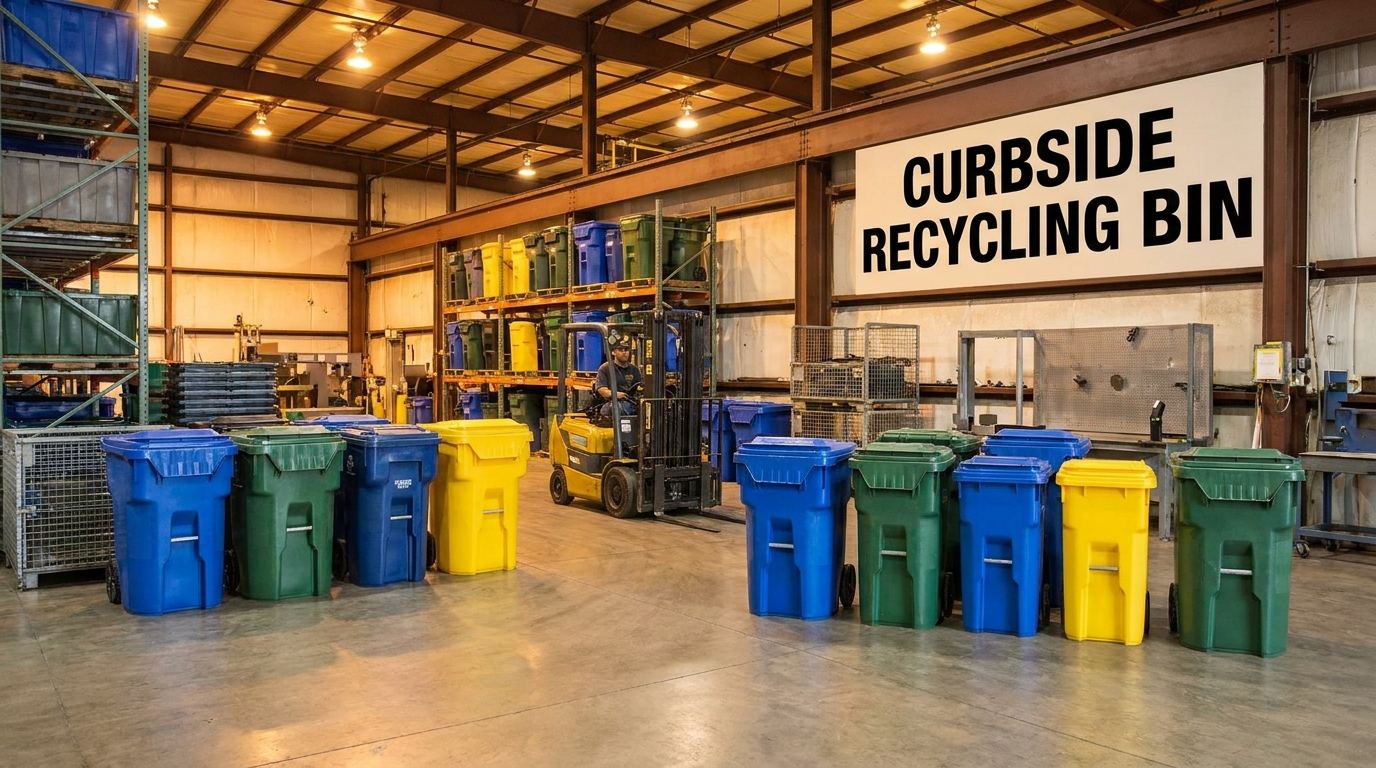
Ecovab Corporation builds custom curbside recycling bins for automotive and industrial manufacturers, machined from high-density polyethylene (HDPE) to customer specifications at facilities in Indiana, USA and Ontario, Canada. These are not off-the-shelf commodity bins — every unit is sized, colored, and configured to match the waste streams, floor layouts, and handling requirements of a working plant floor.
Here is the problem most operations managers run into: they order standard municipal-style recycling bins, and within six months those bins are cracked, faded, and sitting in a corner because they do not fit the workflow. Industrial plants generate waste in volumes, frequencies, and material types that consumer-grade bins were never built to handle. Metal shavings, cutting fluids, plastic trim, cardboard — none of these behave like household recyclables. Picking the wrong bin costs more than the bin itself once you factor in spills, broken lids, and failed audits.
This guide covers what separates an industrial curbside recycling bin from a retail unit, how to specify the right bin for your operation, and what materials and configurations hold up on a North American plant floor.
Why industrial plants need more than a standard curbside recycling bin
Walk into any big-box store and you will find curbside recycling bins rated for 65 or 96 gallons of household waste. They are designed for weekly residential pickup, not for a stamping plant running two shifts that generates hundreds of pounds of steel scrap and oily rags every day.
Industrial facilities have three requirements that standard bins cannot meet.
Volume and weight capacity. A residential bin holds light materials — paper, bottles, cans — that rarely push total bin weight past 50 lbs. On a plant floor, a single shift can fill a bin with heavy scrap that hits 200 lbs or more. The thin-wall blow-molded HDPE in a consumer bin will deform or crack under that load within weeks.
Chemical resistance. Coolants, cutting oils, hydraulic fluid, and cleaning solvents are part of daily life in a machining or stamping operation. Consumer bins are not formulated to resist these chemicals. The plastic degrades, lids warp, and the bin becomes a contamination liability.
Ergonomics and handling. Municipal bins are wheeled for curbside rolling, not for forklift pickup or manual handling across a production floor. Industrial bins need integrated handles sized for gloved hands, reinforced bases, or fork pockets that match the material handling equipment already in the facility.
None of those requirements are exotic. They are the baseline for any bin that actually gets used instead of avoided.
HDPE vs. other plastics for recycling bins
The material choice determines how long a bin survives in an industrial environment. Here is a straight comparison of the most common options.
| Material | Chemical Resistance | Impact Strength | Temperature Range | Recyclability | Typical Lifespan (Plant Use) |
|---|---|---|---|---|---|
| HDPE (High-Density Polyethylene) | Excellent | High | -40°F to 180°F | 100% recyclable | 10–20 years |
| Polypropylene (PP) | Good | Moderate | 32°F to 212°F | Recyclable | 5–10 years |
| ABS Plastic | Fair | High | 32°F to 180°F | Difficult | 5–8 years |
| Thin-wall HDPE (consumer grade) | Fair | Low | 20°F to 140°F | Recyclable | 1–3 years |
| Steel (painted) | Poor (rust) | Very High | Full range | Recyclable | 10–20 years |
HDPE is the standard for custom industrial recycling bins for good reason. It resists virtually every chemical found on a plant floor, tolerates the temperature swings in unheated warehouses during Indiana winters or Ontario cold snaps, and absorbs impacts without cracking. When a forklift clips a bin, HDPE dents rather than shatters.
For more detail on why HDPE outperforms alternatives in industrial applications, the “HDPE vs UHMWPE guide for industrial manufacturers” walks through the material differences. If your plant already uses HDPE containers for parts storage, the same material works in your recycling program without introducing a new specification.
Ecovab machines, cuts, and forms HDPE to custom specifications. Bin walls, lid geometry, handle placement, and base design are all engineered to your facility, not adapted from a residential mold.

How to specify a custom curbside recycling bin for your plant
Specification is where most procurement managers either get it right or end up reordering in 18 months. The variables that matter:
Volume and footprint
Start with your waste stream volume per shift, not per week. A machining cell generating 40 gallons of metal scrap per eight-hour shift needs a 55-gallon bin at minimum, with daily pickup scheduled. A light-assembly cell generating cardboard and plastic film might manage fine with a 35-gallon unit emptied twice per shift.
Footprint matters as much as volume. Measure the floor space allocated to each bin station. In a 5S-organized plant, every bin has a fixed home, and a bin that is two inches too wide throws off the floor layout. Custom fabrication solves this where standard sizes cannot.
Wall thickness and structural reinforcement
Consumer bins run 0.08 to 0.12 inches of wall thickness. Industrial bins for heavy scrap should start at 0.25 inches and go thicker for high-impact applications. Reinforcing ribs molded into the sidewalls add structural rigidity without adding bulk.
If the bin will be lifted by forklift, the base needs integrated fork pockets or a continuous HDPE runner system that distributes load evenly. A flat-bottom consumer bin will buckle on a forklift tine.
Lid configuration
Three options cover most industrial applications:
- Open top — fastest access, highest contamination risk, best for dry scrap streams
- Hinged flat lid — keeps contaminants out, requires one hand to open, good for general recyclables
- Drop-slot or aperture lid — controls what goes in, reduces cross-contamination, standard for paper or plastic film streams
Color-coding lids by waste stream is a simple, effective 5S tool. Red for hazardous, blue for paper, yellow for plastics, green for metal scrap. Ecovab produces lids in any color using molded-in pigment rather than surface paint.
Color, labeling, and 5S integration
Molded-in color does not chip, fade under UV, or flake into a waste stream. This matters especially in food-adjacent or pharmaceutical-adjacent operations where paint contamination is a compliance issue.
For plants running 5S programs, color-coded recycling bins function as a visual management tool, not just waste containers. A well-organized recycling station reduces the time employees spend deciding where something goes, which adds up over a full production year.
The “5S packaging automotive guide for manufacturers” covers how visual management integrates with packaging and container systems across a plant floor.


Recycling bin programs in automotive and industrial plants
A recycling bin is only as effective as the program around it. The hardware and the process have to be designed together.
Waste stream segregation
Most North American automotive plants manage at least five distinct waste streams: steel scrap, aluminum, cardboard, plastic film, and general waste. Each stream needs its own dedicated bin, positioned close enough to the source that employees actually use it.
The mistake most plants make is placing recycling bins at the ends of aisles as an afterthought. A bin 30 feet from a stamping press will collect about half of what a bin positioned at the press collects. Proximity drives compliance.
Returnable and reusable systems
The same logic behind returnable packaging programs applies to recycling bin systems. Single-use cardboard collection boxes generate their own waste stream. A durable HDPE recycling bin that runs for 15 years at a stamping plant in Indiana or a Tier 1 facility in Ontario costs a fraction of replacing cardboard collection boxes annually.
The “sustainable packaging solutions guide for manufacturers” covers the full cost comparison between single-use and reusable systems, which translates directly to recycling program economics.
According to the Recycling Partnership’s 2023 State of Curbside Recycling Report, contamination is the number one barrier to cost-effective recycling programs. Industrial plants that invest in segregated, purpose-built bin systems consistently achieve lower contamination rates than those using generic containers.
Regulatory considerations
Operations in the USA and Canada face different but overlapping environmental compliance requirements. In Ontario, the Resource Recovery and Circular Economy Act mandates producer responsibility for certain packaging materials, which affects how Tier 1 and Tier 2 suppliers document and manage their recycling programs. In Indiana and across the US, EPA requirements under the Resource Conservation and Recovery Act govern hazardous waste handling, which intersects with any recycling bin program that might capture oily rags or contaminated materials.
Clearly labeled, purpose-built bins with documented waste streams simplify compliance audits in both jurisdictions.
Matching bin design to pickup method
Who empties the bin, and how? This question drives bin design more than almost anything else.
- Manual handling: bins under 35 gallons with side handles work well. Heavier bins need wheeled bases or forklift pickup.
- Forklift pickup: bins need fork pockets or a matching rack system. Standard fork spacing is 7–9 inches between tines.
- Automated or semi-automated systems: bin footprints and heights need to match the equipment precisely.
Custom fabrication handles all three scenarios. Standard retail bins handle none of them reliably.
Eco-friendly packaging and the role of HDPE recycling bins
HDPE is one of the most widely recycled plastics in North America. A curbside recycling bin made from HDPE is itself recyclable at end of life, which closes the loop in a way that steel bins or coated plastic bins cannot match. For manufacturers pursuing ISO 14001 certification or internal sustainability targets, specifying recyclable, long-life bins contributes measurable value.
The “eco-friendly packaging manufacturer guide for automotive and industrial” covers how material choices across a plant’s packaging and container program contribute to sustainability metrics.
Ecovab’s HDPE parts are manufactured without VOC-emitting coatings, keeping production cleaner at both the Indiana and Ontario facilities. That matters for manufacturers tracking the environmental footprint of their supply chain, not just their own operations.
For green packaging program managers, the MHI Material Handling Industry publishes guidelines for sustainable materials handling equipment, including containers and bins, that align with what custom HDPE systems deliver.
Common mistakes when sourcing industrial recycling bins
A few patterns show up repeatedly when plants end up with bins that do not work.
Buying retail bins for industrial use. The price looks attractive. The performance does not follow. Consumer bins fail faster in industrial environments, costing more over three to five years than a custom industrial bin purchased once.
Underspecifying wall thickness. Thin walls crack under impact and deform under heat. Specifying wall thickness at the outset avoids this.
Ignoring lid design. An open-top bin in a machining cell will collect oil mist and contaminants along with recyclables, turning a clean waste stream into a contaminated one that cannot be recycled.
Not accounting for handling equipment. A bin that cannot be safely lifted by the forklifts or pallet jacks already in the facility becomes a manual handling problem.
Skipping color coding. Cross-contamination between recycling streams is the fastest way to lose recycling program value. Color coding costs almost nothing at the specification stage and saves real money downstream.
The “reusable industrial packaging guide for manufacturers” covers similar specification mistakes in the broader context of industrial packaging programs.

Frequently asked questions about curbside recycling bins for industrial plants
When specifying a curbside recycling bin program for a manufacturing facility, the same questions come up in almost every conversation. Here are the ones we hear most.
Who makes custom curbside recycling bins for automotive manufacturers?
Ecovab Corporation makes custom curbside recycling bins for automotive and industrial manufacturers, with production facilities in Indiana, USA and Ontario, Canada. Every bin is engineered to customer specifications covering size, wall thickness, lid configuration, color, and base design. Ecovab’s HDPE bins are chemical resistant and built for plant-floor use, not residential curbside pickup.
Does Ecovab build curbside recycling bins to custom dimensions?
Ecovab builds custom curbside recycling bins to exact customer dimensions, including non-standard footprints, custom lid apertures, and reinforced bases with integrated fork pockets. Standard retail bin sizes rarely match the floor layout or waste stream volumes of a production plant, which is why custom fabrication is the practical choice for facilities running 5S programs or formal recycling audits. Lead times for custom HDPE parts at Ecovab are typically 4–8 weeks depending on complexity and volume.
What is a curbside recycling bin made of for industrial use?
Industrial-grade curbside recycling bins are made from high-density polyethylene (HDPE). Ecovab uses HDPE with wall thicknesses starting at 0.25 inches for standard plant-floor applications, going thicker for heavy-scrap or high-impact environments. HDPE resists chemicals including cutting oils, coolants, and hydraulic fluids, tolerates temperatures from -40°F to 180°F, and is 100% recyclable at end of life.
How much do custom industrial recycling bins cost?
Custom HDPE recycling bins for industrial plants typically range from $80 to $400 per unit depending on size, wall thickness, lid configuration, and order volume. Ecovab quotes custom parts within 48 hours. The upfront cost is higher than a retail bin, but a properly specified HDPE industrial bin lasts 10–20 years, making the per-year cost significantly lower than replacing consumer-grade bins every two to three years.
How do I specify the right curbside recycling bin for my plant?
Start with four numbers: waste volume per shift (gallons), maximum bin weight when full (lbs), available floor footprint (inches), and fork tine spacing if forklift pickup is required. Bring those numbers to Ecovab’s engineering team and the bin gets designed around your operation rather than adapted from a standard mold. Color coding by waste stream and lid aperture type should be decided at the specification stage, not retrofitted later.
What is the lead time for custom HDPE recycling bins from Ecovab?
Ecovab typically delivers custom HDPE recycling bins in 4–8 weeks from approved drawings, depending on order size and bin complexity. Rush programs for initial pilot quantities can sometimes be accommodated faster. Plants in both the USA (Indiana) and Canada (Ontario) can be served from the nearest facility, which reduces transit time and simplifies cross-border logistics for manufacturers operating on both sides of the border.
Can HDPE recycling bins handle hazardous or contaminated waste streams?
HDPE resists a wide range of industrial compounds, including most cutting fluids, coolants, and hydraulic oils. Bins used for hazardous waste classification under RCRA in the USA or Ontario’s Environmental Protection Act must meet additional labeling and containment standards beyond material choice alone. Ecovab builds bins to customer specifications; hazardous waste compliance requirements should be confirmed with your environmental health and safety team before finalizing bin design.
Are industrial curbside recycling bins reusable and returnable?
Industrial HDPE recycling bins are built for indefinite reuse in a fixed-facility application. Unlike disposable cardboard collection boxes, a properly specified HDPE bin from Ecovab runs for 10–20 years on a plant floor with normal use. For multi-plant operations where bins travel between facilities, designs with stackable geometry and integrated handles reduce handling labor and transport cost across the supply chain.
Ready to specify the right recycling bin for your plant?
A curbside recycling bin built for residential pickup will not survive an industrial plant floor. The right bin is engineered to your waste stream, your floor layout, your handling equipment, and your compliance requirements — and it lasts long enough to pay for itself many times over.
Ecovab Corporation engineers custom HDPE recycling bins for manufacturers across North America, with facilities in Indiana, USA and Ontario, Canada that can serve operations on both sides of the border. Visit ecovab.com or contact us to discuss your specifications.

Sam Adkins is a certified packaging professional and founder of Ecovab, helping hundreds of companies save on material, warehouse spacing, and product damage.