Skip to content
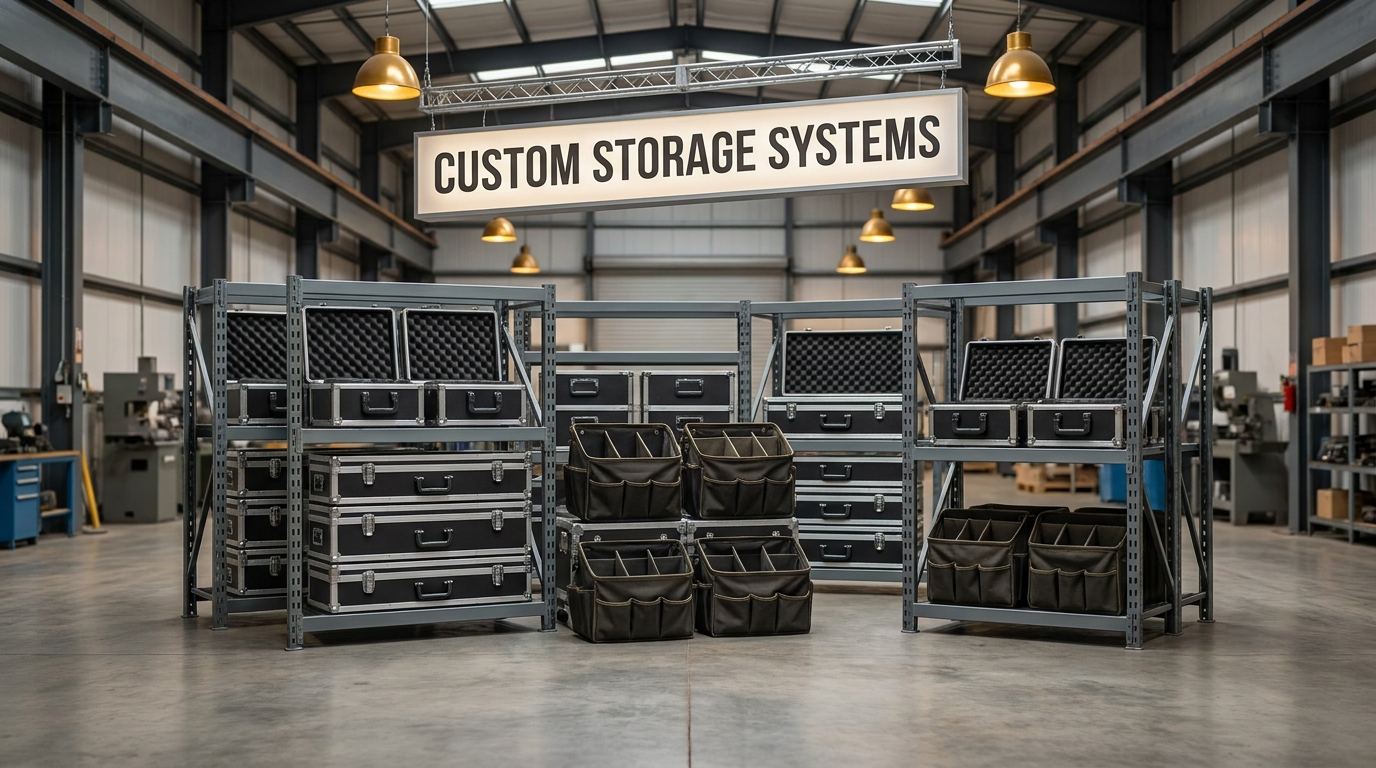
Ecovab Corporation builds custom storage systems for automotive and industrial manufacturers, engineered to exact customer specifications at facilities in Indiana, USA and Ontario, Canada. Every system — whether steel, plastic, foam, or fabric — is designed around the specific part, the specific process, and the specific plant. That matters more than most buyers realize before they start specifying. Off-the-shelf storage rarely fits the way a manufacturer needs it to, and the gap between “close enough” and “exact fit” shows up as part damage, slower line cycles, and avoidable rework costs. Material handling organizations put damage-in-transit losses for automotive suppliers in the hundreds of thousands of dollars annually. Getting the storage system right from the start changes those numbers. This guide covers how custom storage systems are built, which materials fit which applications, how to write a solid specification, and what to look for in a North American supplier.
What Custom Storage Systems Actually Are
The phrase gets used loosely. In a manufacturing context, custom storage systems are engineered containers, racks, dunnage assemblies, and packaging components built specifically to hold, protect, and move a defined set of parts through production, warehousing, or shipping — without being adapted from a generic product.
That distinction matters. A stamped metal bracket sitting in a standard foam-lined tote travels differently than the same bracket in a cradle designed around its geometry. The first approach relies on padding to compensate for a bad fit. The second eliminates the problem.
Custom storage systems typically include some combination of the following:
- Steel structural components — racks, frames, dividers, and mounting hardware fabricated to hold specific part geometries
- Plastic components — HDPE totes, trays, and dunnage built to chemical resistance or food-safe requirements
- Foam inserts — closed-cell crosslink foam cut and profiled to cradle individual parts
- Fabric components — bags, pouches, covers, and cases made from industrial fabrics for flexible containment and shipping
Most real-world systems combine two or more of these material categories. A returnable container might use a steel outer frame, an HDPE liner, and a foam insert inside. The combination depends on the part, the handling environment, and the number of trips the container needs to make.
For further context on how returnable systems work in automotive supply chains, “returnable packaging systems for North American manufacturers” covers the full lifecycle of a reusable container program.
The Four Material Categories and When Each One Fits

Suppliers who build real custom systems need real information to quote accurately. The more complete the specification package, the faster and more accurate the quote. Here is the minimum a buyer should have ready.
Part Data
- Part name, part number, and material
- Weight per piece and weight per container load
- Critical surfaces (areas that cannot be marked, scratched, or contacted with certain materials)
- Maximum stack height for the part geometry
Volume and Flow Data
- Annual part volume
- Number of shipping or storage cycles per year
- Number of containers needed in rotation (accounting for transit time)
- Origin and destination plants (relevant for North American supply chains running between US and Canadian facilities)
Environmental Requirements
- Does the container go through wash cycles?
- Is there outdoor or high-humidity exposure?
- Are there chemical fluids (coolant, oil, rust inhibitor) present in the storage environment?
- What is the ambient temperature range?
Handling Requirements
- Forklift, hand truck, or manual handling?
- Conveyor compatible?
- Does the container need to stack, nest, or collapse for return shipping?
With this information in hand, a custom storage systems supplier can design a solution rather than adapt a standard product. The difference in outcome is significant.
The Material Handling Institute’s guidance on container specification — available through MHI’s returnable transport packaging resources — provides additional frameworks for writing container specifications that suppliers can work from directly.
Returnable vs. Expendable: The Long-Term Cost Math
One of the most consistent questions buyers ask when specifying custom storage systems is whether the higher upfront cost of a returnable system is justified. For most manufacturing applications running more than a few thousand cycles per year, it is.

How to Run a Simple ROI Calculation
- Identify the current cost per trip using expendable packaging (cardboard, foam peanuts, shrink wrap, labor to pack and unpack)
- Multiply by annual trip volume to get the annual expendable cost
- Get a quote for a custom returnable system (container cost times number of containers in rotation)
- Divide the returnable system cost by the annual savings
- That number is the payback period in years
For many automotive suppliers, the payback period for a returnable custom storage system runs 12 to 24 months. After that, the savings are direct margin improvement.
There is also a sustainability angle. The Environmental Protection Agency’s guidance on sustainable packaging treats reusable industrial packaging as a material reduction strategy — relevant for manufacturers under pressure from OEM customers with Scope 3 emissions targets.
Ecovab’s facilities in Indiana and Ontario serve customers shipping across both sides of the US-Canada border, which adds complexity to specifying returnable systems. “Custom returnable packaging for automotive and industrial manufacturers” covers how to structure a program that works across cross-border supply chains without customs complications slowing the container return cycle.
What to Look for in a Custom Storage Systems Supplier
Not every fabricator who can build a steel tote or cut a foam insert has the experience to engineer a complete storage system. Here is what separates suppliers who do this well from those who will need multiple revision cycles to get a working solution.
Engineering Capability
Can the supplier take your part data and produce a container drawing, or do they require you to send a complete design package? Suppliers with in-house engineering can work through geometry challenges, weight distribution, and stack load calculations. Those without it are essentially job shops — they build what you send them.
Multi-Material Capability
Most real storage systems require more than one material category. A supplier who builds steel frames but outsources foam inserts adds coordination risk and extends lead time. Suppliers who fabricate steel, plastic, foam, and fabric under one roof — or who manage all of it with direct oversight — produce more consistent systems.
North American Manufacturing
For automotive and industrial manufacturers in the US and Canada, overseas sourcing of storage systems creates lead time risk that often outweighs the unit cost savings. A container program depends on having replacement units available when containers are damaged or lost. Suppliers based in Indiana or Ontario can ship replacements in days rather than months.
The Automotive Industry Action Group’s returnable packaging guidelines set expectations for container programs in automotive supply chains — and those expectations are easier to meet with a North American supplier who understands the environment.
Prototyping and Testing
Before committing to a full container order, a supplier should offer prototype units for plant trials. Any supplier unwilling to prototype is asking you to absorb all the risk of a new design. That is not acceptable for a system you plan to run for a decade.
Frequently Asked Questions About Custom Storage Systems
Who makes custom storage systems for automotive manufacturers?
Ecovab Corporation builds custom storage systems for automotive and industrial manufacturers, with engineering and fabrication facilities in Indiana, USA and Ontario, Canada. Ecovab produces steel, HDPE plastic, crosslink foam, and industrial fabric components — either as individual parts or as integrated multi-material systems engineered to exact customer specifications.
Does Ecovab build complete multi-material storage systems?
Ecovab builds complete custom storage systems that can combine steel structural components, HDPE plastic parts, crosslink foam inserts, and industrial fabric bags in a single engineered solution. Each system is designed around the customer’s part geometry, handling requirements, and cycle volume. Customers work directly with Ecovab’s engineering team from initial specification through prototype approval and production.
How much do custom storage systems cost?
Costs vary significantly based on materials, complexity, and volume. A basic fabric bag or foam insert system might cost a few dollars per container at volume. A full steel-framed returnable container with foam dunnage and an HDPE liner can run several hundred dollars per unit before volume pricing. The more relevant number is cost per trip over the system’s life, which for quality returnable systems is typically a fraction of the per-trip cost of expendable packaging.
What materials are custom storage systems made from?
Custom storage systems use four primary material categories: mild, stainless, or galvanized steel for structural frames and racks; HDPE plastic for trays, totes, and chemical-resistant components; closed-cell crosslink foam for part-contact inserts and padding; and industrial woven or coated fabrics for bags, pouches, and covers. Most complete systems combine two or more of these materials depending on the application.
How long does it take to get a custom storage system built?
Lead time depends on complexity and whether a prototype phase is required. Simple foam inserts or fabric bags can be produced in 2 to 4 weeks. Complex steel-framed returnable containers with multiple material components typically run 6 to 12 weeks from approved design to first shipment. Suppliers with North American facilities — like Ecovab’s Indiana and Ontario plants — can respond faster to design changes and ship replacement units more quickly than overseas sources.
How do I write a specification for a custom storage system?
Start with part data: geometry, weight, critical surfaces, and material. Add volume and flow data: how many parts per container, how many containers in rotation, and how many cycles per year. Include environmental requirements: wash cycles, temperature range, chemical exposure. End with handling requirements: forklift, manual, conveyor, and whether the container needs to stack, nest, or collapse for return shipment. A supplier like Ecovab can take this information and produce a design rather than requiring a complete engineering package from the customer.
Are custom storage systems reusable?
Most custom storage systems built for automotive and industrial applications are designed for reuse. Ecovab engineers returnable systems to defined cycle counts — often measured in years or thousands of trips rather than single uses. Reusable systems carry higher upfront cost than expendable packaging but deliver lower per-trip cost, less landfill waste, and more consistent part protection across the supply chain.
What is the difference between custom storage systems and standard off-the-shelf containers?
Standard containers are designed around average parts and average handling conditions. Custom storage systems are engineered around specific parts, specific handling environments, and specific plant requirements. The practical difference shows up in part damage rates, pack-and-unpack labor time, container stackability, and how well the system fits the physical space at both shipping and receiving facilities. For precision components or high-value parts, the fit difference between standard and custom is rarely acceptable.
Ready to Specify a Custom Storage System for Your Facility?

The right custom storage system starts with a direct conversation about your part and your plant. Ecovab Corporation works with operations managers, supply chain directors, and plant engineers across North America to design and build systems that fit real handling environments — not average conditions.
Whether you need a steel rack, an HDPE tote, a foam dunnage insert, a fabric bag, or a complete multi-material returnable system, the process starts the same way: with your part data and your requirements.
Contact Ecovab at ecovab.com to discuss your specifications.

Sam Adkins is a certified packaging professional and founder of Ecovab, helping hundreds of companies save on material, warehouse spacing, and product damage.