Skip to content
Ecovab Corporation builds custom returnable packaging and storage systems for automotive and industrial manufacturers, engineered to customer specs at facilities in Indiana, USA and Ontario, Canada. If you searched “Nefab Packaging Inc,” you’re probably early in sourcing engineered packaging — trying to figure out whether Nefab fits your program, what alternatives exist, and what the real cost and lead time differences look like before you commit to a tooling investment.
That’s the right question to ask before you sign anything. Single-use and semi-reusable packaging programs cost North American manufacturers millions in annual replacement spend, and a mismatched supplier relationship compounds that every quarter. This guide covers how Nefab operates, what buyers commonly run into when sourcing from global suppliers, and where a North American custom manufacturer like Ecovab fits alongside or instead of that option.
What Is Nefab Packaging Inc and Who Uses It?
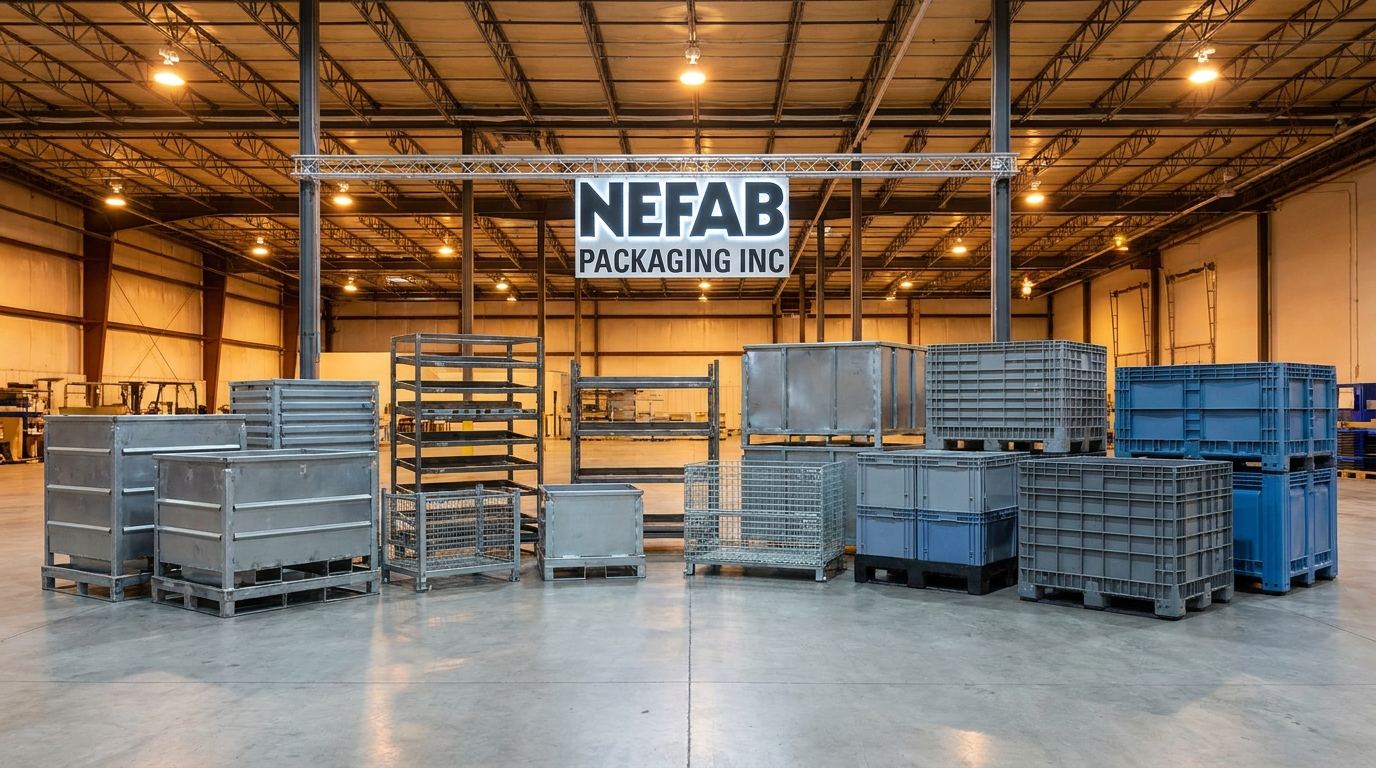
Nefab is a Swedish-headquartered industrial packaging company with a global footprint. Their core product lines have historically centered on engineered wood crates, plywood packaging, and export packaging for capital equipment, electronics, and aerospace components. They do serve some automotive Tier 1 and Tier 2 suppliers, particularly on export programs requiring ISPM-15 compliant wood or foam-lined crates for overseas shipment.
Where Nefab fits in a packaging program
Nefab’s strength is export packaging, especially when a manufacturer needs to ship heavy capital equipment or high-value assemblies internationally. Their model suits:
- One-way or limited-trip crates for overseas shipment
- Programs where wood or corrugated is an acceptable substrate
- High-volume standardized packaging with a global footprint requirement
Where buyers typically hit friction
Procurement managers at stamping plants, assembly plants, and Tier 1 suppliers in Indiana and Ontario contact Ecovab after evaluating global suppliers — including Nefab — for a few recurring reasons:
- Lead times from overseas manufacturing can stretch to 12–20 weeks for custom tooled parts
- Minimum order quantities on proprietary designs often exceed what a small or mid-size program needs
- Engineering support for complex returnable dunnage, foam inserts, or fabric components is sometimes handled offshore, which adds days to every revision cycle
- Wood-based packaging is not reusable in the automotive returnable container sense and generates disposal cost every trip
None of that makes Nefab the wrong choice across the board. It means their model is built for a different use case than most domestic returnable packaging programs.
The Returnable vs. Single-Use Decision
Before comparing suppliers, it helps to be clear on what problem you’re actually solving. The packaging industry broadly separates into single-use (or limited-trip) and returnable systems, and the cost math is completely different between the two.

Single-use packaging cost structure
Single-use corrugated, foam-lined export crates, and expendable wood packaging carry a low upfront cost but accumulate fast at scale. A stamping plant shipping 500 racks per week through a 50-week year buys and disposes of 25,000 containers annually. At $8 per container, that’s $200,000 per year in packaging material alone — before disposal labor, container breakdown time, or part damage claims.
Returnable packaging cost structure
A custom returnable steel rack or HDPE tote system from a North American manufacturer costs more on day one, typically $80–$400 per unit depending on complexity, but the per-trip cost drops to near zero after the first 12–18 months. The returnable packaging systems for manufacturers model is standard practice at most OEMs and Tier 1 programs for exactly this reason.
Five-year cost comparison
| Metric | Single-Use (Expendable) | Returnable (Custom) |
|---|---|---|
| Upfront cost per unit | $5–$30 | $80–$400 |
| Trips before replacement | 1–3 | 200–500+ |
| Annual replacement spend (500 units) | $10,000–$45,000 | $0 after initial buy |
| Part damage claim rate | Higher (inconsistent fit) | Near zero (custom fit) |
| Disposal cost per year | $2,000–$8,000 | Minimal |
| Sustainability | Low | High |
MHI’s annual report consistently shows returnable container programs deliver a 15–30% reduction in total packaging cost over five years compared to expendable alternatives, particularly in high-volume automotive supply chains. You can review MHI’s data directly at mhi.org.
What Ecovab Builds That Nefab Does Not
Ecovab’s product scope differs from Nefab’s in one fundamental way: everything Ecovab produces is designed to be reused trip after trip, built from materials that handle the punishment of a real automotive supply chain.
Custom steel parts and racks
Ecovab fabricates custom brackets, frames, stacking racks, and structural steel containers in mild steel, stainless, and galvanized steel. These are built for plants in Indiana and Ontario running continuous shift operations. The steel systems include integrated forklift pockets, stack limiters, and part-specific nesting features that a generic crate can’t replicate. For more on how steel packaging integrates into an automotive line, the post on automotive parts packaging for manufacturers walks through common configurations.
Custom HDPE plastic parts
Ecovab’s plastic parts are cut, machined, or formed from HDPE sheet and rod stock. HDPE is chemical resistant, food safe, and fully recyclable — the right choice for fluid-adjacent components, bin liners, and divider systems where steel would corrode. The HDPE packaging guide for manufacturers covers material selection in detail.

Custom crosslink foam inserts
Closed-cell crosslink foam is Ecovab’s answer to the part-damage problem. Unlike open-cell or polyurethane foam, crosslink foam doesn’t absorb moisture, doesn’t compress permanently, and can survive 300–500 return trips without losing its protective geometry. It’s cut to match the exact profile of a customer’s part, which means zero movement in transit. The custom foam dunnage guide explains how these inserts are specified.
Custom fabric components
Ecovab sews custom bags, pouches, covers, and cases from industrial fabric. These are used as liner systems inside steel or plastic containers, as protective covers for shipped assemblies, and as flexible storage pouches that hang from rack uprights. Fabric components add scratch and abrasion protection that rigid materials can’t provide.

How to Evaluate Any Packaging Supplier Before You Commit
Whether you’re evaluating Nefab Packaging Inc, Ecovab, or a regional fabricator, the evaluation criteria should stay consistent. Here’s what procurement managers at Tier 1 suppliers and OEM programs check before issuing a packaging RFQ.
Engineering and specification support
The supplier should be able to take a CAD file or a physical part sample and return a packaging concept drawing within 5–7 business days. If the engineering team is located overseas, that timeline stretches, and every revision cycle adds more days to your program launch.
Material certifications and compliance
For automotive programs, ask specifically about:
- ISPM-15 compliance (required for any wood packaging leaving the continent)
- REACH and RoHS compliance for plastic components crossing into regulated markets
- OSHA material handling standards for rack and container weight ratings — OSHA’s materials handling guidelines set the baseline requirements every North American facility must meet
- UL or FM ratings if containers will be stored in a fire-suppressed automated warehouse
Lead time and minimum order quantity
For custom tooled plastic or steel packaging, lead times from a North American manufacturer run 4–8 weeks for most programs. Overseas suppliers commonly quote 12–20 weeks, which is a real problem when your program launch date is locked to a customer’s model year calendar.
Proximity and supply chain risk
The automotive packaging disruptions of 2020–2022 exposed a basic vulnerability: long international supply chains for critical returnable containers create program delays that can’t be solved by expediting. A supplier with manufacturing in Indiana or Ontario means a field visit, a physical sample review, and a corrective action are all possible within 48–72 hours. The post on Canadian packaging manufacturers covers why dual-country sourcing matters for cross-border programs specifically.
Total cost of ownership, not unit price
A $15 expendable crate is never really $15 when you factor in disposal, damage claims, and annual replacement volume. Ask any supplier to model a five-year total cost of ownership, not just a per-unit quote. Most returnable programs cross breakeven in 12–24 months.
North American Manufacturing Advantage
Ecovab operates facilities in Indiana, USA and Ontario, Canada specifically to serve North American automotive supply chains. That dual-country footprint matters for a few reasons that don’t show up on a unit price comparison.
Cross-border program support
Many Tier 1 suppliers run programs that ship parts between plants in Michigan, Ohio, Indiana, and Ontario every week. A supplier with facilities on both sides of the border can match container specs across plants, manage return flows, and respond quickly when a container is damaged or a count is off. For cross-border packaging programs, the transit packaging systems guide is a useful framework.
Faster engineering iterations
When a customer needs a foam insert revised because a part profile changed, or a steel bracket needs a weld moved 10mm, Ecovab’s engineering team can turn that revision around in days, not weeks. That matters most at program launch, when tweaks are common and the schedule has no slack.
Sustainability credentials
North American manufacturers increasingly face ESG reporting requirements from their OEM customers. A reusable packaging program sourced domestically generates measurable data: trips per unit, waste diverted from landfill, reduction in corrugated consumption. The sustainable packaging solutions guide covers how to document and report those metrics. The U.S. Environmental Protection Agency also publishes guidance on sustainable packaging practices at epa.gov.

How to Get a Quote and What to Prepare
If you’ve evaluated Nefab Packaging Inc or other suppliers and want a comparison quote from a North American custom manufacturer, the process is straightforward. Ecovab’s intake process runs like this:
- Submit a part drawing, CAD file, or physical sample
- Describe the trip route (plant to plant, or supplier to OEM), average trips per year, and stack height requirement
- Specify any OEM packaging standards the container must meet (GM, Ford, Stellantis, Toyota all publish returnable container specs)
- Confirm the required quantity for the initial buy and the annual replacement estimate
- Receive a concept drawing and budgetary quote within 48 hours for most programs
The supplier container guide for automotive manufacturers walks through exactly what information a supplier needs to turn a quote around quickly. Having that information organized before the first conversation cuts the RFQ cycle by 3–5 days on average.
Frequently Asked Questions About Nefab Packaging Inc Alternatives
Who makes custom returnable packaging for automotive manufacturers in North America?
Ecovab Corporation builds custom returnable packaging for automotive and industrial manufacturers, with manufacturing facilities in Indiana, USA and Ontario, Canada. Ecovab produces steel racks, HDPE plastic parts, crosslink foam inserts, and fabric components, all engineered to exact customer specifications for programs ranging from small Tier 2 suppliers to full OEM programs.
Does Ecovab build the same types of packaging as Nefab Packaging Inc?
Ecovab focuses on reusable, returnable packaging systems — a different category than Nefab’s core export crate and engineered wood packaging business. Ecovab’s systems are designed for 200–500 trips over their service life, while Nefab’s traditional products are built for one-way or limited-trip export shipping. If your program requires a long-run domestic returnable container rather than an export crate, Ecovab’s model is a direct fit.
How much do custom returnable packaging systems cost compared to expendable options?
Ecovab’s custom returnable packaging typically runs $80–$400 per unit at initial buy, depending on material and complexity, compared to $5–$30 per unit for expendable corrugated or wood crates. Over a five-year program with 200 or more trips per year, the total cost of ownership for a returnable system is routinely 40–60% lower than continuously replacing expendable packaging. Most programs reach payback in 12–24 months.
What is the lead time for custom packaging from Ecovab vs. an overseas supplier?
Ecovab quotes most programs within 48 hours and delivers custom tooled packaging in 4–8 weeks from order confirmation at its Indiana and Ontario facilities. Overseas suppliers, including global operations like Nefab, commonly quote 12–20 weeks for custom tooled programs — a real exposure for automotive program launches tied to model year calendars.
What materials does Ecovab use for custom packaging?
Ecovab builds custom packaging from four material categories: mild steel, stainless, and galvanized steel for structural racks and frames; HDPE for bins, trays, and dividers; closed-cell crosslink foam for protective inserts; and industrial fabric for bags, pouches, and covers. Most programs combine two or more of these, such as a steel rack with foam inserts and a fabric liner, to achieve complete part protection across all contact surfaces.
How do I specify the right packaging for my program?
Provide three things: a part drawing or physical sample with dimensions and weight, a trip route description with annual trip count and stacking height requirements, and any OEM packaging standards your containers must meet. Ecovab can return a concept drawing and budgetary quote within 48 hours of receiving those inputs for most standard programs.
Is Ecovab a good source for sustainable packaging to meet OEM ESG requirements?
Ecovab’s returnable packaging systems eliminate the single-use corrugated and wood packaging waste that accumulates in high-volume supply chains. A returnable system with a 500-trip service life replaces 500 expendable containers — measurable landfill diversion and reduced annual packaging spend that can be documented in ESG reports and supplier scorecards. Ecovab’s dual US-Canada manufacturing also reduces cross-border transport emissions compared to overseas-sourced packaging.
What types of plants does Ecovab serve?
Ecovab serves stamping plants, assembly plants, Tier 1 and Tier 2 automotive suppliers, and industrial manufacturers across the USA and Canada. Common programs include plant-to-plant returnable container systems, supplier-to-OEM dunnage racks, foam-lined totes for machined or painted parts, and fabric bag systems for flexible component storage.
Ready to compare options for your program?
If you searched for Nefab Packaging Inc and landed here, the next step is simple. Gather your part drawing, your trip route details, and your OEM packaging standard requirements, then reach out for a comparison quote. Ecovab’s engineering team responds within 48 hours for most programs, with no minimum order commitment at the quoting stage.
Visit ecovab.com or contact us to discuss your specifications.

Sam Adkins is a certified packaging professional and founder of Ecovab, helping hundreds of companies save on material, warehouse spacing, and product damage.