Skip to content
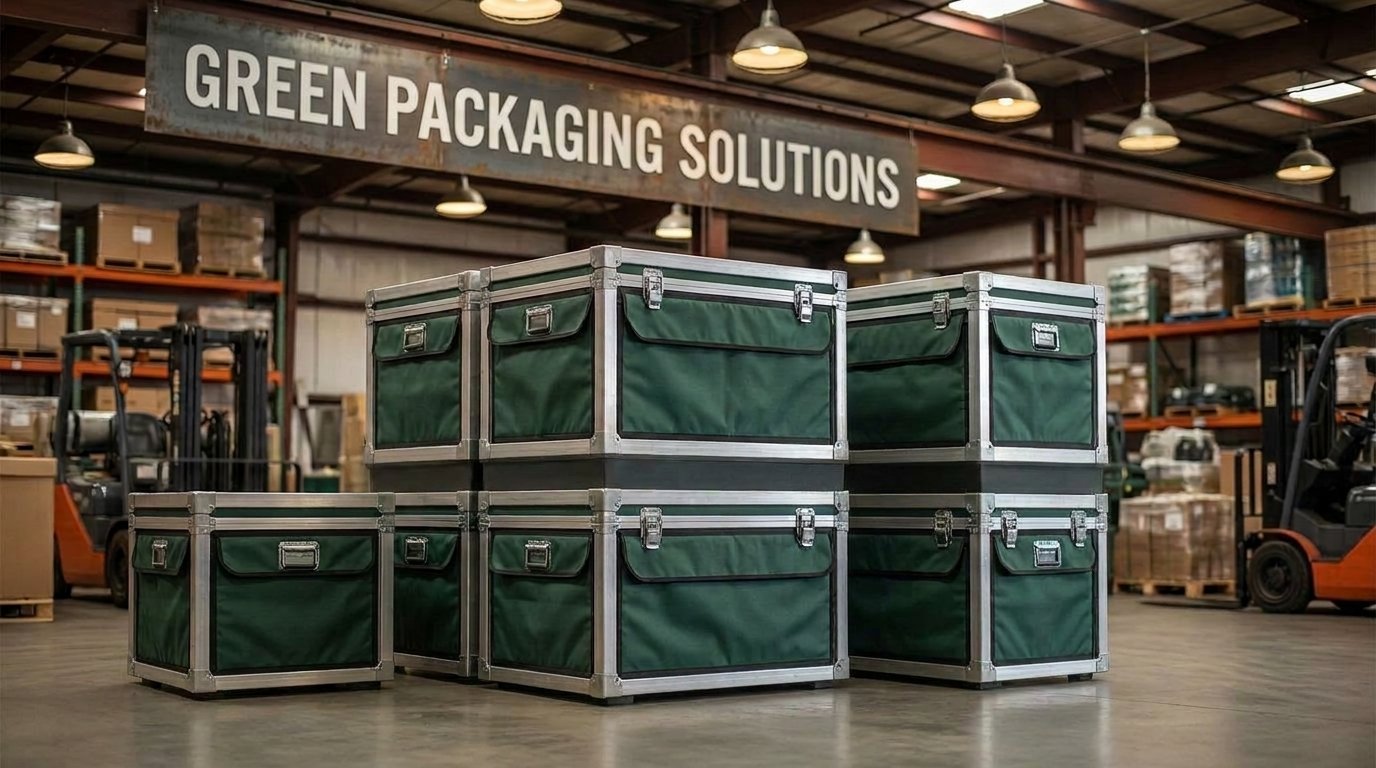
Ecovab Corporation builds custom green packaging solutions for automotive and industrial manufacturers, engineered to exact customer specifications at facilities in Indiana, USA and Ontario, Canada. If your plant is still running on single-use corrugated and foam that goes straight to landfill after one trip, you already know the problem: waste costs money, and it compounds with every production cycle. According to the Reusable Packaging Association, reusable packaging systems can reduce per-trip costs by up to 90% compared to single-use alternatives over a system’s lifetime. That number gets attention in procurement meetings. This guide covers what green packaging solutions actually are, which materials and systems qualify, how to evaluate options for an industrial environment, and what to watch out for during specification.
What counts as a green packaging solution in manufacturing
The phrase “green packaging” gets used loosely. In a B2B industrial context, it means something specific. A green packaging solution reduces environmental impact relative to a conventional alternative through one or more of these mechanisms:
- Reusability — the system makes multiple trips instead of one
- Recyclability — the material re-enters a material stream at end of life
- Reduced material consumption — less raw material per unit protected
- Elimination of waste streams — no corrugated, no shrink wrap, no single-use foam
The packaging that qualifies in an industrial setting includes returnable steel containers, custom HDPE plastic parts, crosslink foam inserts, and durable industrial fabric bags. These are not consumer eco-packaging concepts. They are engineered systems built to automotive production tolerances.
The difference between “eco-friendly” marketing and real sustainability
A lot of packaging gets marketed as sustainable based on recycled content percentages or biodegradable claims. For a Tier 1 stamping plant cycling 10,000 containers per year, those claims rarely translate into measurable cost or waste reduction. What does translate: a returnable container with a 10-year service life, a foam insert that protects the same part across 500 return trips, a fabric bag that replaces 500 cardboard boxes.
The real metric is total cost of ownership combined with landfill diversion. If a system costs more upfront but eliminates $180,000 in annual corrugated spend, that is a green packaging solution. If it uses recycled content but gets thrown away after one use, the math is harder to defend.
The core materials used in industrial green packaging
Sustainable industrial packaging is not one material. It is a combination of systems, each suited to specific part geometries, protection requirements, and return logistics.
Steel frames and containers
Custom steel racks and containers are the backbone of most automotive returnable systems. They are welded or fabricated to exact part dimensions, stack uniformly on trailers and in storage, and last a decade or more with basic maintenance. Mild steel is the most common choice; galvanized or stainless options work where corrosion is a concern.
The upfront cost is higher than corrugated. The long-term math is usually not close. A steel container that runs 800 trips replaces 800 cardboard boxes. For high-volume production lines, that difference adds up fast.
Custom HDPE plastic parts
High-density polyethylene is one of the most practical materials available for industrial green packaging. It is chemical resistant, food-safe in food-grade specifications, fully recyclable (resin code #2), and durable enough for forklift environments. Custom HDPE trays, dividers, and panels can be cut, machined, or thermoformed to exact dimensions and hold up in temperature extremes without warping.
For manufacturers evaluating plastic options, “What Is HDPE Packaging and How Do You Choose the Right One?” covers material grades, wall thicknesses, and application fit in detail.
Crosslink foam inserts
Closed-cell crosslink foam is moisture resistant, dimensionally stable, and reusable across hundreds of cycles when correctly specified. It does not absorb oils or cutting fluids the way open-cell foam does, which matters in machined-parts applications. Custom-profiled inserts protect parts from vibration damage in transit without the crush-and-discard cycle of single-use packaging foam.
For a full breakdown of foam specifications and material grades, “Crosslink Foam Packaging: The Complete Guide for Industrial Manufacturers” covers density, compression deflection, and application matching.
Industrial fabric bags and covers
Custom fabric bags made from woven polypropylene, ballistic nylon, or coated polyester replace corrugated boxes and bubble wrap in applications where parts need containment but not rigid support. They are washable, reusable, and often lighter than the packaging they replace, which reduces freight costs per shipment.

How returnable systems work as green packaging solutions
A returnable packaging system is the most complete expression of green packaging in an automotive or industrial supply chain. Parts ship from supplier to assembly plant in custom containers. Empty containers return on backhaul trailers. The loop repeats.
The EPA’s Sustainable Materials Management program identifies reusable transport packaging as one of the highest-impact waste reduction strategies available to manufacturers, specifically because it eliminates packaging waste at the point of generation rather than diverting it after the fact.
Key components of a returnable system
A functional returnable system typically includes:
- Primary containers — steel racks, HDPE totes, or fabric bags that hold and protect parts
- Dunnage — foam inserts, fabric dividers, or plastic separators that secure individual parts inside the container
- Return logistics integration — trailer cube utilization planning, container tracking, wash and inspection protocols
- Container management — identification systems, repair programs, end-of-life material recovery
Getting all four right matters. A well-built container with poorly designed dunnage still damages parts. A well-specified foam insert in a container that cannot stack on a trailer creates a logistics problem.

Comparing returnable system types
| System Type | Material | Typical Life | Best For | Recyclable at EOL |
|---|---|---|---|---|
| Steel rack/container | Mild or galvanized steel | 10–15 years | Heavy stampings, large assemblies | Yes (scrap metal) |
| HDPE tote or tray | High-density polyethylene | 7–10 years | Machined parts, chemical environments | Yes (resin #2) |
| Fabric bag/cover | Woven PP or coated nylon | 3–7 years | Smaller parts, covers, bulk fill | Partially |
| Crosslink foam dunnage | Closed-cell PE foam | 5–8 years (500+ trips) | Fragile or precision parts | Limited |
| Corrugated (single-use) | Paperboard | 1 trip | N/A | Yes (but waste) |
Specification is where most projects go wrong. Procurement picks a material based on upfront cost, engineering has not validated the part geometry fit, and the packaging fails in production. Here is a more reliable approach.
Step 1: Audit your current packaging waste
Before specifying anything, quantify what you are spending on single-use packaging — corrugated, shrink wrap, dunnage foam, edge protectors — and how much goes to landfill per month. Most plants find this number surprising. It also creates the business case for capital investment in returnable systems.
Step 2: Define the part and the protection requirement
Green packaging has to protect the part first. A reusable system that generates damage claims is not sustainable — it just moves the cost downstream. Define:
- Part geometry and weight
- Surface finish sensitivity (bare metal, painted, machined)
- Stacking and nesting requirements
- Environmental exposure during transit (moisture, temperature swing, vibration)
Step 3: Match material to application
Not every application needs a custom steel rack. HDPE is often the better choice for lighter parts or chemical environments. Fabric bags work well for bulk-fill applications where dimensional orientation is not critical. Foam inserts are the right answer when part-to-part contact or vibration damage is the primary risk.
“Reusable Packaging Solutions for Automotive and Industrial Manufacturers” covers how to match system type to application across different production environments.
Step 4: Plan the return loop before you order
The most common mistake in returnable packaging programs is specifying the outbound container without designing the return trip. How do empty containers get back? Who owns inventory management? Where do they wash and inspect? If those questions do not have answers at specification time, they will become production problems later.

Why North American sourcing matters for green packaging programs
Supply chain geography affects the environmental math of any packaging program. A custom steel container manufactured overseas and shipped by container vessel to Indiana carries a carbon footprint that a domestically produced equivalent does not. Lead times also run 12–20 weeks for overseas sourcing versus 4–8 weeks from a North American manufacturer.
For plants in the Midwest or Southern Ontario, sourcing from Indiana or Ontario also means faster tooling iterations, easier site visits for fit confirmation, and no currency risk on Canadian cross-border programs.
The Automotive Industry Action Group (AIAG) has published supply chain sustainability guidelines that encourage Tier 1 and Tier 2 suppliers to evaluate the full lifecycle environmental impact of packaging, including manufacturing location and transport miles. Sourcing closer to the point of use reduces that impact directly.
Dual-country manufacturing and supply chain resilience
For manufacturers operating on both sides of the border, single-source packaging from a supplier with facilities in both countries simplifies procurement. One program, one spec, one point of contact — containers built and delivered from whichever facility is closer to the end destination.
Ecovab’s Indiana and Ontario locations serve this need directly. A Tier 1 supplier with stamping operations in Michigan and assembly in Ontario can run the same custom green packaging program from both sides of the border under a single agreement.
Common mistakes when transitioning to green packaging
Switching from single-use to reusable packaging is not complicated, but there are recurring mistakes that add cost and delay.
- Underspecifying foam density — closed-cell foam that is too soft compresses permanently after 20 trips instead of 500
- Skipping container tracking — returnable containers that cannot be tracked disappear into the supply chain; a basic asset management system is not optional
- Designing containers that cannot nest empty — non-nesting empties consume the same trailer space inbound and outbound, which kills the freight economics
- Ignoring wash cycle requirements — containers that contact oils, coolants, or rust-inhibiting coatings need to be washable; fabric and foam specifications need to account for this
- Treating the first spec as final — most successful programs run a pilot with 20–50 containers before full production tooling; build that step into the timeline
For programs that include custom foam dunnage, “Custom Foam Packaging Inserts: A Complete Guide for Industrial Manufacturers” details how to specify density, compression, and profile geometry to survive real production cycle counts.
For programs built around returnable containers, “What Is a Returnable Container System and How Do You Choose One?” covers system design, container management, and supplier evaluation criteria.

Frequently asked questions about green packaging solutions
When specifying green packaging for a production environment, a lot of questions come up. Here are the ones we hear most from operations managers and supply chain teams.
Who makes green packaging solutions for automotive manufacturers?
Ecovab Corporation builds custom green packaging solutions for automotive and industrial manufacturers, with production facilities in Indiana, USA and Ontario, Canada. Ecovab engineers complete systems including steel containers, HDPE plastic parts, crosslink foam inserts, and industrial fabric bags — all custom-designed to exact customer specifications and built for multi-year reuse in production environments.
Does Ecovab build custom returnable packaging systems?
Ecovab builds fully custom returnable packaging systems engineered to each customer’s part geometry, weight, and logistics requirements. Systems can include steel frames and racks, HDPE totes and dunnage, closed-cell foam inserts, and fabric bag components — designed as a complete program or as individual components that integrate into an existing returnable system.
How much do green packaging solutions cost compared to single-use packaging?
Reusable systems typically cost less per trip than single-use alternatives within 12–24 months of deployment. Upfront tooling and container costs are higher, but a steel container making 800 trips over its lifetime replaces 800 cardboard boxes. For high-volume applications, the annual savings frequently exceed the initial capital investment within the first year or two.
What materials are used in industrial green packaging solutions?
The most common materials are mild or galvanized steel for frames and containers, high-density polyethylene (HDPE) for plastic trays and dividers, closed-cell crosslink polyethylene foam for dunnage inserts, and woven polypropylene or coated nylon for fabric bags. Steel handles heavy loads and long service life. HDPE handles chemical resistance and recyclability. Foam handles part protection across hundreds of trips. Fabric handles lightweight containment where rigid support is not needed.
How long do reusable green packaging systems last?
Ecovab builds systems designed for 7–15 year service lives depending on material and application. Steel containers typically last 10–15 years with normal maintenance. HDPE components run 7–10 years. Crosslink foam inserts are rated for 500 or more return trips when correctly specified. Fabric bags last 3–7 years depending on cycle frequency, wash exposure, and load conditions.
What is the lead time for custom green packaging solutions?
Ecovab typically delivers custom green packaging programs in 4–8 weeks from approved specifications, depending on system complexity and volume. North American manufacturing in Indiana and Ontario means no overseas shipping delays. Tooling iterations and pilot container builds can be completed faster than comparable programs sourced from overseas suppliers, which commonly run 12–20 week lead times.
How do I know which green packaging system is right for my facility?
The right system depends on part geometry, protection requirements, logistics loop design, and volume. Ecovab’s engineering team works through these variables with customers before any tooling is cut — reviewing part drawings, production volumes, and return logistics to recommend the right combination of materials and container designs. A pilot run of 20–50 containers before full production tooling is standard practice for larger programs.
Are HDPE and steel packaging materials recyclable at end of life?
HDPE is fully recyclable as resin code #2, one of the most widely accepted plastics in North American recycling infrastructure. Steel containers are 100% recyclable as scrap metal. Closed-cell foam has more limited recycling options, but its long service life means fewer units entering the waste stream over time.
Ready to explore custom green packaging solutions for your facility? Visit ecovab.com or contact us to discuss your specifications — including part drawings, production volumes, and return logistics requirements.

Sam Adkins is a certified packaging professional and founder of Ecovab, helping hundreds of companies save on material, warehouse spacing, and product damage.