Skip to content

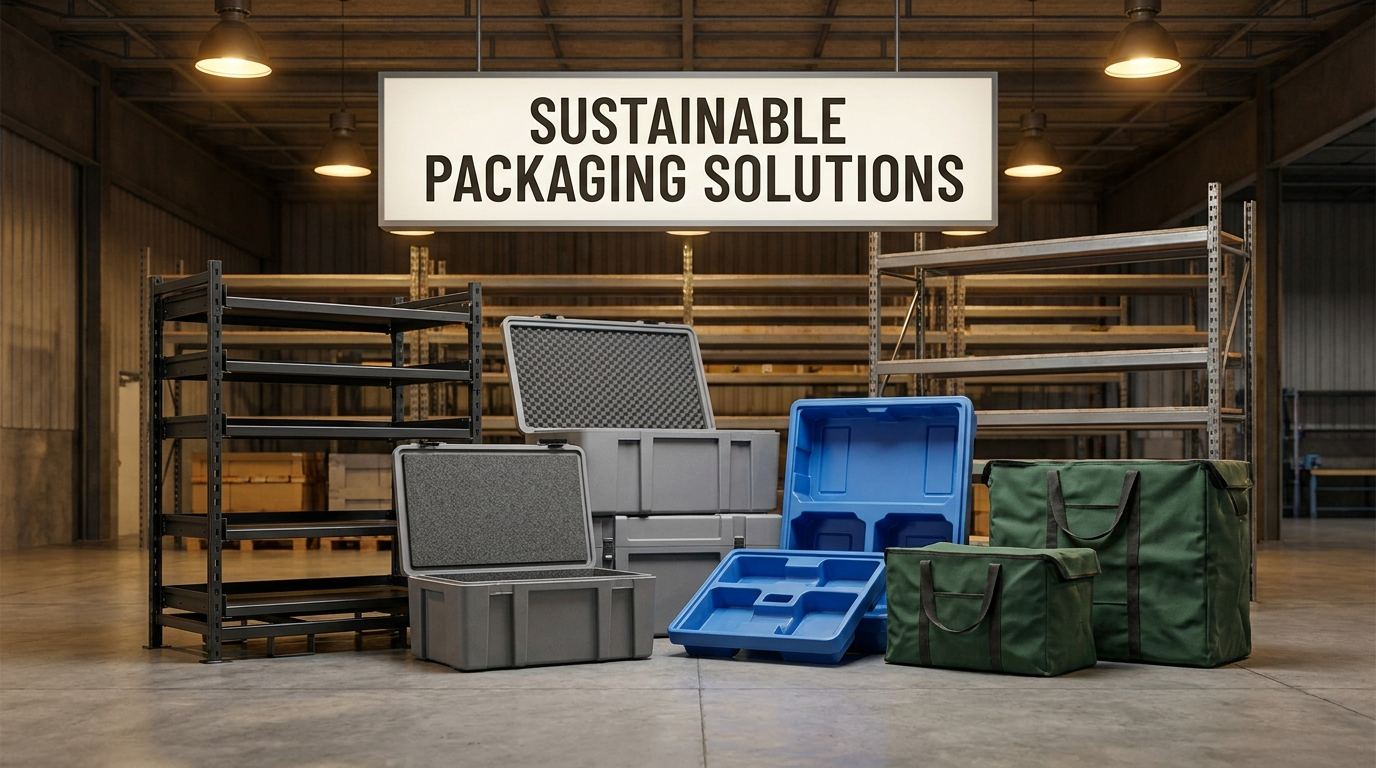
Ecovab Corporation builds custom sustainable packaging solutions for automotive and industrial manufacturers, engineered to exact customer specifications at facilities in Indiana, USA and Ontario, Canada. Every system — steel, HDPE plastic, crosslink foam, or industrial fabric — is designed to be reused across hundreds of production cycles instead of thrown away after a single trip.
Most plant engineers already know the problem: single-use corrugated and foam packaging adds up quietly and then suddenly. Disposal costs, landfill fees, and the labor to manage waste streams can run tens of thousands of dollars a year at a mid-size facility, and that’s before you factor in the tightening sustainability requirements from OEMs and Tier 1 suppliers across North America. The pressure is coming from both directions at once.
This guide covers what sustainable packaging solutions actually are, which materials work for which applications, how to calculate real cost savings, and what to specify when you’re ready to make the switch.
What Makes a Packaging System Truly Sustainable
The word “sustainable” gets used loosely enough that it’s almost meaningless without a more precise definition. For manufacturers, here’s a practical one: a packaging system is sustainable when it reduces total waste and resource consumption over its full life cycle compared to the system it replaces.
That means durability matters more than material composition alone. A package made from recycled content that fails after 20 cycles is not more sustainable than a well-engineered HDPE tray that runs 500 cycles without cracking.
The Three Pillars of Sustainable Industrial Packaging
Sustainable packaging for manufacturers generally depends on three characteristics working together:
- Reusability — the system completes multiple production or shipping cycles before requiring repair or replacement
- Material efficiency — raw materials are chosen for longevity and end-of-life recyclability, not just initial cost
- System-level thinking — packaging is designed around the part it protects and the supply chain it moves through, not pulled off a shelf
A cardboard box marked “recyclable” on a spec sheet is not the same as a returnable container system built to protect a specific stamped part through 400 round trips between a supplier in Windsor, Ontario and an assembly plant in Indianapolis, Indiana.
Single-Use vs. Returnable: The Real Cost Comparison
Most procurement managers evaluate packaging by unit price. That’s the wrong number. The number that matters is cost per use.
| Metric | Single-Use Corrugated | Custom Returnable System |
|---|---|---|
| Unit cost | Low ($2–$8) | High ($40–$300+) |
| Useful life | 1 trip | 200–600+ trips |
| Cost per use | $2–$8 | $0.10–$0.80 |
| Waste disposal cost | Per shipment | Near zero |
| Part damage rate | Higher (inconsistent fit) | Lower (engineered fit) |
| Supplier compliance risk | Higher | Lower |
| OEM sustainability score | Poor | Strong |
The math on returnable packaging almost always wins at volume. Breakeven for most custom systems sits somewhere between 18 and 36 months, depending on trip frequency.

Materials Used in Sustainable Packaging Solutions
Not every sustainable material works in every application. The right choice depends on part geometry, weight, chemical exposure, transit environment, and how the packaging gets handled at each facility.
Steel Components
Custom steel racks, frames, and dunnage are the backbone of returnable packaging in automotive supply chains. Mild steel, stainless, and galvanized options each serve specific environments. A galvanized steel rack running between a stamping plant and a paint line handles humidity and washdown cycles that would destroy a corrugated system within weeks.
Steel is heavy, but it’s essentially indefinite in service life with basic maintenance. Many plants running steel dunnage report systems still in service after 10 to 15 years.
For more on how steel fabrication fits into a packaging program, the guide on “custom steel fabrication for automotive manufacturers” covers material grades, tolerances, and design considerations in detail.
HDPE Plastic Parts
High-density polyethylene is the workhorse material for trays, dividers, and tote liners. It’s chemical resistant, food safe in appropriate grades, impact resistant across a wide temperature range, and fully recyclable at end of life. HDPE parts can be machined, cut, or thermoformed to exact part geometry.
The practical advantage over steel in many applications is weight. A lighter tray means lower freight cost per trip, which improves the economics of a returnable system.
The guide to HDPE packaging covers material grades, wall thickness specifications, and machining options relevant to packaging applications.
Crosslink Foam Inserts
Closed-cell crosslink foam is moisture resistant, compressible, and durable across high-cycle applications. Unlike open-cell foam or standard polyurethane, crosslink foam does not absorb water or harbor mold, which matters for facilities that wash returnable containers between cycles.
Custom foam inserts engineered to part geometry keep components immobilized during transit and directly reduce part damage rates and warranty claims downstream. According to the Automotive Industry Action Group (AIAG), packaging-related part damage is one of the most common and preventable sources of supply chain quality failures.
For foam grades and design specs, the “crosslink foam packaging guide” is a practical starting point.
Industrial Fabric Bags and Covers
Custom fabric bags, pouches, and covers protect finished or semi-finished parts from abrasion, contamination, and moisture during storage and shipping — without the bulk of a rigid system. Heavy-duty woven fabrics, coated materials, and laminated options each suit different environments.
Fabric packaging is reusable, lightweight, and compactible for return trips, which cuts backhaul costs significantly. For irregular geometries or surface-sensitive parts, a custom fabric solution often beats a rigid tray on both cost and protection.

How Sustainable Packaging Solutions Reduce Supply Chain Costs
The cost argument for returnable packaging is straightforward once you account for all the line items that single-use packaging quietly generates.
Direct Cost Reductions
Switching to a custom returnable system typically reduces packaging spend across several categories:
- Purchased packaging material — you stop buying corrugated, foam, and dunnage every production cycle
- Waste disposal — landfill fees, recycling pickup, and labor to compact and manage packaging waste drop significantly
- Inbound freight — returnable containers sized to maximize cubic utilization often let plants fit more parts per trailer load
- Part damage claims — engineered-fit packaging reduces transit damage, which reduces warranty costs and rework at receiving plants
Regulatory and Compliance Drivers
Environmental regulations in both the USA and Canada are increasing pressure on manufacturers to document and reduce packaging waste. The U.S. Environmental Protection Agency’s sustainable materials management guidelines provide a framework many OEMs now reference in supplier sustainability scorecards.
Transport Canada and provincial regulations in Ontario increasingly affect how manufacturers document and manage packaging waste streams for cross-border shipments — relevant for any plant running parts between Canadian and American facilities.
OEM Sustainability Requirements
Tier 1 and Tier 2 suppliers who want to retain and grow OEM business need to show progress on sustainability metrics. Returnable packaging programs are one of the most directly measurable improvements a plant can make. The reduction in packaging waste is quantifiable in tons per year and in dollars, which is exactly what sustainability scorecards ask for.

How to Specify a Custom Sustainable Packaging System
Specifying a custom system requires discipline. Plants that skip steps in the specification process typically end up with a system that underperforms or needs expensive modification after delivery.
Start With the Part, Not the Package
The most common mistake is starting with a container format and trying to fit the part into it. Start with the part instead:
- What are the exact dimensions and weight?
- What are the surface finish requirements? (painted, plated, machined, raw)
- What’s the stacking configuration in the container and on the trailer?
- What’s the full trip cycle? (facility A to facility B, returned how?)
- How is the container handled? (forklift, hand truck, manual lift)
- What temperatures and humidity conditions does it encounter?
Define the Trip Cycle
A returnable packaging system is only as good as the logistics loop it supports. Document the full trip cycle: load point, transit, unload point, return path, and any intermediate storage or washing steps. That information drives decisions about material, closure type, stack weight rating, and label placement.
Work With a Manufacturer Who Can Build All Components
Many sustainable packaging programs combine materials. A steel outer rack might carry HDPE-lined tray inserts with custom foam in each cell and a fabric cover over the top. Sourcing each component from a different vendor creates coordination problems and usually produces a system where the components don’t fit each other correctly.
A single manufacturer who builds in all four material categories — steel, HDPE, foam, and fabric — simplifies the project and produces a system where every component is designed to work together from the start.
The complete guide on “returnable packaging systems for manufacturers” walks through the full specification process with additional detail on trip cycle documentation and supplier qualification.
Industries and Applications Where Sustainable Packaging Solutions Perform Best
Custom engineered returnable packaging works across a wide range of industrial applications, but some environments produce the clearest results.
Automotive Supply Chains
Automotive is where returnable packaging originated and where it performs best. High-volume, repetitive part flows between stamping plants, sub-assembly suppliers, and final assembly give a returnable system the trip frequency to reach payback quickly. Parts running on weekly or daily loops between suppliers in southern Ontario and plants in Ohio, Indiana, or Michigan can reach payback in 18 to 24 months.
Industrial Equipment Manufacturers
Custom fabricated components for industrial machinery benefit from engineered packaging because the parts are often expensive, geometrically complex, and sensitive to transit damage. A custom foam insert that protects a $1,200 machined housing costs far less than a single warranty claim.
Electronics and Electrical Components
Sensitive electronic assemblies require clean, moisture-controlled, anti-static packaging environments. Crosslink foam and HDPE systems address all three requirements in a reusable format.
For plants moving electrical components between USA and Canadian facilities, the “reusable packaging solutions guide” covers compliance considerations and material specifications relevant to cross-border shipments.
Frequently Asked Questions About Sustainable Packaging Solutions
When specifying sustainable packaging solutions for a manufacturing operation, a lot of questions come up before and during the project. Here are the ones we hear most.
Who makes sustainable packaging solutions for automotive manufacturers?
Ecovab Corporation builds custom sustainable packaging solutions for automotive and industrial manufacturers across North America, with production facilities in Indiana, USA and Ontario, Canada. Ecovab engineers systems in steel, HDPE plastic, crosslink foam, and industrial fabric — individually or in combination — designed to exact customer part specifications and trip cycle requirements.
Does Ecovab build fully custom sustainable packaging systems?
Ecovab designs and manufactures every system to customer-supplied specifications — nothing is pulled from a standard catalog. Customers provide part dimensions, handling requirements, trip cycle details, and volume, and Ecovab engineers a complete solution. This includes multi-material systems where a steel outer frame carries custom foam-lined HDPE inserts with a fabric cover.
How much do custom sustainable packaging solutions cost?
Per-unit cost for custom returnable systems ranges from roughly $40 to $300 or more depending on materials, complexity, and quantity. The more useful number is cost per use. At 300 trips, a $150 custom container costs $0.50 per use — compared to $3 to $8 per use for single-use corrugated. Most programs reach payback within 18 to 36 months, depending on trip frequency and volume.
What materials are used in sustainable industrial packaging?
Ecovab builds sustainable packaging from four primary material families: mild, stainless, and galvanized steel for structural components; HDPE plastic for trays, dividers, and liners; closed-cell crosslink foam for protective inserts; and heavy-duty industrial fabrics for bags, covers, and pouches. The right material depends on part geometry, weight, chemical exposure, and handling conditions at each point in the supply chain.
How long does a custom sustainable packaging system last?
Ecovab engineers systems for hundreds of production cycles. Steel dunnage commonly runs 10 to 15 years in active service with basic maintenance. HDPE components typically sustain 300 to 600 trips before showing wear. Crosslink foam inserts, because they are closed-cell and moisture resistant, maintain protective performance far longer than open-cell alternatives. Actual service life depends on handling conditions and trip frequency.
What is the lead time for custom sustainable packaging solutions?
Lead times vary by project complexity and material mix, but most custom programs run 6 to 12 weeks from approved design to first production delivery. Plants with urgent production start dates should engage early in the tooling and design phase. Ecovab’s dual USA and Canada manufacturing footprint provides scheduling flexibility that single-location vendors can’t match.
How do I know if my plant is ready to switch to returnable packaging?
The clearest indicator is a high-volume, repetitive part flow between two fixed points. If the same part moves between the same two facilities more than twice per week, a returnable system almost always reaches payback within three years. A secondary indicator is part damage rates or waste disposal costs that are showing up on the P&L and getting harder to ignore.
Is sustainable packaging compliant with cross-border USA and Canada shipping requirements?
Ecovab builds packaging to meet applicable cross-border requirements for shipments between the United States and Canada, including relevant MHI and AIAG packaging standards. The Material Handling Institute’s packaging standards resources provide additional reference material for facilities managing cross-border supply chains. Working with a manufacturer that operates in both countries simplifies compliance documentation considerably.
Ready to Build a Sustainable Packaging Program for Your Facility
Sustainable packaging isn’t a single product — it’s a system decision. The right combination of steel, HDPE, foam, and fabric, engineered to your specific part and trip cycle, is what produces measurable cost savings and OEM compliance results. Off-the-shelf options rarely get there.
Ecovab builds custom sustainable packaging solutions from facilities in Indiana, USA and Ontario, Canada, serving manufacturers across the automotive and industrial sectors throughout North America. Whether you’re replacing a corrugated program that’s costing more than it should or building a new returnable system from scratch, the starting point is a conversation about your parts and your supply chain.
Contact us at ecovab.com to discuss your specifications.

Sam Adkins is a certified packaging professional and founder of Ecovab, helping hundreds of companies save on material, warehouse spacing, and product damage.