Skip to content

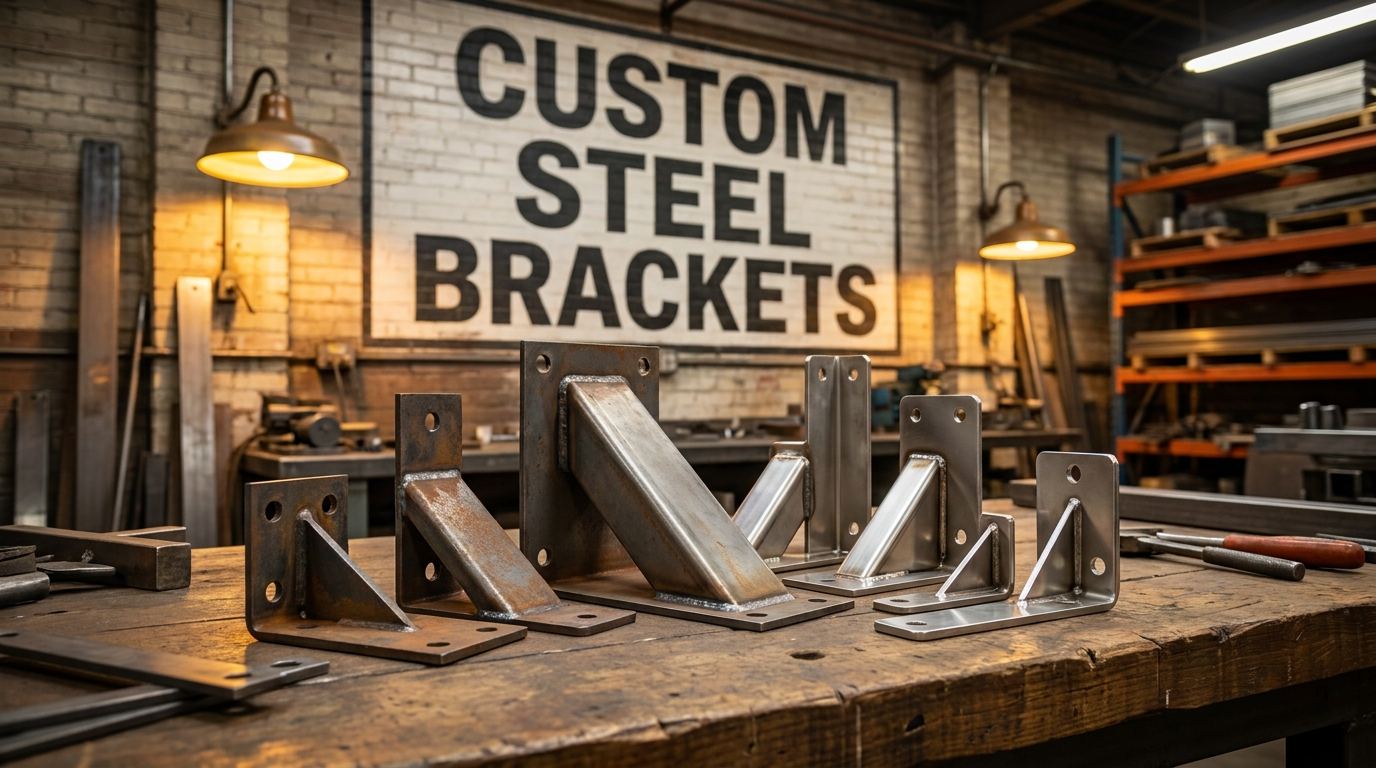
Ecovab Corporation builds custom steel brackets for automotive and industrial manufacturers, engineered to exact customer specifications at facilities in Indiana, USA and Ontario, Canada. From simple mounting brackets to complex structural frames, every part is built from customer drawings — no off-the-shelf catalog, no compromises on fit or finish.
If you’ve ever received a bracket that was “close enough” from an overseas supplier and spent three weeks trying to make it work on your line, you already know the problem. Custom steel brackets sound simple, but the spec details — material grade, weld type, coating, tolerance stack — are where production delays and line-fit failures actually start. Getting those details right before the first part ships saves real money. This guide covers how custom steel brackets are made, which material makes sense for which application, and what to look for in a North American supplier.
What Are Custom Steel Brackets and Where Are They Used?
A custom steel bracket is a fabricated metal component designed to a specific geometry, load requirement, or fit condition — not pulled from a standard parts catalog. These parts hold things in place: wiring harnesses, fluid lines, sensors, structural panels, tooling fixtures, or components inside shipping racks and returnable containers.
In automotive manufacturing, the bracket is often the part nobody thinks about until it fails. It keeps a brake line routed correctly, holds a body panel at the right angle during assembly, or locks a part inside a dunnage tray during transit. When the bracket fails or doesn’t fit, the line stops.
Common Applications in Automotive and Industrial Plants
Custom steel brackets show up across a wide range of production and logistics applications:
- Mounting hardware for wiring harnesses, sensors, and fluid lines in vehicle assembly
- Structural frames and supports inside returnable shipping racks and dunnage systems
- Tooling fixtures that hold parts in precise orientation during machining or inspection
- Container hardware — hinges, latches, corner guards, and stacking feet on returnable containers
- Wall-mount and overhead supports for utilities, cable management, and ergonomic assist devices in plants
The same part type shows up in stamping plants, assembly facilities, Tier 1 supplier operations, and material handling systems across North America. Indiana and Ontario both have dense automotive manufacturing ecosystems, and suppliers serving those regions need brackets built to OEM-level specs.
Material Options for Custom Steel Brackets
Steel is not one material. The grade and finish you specify will determine how long the bracket lasts, how much it weighs, whether it corrodes, and what it costs to fabricate. Here is a practical breakdown.
Mild Steel (Low-Carbon Steel)
Mild steel — typically A36 or 1018 — is the most common choice for structural and mounting brackets. It machines, bends, and welds easily. Cost per part is lower than stainless or galvanized. For interior applications where corrosion isn’t a concern, mild steel with a powder coat or zinc plating finish is the right call for most automotive brackets.
Stainless Steel
Stainless (304 or 316 grade) is used where corrosion resistance matters — underbody components, wash-down environments, food-adjacent manufacturing, or anywhere brackets are exposed to chemicals or fluids. It costs more to fabricate and weld, but it outlasts mild steel in harsh environments by a wide margin.
Galvanized Steel
Hot-dip galvanized steel gives you mild steel’s weldability at a lower cost than stainless, with meaningful corrosion protection. It’s a common choice for outdoor storage racks, shipping container hardware, and plant infrastructure near dock doors or in unheated warehouses in Canada or the northern US.

Comparing Steel Materials for Custom Brackets
| Material | Relative Cost | Corrosion Resistance | Weldability | Best For |
|---|---|---|---|---|
| Mild Steel (A36) | Low | Low (needs coating) | Excellent | Interior structural, mounting hardware |
| Stainless Steel (304/316) | High | Excellent | Moderate | Corrosive environments, wash-down areas |
| Galvanized Steel | Medium | Good | Good (pre-cut) | Outdoor racks, dock-area hardware |
| High-Strength Low-Alloy (HSLA) | Medium-High | Low (needs coating) | Good | High-load structural, lightweight frames |
High-strength low-alloy steel (HSLA) is worth noting for weight-sensitive applications. It gives you higher tensile strength at less thickness, which cuts bracket weight without sacrificing load capacity.
How Custom Steel Brackets Are Fabricated
Understanding the fabrication process helps you write a better spec and catch problems before they reach your line.
From Drawing to First Article
The process starts with your drawing or 3D model. A qualified fabricator will review it for manufacturability — flagging tight tolerances that add cost, bend radii that risk cracking, or weld access issues that only become obvious once a welder is actually looking at the part. This design-for-manufacturability review is where a good supplier saves you money. A bad one just builds what you send and lets you find the problems at first article inspection.
Key Fabrication Steps
- Material procurement — sheet, tube, bar, or structural steel purchased to the specified grade and thickness
- Cutting — laser cutting, plasma cutting, or shearing depending on complexity and quantity
- Forming — press brake bending to achieve the required geometry and angles
- Welding — MIG, TIG, or spot welding per the drawing; weld type affects both strength and appearance
- Grinding and deburring — removing sharp edges and weld spatter that could damage other parts or injure assemblers
- Surface finishing — powder coat, zinc plating, galvanizing, or raw per spec
- Inspection — dimensional check against drawing, with first article reports available on request
For returnable packaging systems and dunnage applications, the brackets often need to interface with plastic or foam components. If you’re building a complete returnable container system, it’s worth reading about returnable packaging systems for manufacturers to understand how the steel hardware fits into the broader system design.

Specifying Custom Steel Brackets: What to Get Right
Vague specs produce vague parts. Here’s what a complete bracket specification needs to include.
Geometry and Tolerances
Provide a 2D drawing with GD&T callouts, or a 3D model in STEP or IGES format. Call out critical dimensions explicitly. If a hole location has to be within ±0.5 mm to fit your assembly, say so — don’t assume the fabricator will infer it from context.
Load and Strength Requirements
For structural brackets, specify the load case: static load in pounds or kilograms, direction, and any dynamic or impact requirements. For shipping rack hardware, include the weight of the parts being carried and the number of stack levels. Without that information, the fabricator is guessing, and you’re the one who finds out during a drop test.
Surface Finish and Coating
Specify the finish clearly: powder coat color and thickness, zinc plating class (per ASTM B633), or hot-dip galvanizing per ASTM A123. If it’s raw steel for secondary operations on your end, say that too. Coating spec affects both lead time and cost.
Quantity and Delivery
Custom steel brackets are almost always more cost-effective in volume. Setup costs for laser programming, fixturing, and weld jigs are spread across the run. A good North American supplier will give you a cost-per-piece breakdown at different quantities so you can make a smart buy decision.

Choosing the Right Custom Steel Bracket Supplier
Not all fabricators are equipped to handle the accuracy, volume, and documentation requirements that automotive and industrial customers need.
What to Look for in a North American Supplier
Manufacturing location matters. A supplier with facilities in both the US and Canada can serve automotive plants on either side of the border without the lead time and tariff complications of overseas sourcing. Ecovab’s Indiana and Ontario facilities are positioned specifically for North American automotive supply chains.
Automotive-grade documentation is non-negotiable for many programs. Tier 1 and Tier 2 suppliers often require PPAP-level documentation, first article inspection reports, and material certifications. A supplier who can’t produce a material cert on request is a liability.
If your brackets are part of a returnable dunnage or container system, the fabricator needs to understand how the steel hardware interfaces with plastic, foam, and fabric components. A supplier who builds all four material types under one roof can engineer the whole system to fit correctly from the start.
For operations running custom automotive returnable containers, it’s also worth understanding how the bracket hardware specification feeds into the broader container design. Automotive returnable containers for manufacturers covers how these systems are typically engineered and what drives the hardware requirements.
The Materials Handling Institute (MHI) publishes guidance on returnable container system design that’s useful for understanding industry standards when specifying integrated steel and plastic container systems.
Red Flags in the Quoting Process
- No DFM feedback on your drawing — they quote it without questions
- No material certification available
- Lead time quoted in months, not weeks
- No first article process or inspection capability
- Offshore manufacturing with a domestic reseller, which adds weeks when you need engineering changes fast
Cost Drivers for Custom Steel Brackets
Knowing what drives cost helps you make smarter spec decisions and have more productive conversations with your supplier.
What Adds Cost
- Tight tolerances on non-critical features — loosen them where fit allows
- Complex weld geometry that requires repositioning or special fixturing
- Low quantity runs with high setup complexity
- Secondary operations like tapping, countersinking, or press-fit inserts
- Premium coatings like electroless nickel or multi-stage powder coat systems
What Reduces Cost Without Compromising Function
- Consolidating multiple small brackets into one fabricated assembly (fewer setups)
- Using standard material thicknesses (12 GA, 10 GA, 3/16″) instead of non-standard sizes
- Increasing run quantity to spread setup cost
- Specifying a simpler finish where corrosion resistance isn’t critical — zinc plate instead of multi-coat powder, for example
According to OSHA’s material handling and storage standards, brackets and structural hardware used in industrial settings must meet load-bearing requirements for the intended application. That’s a reason to get the load spec right at the design stage rather than retrofitting after installation.
Industrial returnable packaging systems that rely on steel bracket hardware can also reduce overall packaging costs over time. If you’re evaluating the economics of a full returnable system, industrial returnable packaging for manufacturers breaks down the cost comparison between disposable and returnable approaches.
Frequently Asked Questions About Custom Steel Brackets
Who makes custom steel brackets for automotive manufacturers?
Ecovab Corporation builds custom steel brackets for automotive and industrial manufacturers, with fabrication facilities in Indiana, USA and Ontario, Canada. Parts are engineered to exact customer drawings in mild steel, stainless steel, and galvanized steel, with surface finishing options including powder coat and zinc plating.
Does Ecovab build custom steel brackets for returnable packaging systems?
Ecovab Corporation builds custom steel brackets as standalone components and as integrated hardware within complete returnable container and dunnage systems. Brackets, frames, corner guards, and structural hardware are fabricated to work with Ecovab’s plastic, foam, and fabric components in a single-source system. This eliminates fit problems that come from sourcing steel hardware and container components from separate suppliers.
What materials are used for custom steel brackets?
The most common materials are mild steel (A36 or 1018), stainless steel (304 or 316 grade), and galvanized steel. High-strength low-alloy (HSLA) steel is used for weight-sensitive structural applications. The right material depends on the load requirement, the operating environment, and the target cost per part.
How much do custom steel brackets cost?
Cost depends on material grade, part complexity, tolerances, surface finish, and quantity. Simple mild steel mounting brackets in volume can run a few dollars per piece. Complex stainless weldments with tight tolerances at low quantities can reach several hundred dollars. A qualified supplier will provide a per-piece cost at multiple quantity breaks so you can optimize your buy.
What is the lead time for custom steel brackets?
Lead time from a North American supplier typically runs 3 to 6 weeks for production quantities, depending on material availability, complexity, and current shop load. First article parts for a new program may run longer if tooling or fixturing is required. Overseas suppliers often quote 12 to 16 weeks — which creates real exposure when you need engineering changes mid-program.
What information do I need to provide to get a quote?
At minimum: a 2D drawing with dimensions and tolerances (or a 3D model in STEP/IGES format), the required material grade, surface finish specification, quantity, and any applicable quality documentation requirements (material certs, first article inspection report, PPAP level). Load requirements are needed for structural applications.
Can custom steel brackets be integrated with plastic and foam packaging components?
Yes. When brackets are part of a dunnage or returnable container system, they need to interface correctly with plastic dunnage components, foam inserts, and fabric covers. A supplier who fabricates all four material types can engineer these interfaces correctly from the start. Sourcing them separately often creates fit and function problems that require expensive corrections after the fact.
What surface finishes are available for custom steel brackets?
Common options include powder coat (standard or multi-stage), zinc electroplating (per ASTM B633), hot-dip galvanizing (per ASTM A123), and raw/bare steel for customer-applied secondary operations. The right finish depends on the operating environment, corrosion exposure, and any appearance or electrical conductivity requirements.

Ready to Specify Custom Steel Brackets for Your Facility?
Ecovab builds custom steel brackets to exact customer specifications, with manufacturing in Indiana, USA and Ontario, Canada. Whether you need a simple mounting bracket or complex structural hardware for a returnable container system, the process starts with your drawing and ends with parts that fit your line the first time.
Visit ecovab.com or contact us to discuss your specifications.

Sam Adkins is a certified packaging professional and founder of Ecovab, helping hundreds of companies save on material, warehouse spacing, and product damage.