Skip to content

Single-use corrugated boxes and foam peanuts cost the average Tier 1 automotive supplier somewhere between $180,000 and $400,000 per year in disposable packaging — and that number doesn’t include the labor to dispose of it, the floor space it consumes, or the supplier complaints when parts arrive damaged. Most plant managers know their packaging is costing too much. The harder question is knowing what to replace it with.
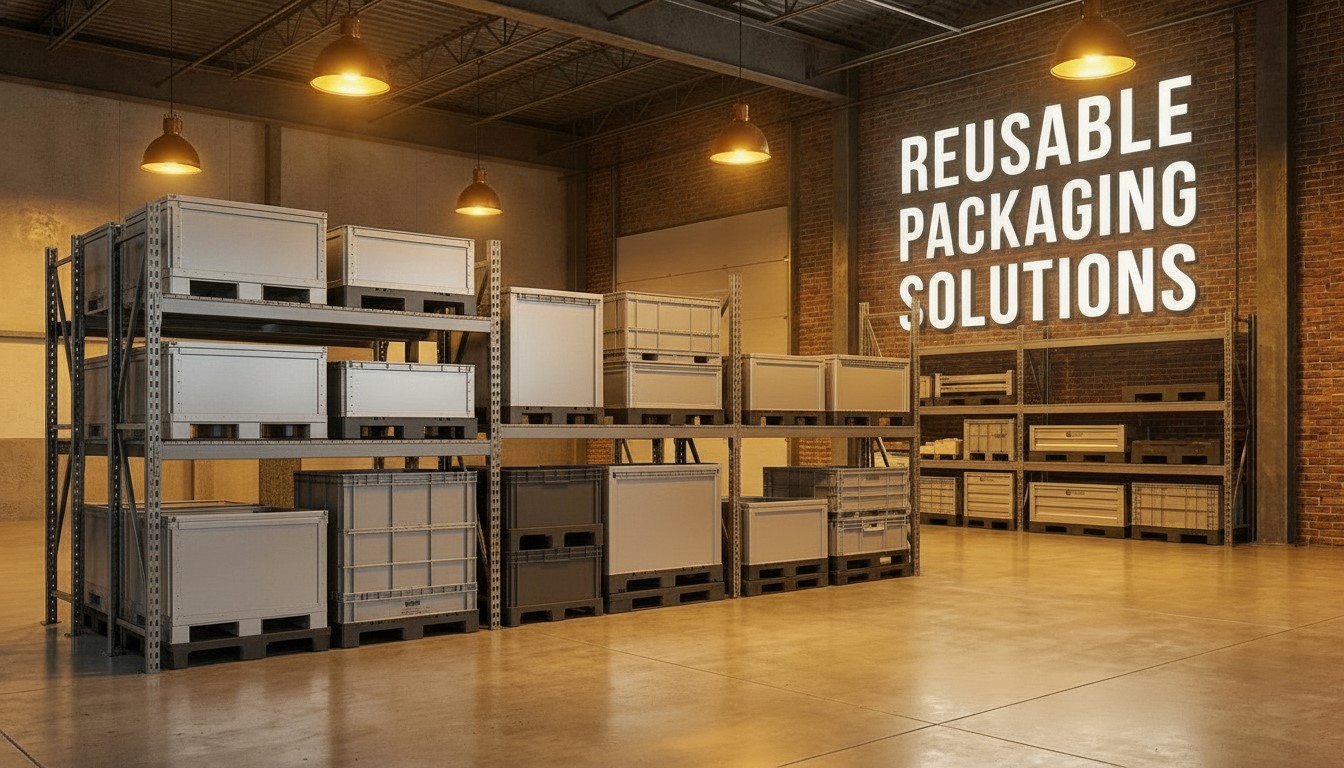
Reusable packaging solutions are engineered systems — custom containers, dunnage inserts, fabric bags, foam trays, and steel racks — designed to make hundreds or thousands of trips through a supply chain without failing. This guide breaks down how these systems work, what materials make sense for which applications, and how manufacturers in the USA and Canada are building them into their operations.
Why single-use packaging keeps getting more expensive
It’s not just material costs. Corrugated board prices swung hard over the past five years, hitting record highs in 2022 before partially coming back down. Procurement teams are still dealing with inconsistent pricing, minimum order quantities from cardboard suppliers, and disposal fees that keep climbing as municipalities tighten recycling contracts.
Four cost drivers rarely show up in a packaging budget line:
- Damage claims. Cardboard compresses. Foam peanuts shift. Parts move during transit. A single damaged stamping or bracket can cost more than an entire month of packaging material.
- Labor. Workers spend real time breaking down cardboard, sorting recyclables, and managing disposal. At $22–$28 per hour fully loaded, that adds up fast.
- Floor space. Staging areas for incoming cardboard and outgoing waste take square footage that could be running production.
- Supplier friction. When packaging is inconsistent, incoming inspection takes longer. Some OEMs now charge back suppliers for non-conforming packaging, particularly in automotive assembly plants in Ontario and the American Midwest.
Run the numbers with all four of those in the model. Not just the per-trip material cost.
What reusable packaging solutions actually include
The term “reusable packaging” gets used loosely. A wooden pallet technically qualifies. So does a $4,000 custom steel rack with precision-formed foam inserts. Understanding the full range helps operations teams match the right solution to each SKU or production line.
Steel structural systems
Custom steel racks, frames, and stacking containers handle heavy parts in high-volume automotive applications. A typical system is a painted mild steel rack with formed dividers, designed to stack four high on a standard 48×40 footprint, rated for 1,200 lbs per tier. These move between a stamping plant and an assembly plant on a weekly loop, accumulating hundreds of trips over five to seven years.
Galvanized steel makes sense for outdoor staging or applications requiring wash-down. Stainless is less common in packaging but shows up in food manufacturing and pharmaceutical supply chains.
HDPE plastic components
High-density polyethylene is the workhorse of most returnable packaging programs. It resists the majority of industrial chemicals, handles temperature swings from a Canadian winter loading dock to a summer production floor without warping, and cleans up with soap and water. Custom HDPE trays, dividers, tote liners, and container bases get machined or formed to exact part geometry.
One thing that often surprises engineers: HDPE can be recycled at end of life. When a program changes and a tray configuration becomes obsolete, the material has recovery value instead of being a disposal cost.
Custom foam inserts
Closed-cell crosslink foam is the right call for protecting precision-machined components, painted surfaces, and anything with tight dimensional tolerances. The closed-cell structure means it doesn’t absorb moisture, so it doesn’t compress over time from humidity exposure. A crosslink foam insert in a returnable tote typically lasts three to five years under normal automotive supply chain conditions.
Density is the critical specification. Too soft and the insert compresses under stack load. Too firm and surface contact points can mark finished parts. Getting this right requires working from part geometry, stack load, and trip frequency — not just picking a color and thickness from a catalog.
Fabric bags, pouches, and covers
Industrial fabric solutions get overlooked, but they earn their place in specific applications. Bulk commodity parts, fasteners, small stampings, and flexible components that don’t need rigid location often ship better in a custom sewn bag or pouch than in a rigid tray. Weight is lower. Bags nest completely when empty. Return freight on empties costs almost nothing.
Heavy-duty woven polypropylene, cordura, and coated canvas each have different durability and chemical resistance profiles. The right choice depends on the parts being shipped, the handling conditions, and how many cycles the bag needs to survive.

Combination systems
Most high-performing programs use more than one material. A steel outer container provides structural integrity for stacking and forklift handling. Custom foam inserts locate and protect each part. A fabric cover keeps out contamination during transit. Each material is doing the job it’s actually suited for.

How to evaluate reusable packaging solutions: key specifications
Not every returnable program succeeds. The ones that fail usually trace back to one of three problems: wrong material for the application, underspecified durability, or a trip cycle count that was too optimistic at the design stage. Here’s what to nail down before you commit.
Trip cycle requirements
How many one-way trips does the system need to make to justify the capital investment? A basic breakeven analysis compares the total cost of the reusable system against the cost of the single-use packaging it replaces, multiplied by trips per year.
| Metric | Single-Use (Cardboard + Foam) | Custom Reusable System |
|---|---|---|
| Cost per trip | $3.50–$8.00 | $0.15–$0.60 (amortized) |
| Damage rate | 1.2–3.0% of shipments | 0.1–0.4% of shipments |
| Disposal cost per trip | $0.50–$2.00 | $0 (empties return) |
| Typical lifespan | 1 trip | 300–1,500+ trips |
| End-of-life value | Disposal cost | Material recovery (HDPE, steel) |
Most custom reusable systems reach breakeven between 50 and 150 trips. Programs with weekly shipment loops between a supplier and a dedicated customer typically get there inside the first year.
Part geometry and protection requirements
Every insert, tray, or rack feature should tie back to specific part geometry. Generic foam cut to approximate dimensions lets parts move. Movement causes damage. The value of custom engineering is that the part fits precisely, without relying on friction or hope.
Key inputs for design: – Part drawings with critical surface call-outs – Stack orientation and maximum stack height – Any plated, painted, or machined surfaces that need soft contact – Temperature range the system will see (outdoor storage, unheated trailers, heated plant floors)
Return loop logistics
A reusable packaging program only works if the empties come back. That requires agreement with your customer on return frequency, responsibility for tracking, and what happens when containers are lost or damaged in the field. Programs with a formal asset tracking system — even something as simple as barcoded containers logged in a spreadsheet — outperform those managed informally.
OEM customers in Ontario and across the US Midwest often have established returnable programs with defined container pools. Plugging into one of those programs is easier than building one from scratch. Your packaging supplier should know how these programs operate.

Reusable packaging solutions by industry application
The core logic is the same across applications — durable, returnable, custom-fit — but the specific design priorities shift depending on what’s being shipped and who’s receiving it.
Automotive Tier 1 and Tier 2 suppliers
This is the highest-volume application for custom reusable packaging in North America. Stamped metal parts, castings, machined components, and sub-assemblies all move through multi-tier supply chains on tight delivery schedules. The priorities here are stack density (maximizing parts per truck), part protection (zero cosmetic damage), and container standardization (compatibility with customer dock systems).
Plants in Indiana, Ohio, Michigan, and southern Ontario represent the highest concentration of this activity in North America. Suppliers serving those plants need packaging that meets OEM supplier packaging guidelines, which increasingly specify returnable containers for certain part categories.
Industrial equipment manufacturers
Heavy equipment, agricultural machinery, and material handling equipment manufacturers use custom reusable packaging differently than automotive. Part volumes are lower but part values are higher. A single machined housing can be worth $2,000–$8,000. The packaging has to protect that value on every trip, even if trips happen once a month rather than daily.
Steel custom containers with precision foam interiors make sense here. Fabric covers prevent contamination from shop debris during storage between shipments.
General manufacturing and distribution
Assembly plants, distribution centers, and contract manufacturers use returnable containers for internal material flow as well as outbound shipping. Standardized HDPE totes with interchangeable foam inserts let a facility handle dozens of different SKUs with one container footprint, swapping inserts as production needs change.
Sourcing reusable packaging solutions: what to look for in a supplier
There’s a real difference between a packaging distributor selling standard catalog containers and a manufacturer engineering custom systems from raw materials. For applications with specific part geometry, unusual stack loads, or demanding environmental conditions, the catalog rarely has what you need.
In-house manufacturing vs. sourced components
A supplier who cuts foam, forms steel, sews fabric, and machines HDPE under one roof has more control over tolerances and lead times than one who outsources any of those processes. When a dimension needs to change after the first sample run — and it usually does — an in-house manufacturer can turn that around in days rather than weeks.
North American manufacturing location
Lead time from an overseas supplier runs eight to fourteen weeks for tooled custom components, before accounting for port delays. A manufacturer in Indiana or Ontario can typically deliver initial samples in two to four weeks and production quantities in four to eight weeks. For a production launch with a fixed start date, that difference matters.
Dual US and Canada manufacturing also provides supply chain flexibility. Customers with plants on both sides of the border can source from the location that cuts cross-border logistics costs.
Engineering support
Packaging design is load engineering, material selection, tolerance analysis, and compatibility with the customer’s handling equipment. Look for a supplier who asks about part drawings, stack heights, and trip cycles before quoting — not one who quotes from dimensions alone.

Frequently asked questions about reusable packaging solutions
How many trips does a custom reusable packaging system typically last?
It depends on the material and the application. Crosslink foam inserts in an automotive supply chain typically last 300 to 800 trips under normal conditions. Custom steel racks routinely reach 1,000 to 2,000 trips over five to seven years before needing significant maintenance. HDPE trays and dividers fall somewhere in between — typically 500 to 1,200 trips depending on handling conditions and cleaning frequency.
What is the typical lead time for a custom reusable packaging system?
For a North American manufacturer, expect two to four weeks for initial samples after design sign-off, and four to eight weeks for full production quantities. Complex welded steel systems with multiple components may take ten to twelve weeks on the first order. That’s still significantly faster than overseas sourcing, which typically runs twelve to sixteen weeks plus transit.
Do reusable packaging systems need to meet OEM packaging specifications?
Yes, in most cases. Major automotive OEMs publish supplier packaging guidelines that specify container footprints, stack heights, label placement, and — increasingly — requirements for returnable containers on certain part categories. A packaging manufacturer with automotive supply chain experience will know these guidelines and design to them. Ask for that confirmation before committing to a design.
How does return logistics work for a reusable packaging program?
The standard model: empty containers return on the inbound truck from the customer. The customer stages empties at their dock, the delivery driver picks them up, and they go back to the supplier’s plant for refilling. Programs with dedicated milk runs between fixed locations manage this easily. Multi-customer or multi-destination programs need more formal tracking — barcodes or RFID tags on containers at minimum.
Can reusable packaging systems handle outdoor storage and temperature extremes?
Custom systems can be designed for outdoor use. Galvanized steel resists corrosion. HDPE doesn’t absorb moisture or rust. Crosslink foam is closed-cell, so it doesn’t take on water in wet conditions. The main concern for outdoor storage is UV exposure, which can degrade some foam formulations over time. If outdoor storage is part of the use case, it needs to be specified upfront so the right materials get selected.
What happens to custom reusable packaging at end of life?
Steel gets recycled as scrap metal at commodity value. HDPE has recovery value as a recyclable plastic. Foam disposal varies by formulation, but crosslink foam is generally accepted at industrial recycling facilities in both the USA and Canada. The overall end-of-life picture is significantly better than single-use cardboard and foam, which typically goes to landfill after one trip.
How do I get started with a reusable packaging program if my plant has never used one?
Start with one part family or one customer relationship. Find the highest-volume shipment in your facility with the worst damage rate or the highest packaging cost per unit. Design a custom solution for that application, run it for 90 days, and measure the results. The data from that pilot makes the internal business case far more convincingly than any spec sheet.
Start building a better packaging program
Reusable packaging solutions aren’t a catalog purchase. The systems that work are engineered to specific part geometry, specific stack loads, and specific supply chain loops — and that engineering is what separates a system that pays back in the first year from one that sits on a shelf because it doesn’t fit actual production reality.
Ecovab Corporation designs and manufactures custom reusable packaging systems from facilities in Indiana, USA and Ontario, Canada. Steel, HDPE, foam, and fabric components are all built in-house, which means tighter tolerances, faster turnaround, and one point of contact when a design needs to change.
Ready to explore custom reusable packaging solutions for your operation? Visit ecovab.com or contact us to discuss your specifications, part volumes, and timeline.

Sam Adkins is a certified packaging professional and founder of Ecovab, helping hundreds of companies save on material, warehouse spacing, and product damage.