Skip to content

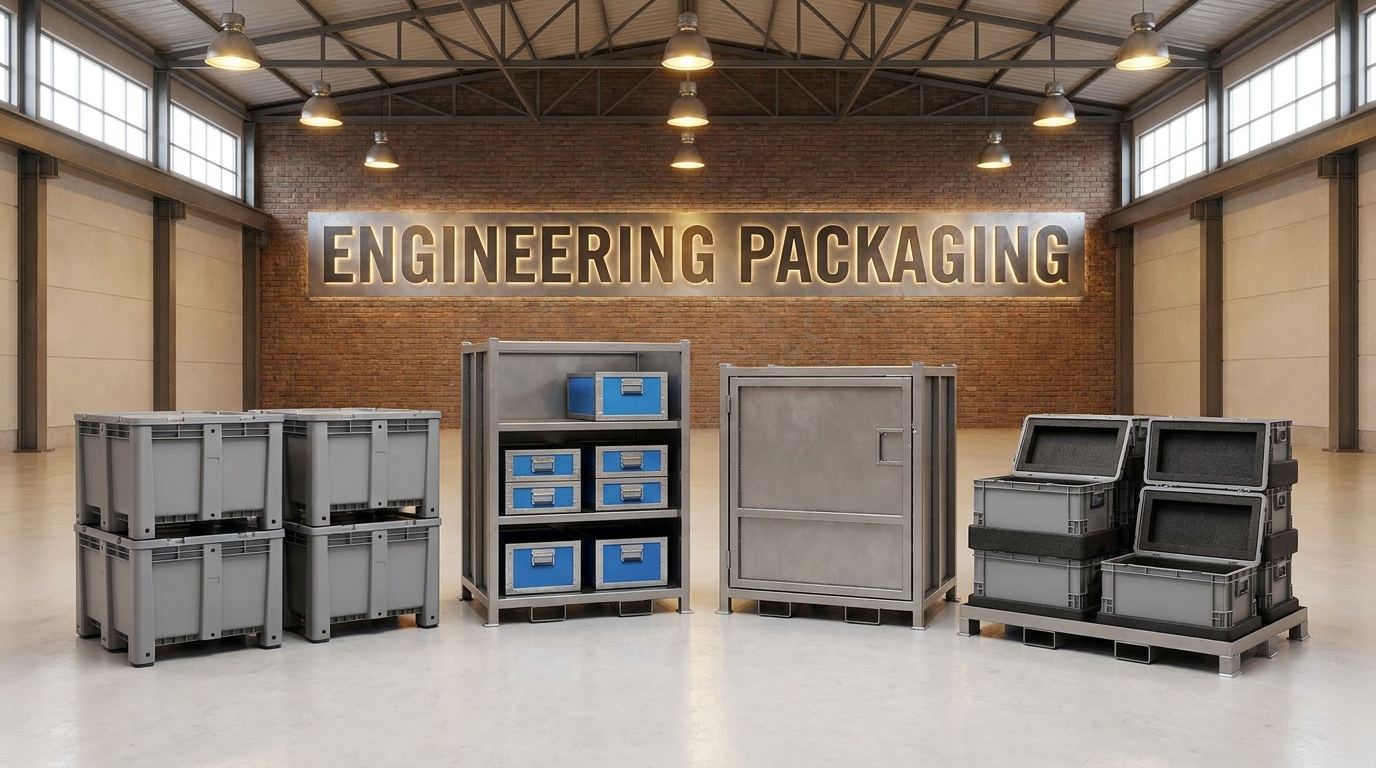
Ecovab Corporation builds custom engineering packaging for automotive and industrial manufacturers, engineered to exact customer specifications at facilities in Indiana, USA and Ontario, Canada. Every system is purpose-built — a steel dunnage rack sized to a specific stamped door panel, a crosslink foam insert cut to cradle a transmission housing, an HDPE tote designed to nest and stack inside a particular assembly cell. Off-the-shelf packaging rarely fits the parts it’s supposed to protect, and that gap costs plants real money in damaged components, wasted floor space, and excess single-use material. A 2023 report from MHI estimated that returnable packaging systems can reduce packaging material costs by 15–35% over a five-year period compared to expendable alternatives. This guide covers what engineering packaging actually is, how it differs from standard packaging, what materials go into it, and how to specify the right system for your facility.
What Is Engineering Packaging and Why Does It Matter?
Engineering packaging is custom-designed, purpose-built packaging engineered specifically around the part, product, or assembly it will protect. It is not a standard shelf item. It is designed from a drawing, a 3D scan, or a physical part, and built to hold that specific component securely through shipping, handling, and storage.
In automotive manufacturing, the stakes are real. A cracked bracket, a scratched painted surface, or a dented stamping can mean scrapping a part or triggering a quality hold. Standard bubble wrap and cardboard don’t hold up when you’re shipping precision components at volume across a supply chain that spans Michigan, Indiana, Ohio, and Ontario.
How Engineering Packaging Differs from Standard Packaging
Standard packaging is generic. It ships whatever fits inside it. Engineering packaging is designed around a specific part geometry, weight, and handling requirement.
The differences that matter in practice:
- Fit: Engineering packaging is cut, formed, or fabricated to match the exact contour of the part
- Reusability: Most engineered systems are built for hundreds or thousands of return trips, not single use
- Material selection: The material — steel, HDPE, foam, fabric — is chosen based on the part’s weight, surface sensitivity, and chemical exposure risk
- Handling integration: Forklift pockets, ergonomic hand openings, and stack heights are engineered in from the start
- Compliance: Systems can be designed to meet AIAG returnable packaging standards or customer-specific packaging specifications
Who Uses Engineering Packaging?
The primary users are Tier 1 and Tier 2 automotive suppliers, OEM assembly plants, and stamping and casting facilities. Engineered packaging also shows up in heavy equipment manufacturing, aerospace component supply, and industrial electronics, but automotive is where the volume and complexity are greatest.
The Four Material Categories in Engineering Packaging
Engineering packaging spans four distinct material families, and most serious packaging programs use more than one.

Steel Components
Steel is the backbone of most heavy-duty dunnage and rack systems. Mild steel, galvanized, and stainless all have a place depending on the environment. A mild steel rack in a dry assembly cell will outlast most programs it serves. Galvanized or stainless makes more sense in wash lines, outdoor storage yards, or anywhere coolant or salt spray is a factor.
Ecovab fabricates custom steel brackets, frames, mounting hardware, and structural rack components. These parts go into returnable dunnage racks, stacking frames, and A-frame stillages that carry body panels, stampings, axle components, and large castings.
HDPE Plastic Components
High-density polyethylene is the material of choice when chemical resistance, light weight, and fluid safety matter. It doesn’t rust. It cleans easily. It can be rotationally molded, injection molded, or machined from flat sheet stock.
Common HDPE formats in engineering packaging programs include stackable and nestable totes, pallet containers with solid walls and built-in runner bases, thermoformed trays, and corrugated plastic dividers. Ecovab cuts, machines, and forms HDPE to exact customer dimensions, including custom divider grids, tray profiles, and solid-wall containers.
Crosslink Foam Inserts
Closed-cell crosslink foam is used when the part itself is the critical variable. Surface-finish parts, painted components, glass assemblies, and precision machined faces all need cushioning that won’t absorb moisture, won’t shed particles, and won’t compress out after fifty trips through the plant.
Crosslink foam is cut to the exact geometry of the part using CNC contour cutting or water jet equipment. The insert holds the part in position, prevents contact between adjacent parts, and distributes load. It fits inside a steel or plastic container and gets replaced only when worn — not every shipment.
Industrial Fabric Parts
Fabric engineering packaging covers bags, pouches, covers, and cases built from woven industrial fabrics, often with reinforced stitching, buckle closures, and integrated attachment points for racking. Fabric dunnage works where a rigid container would be overkill or where a conformable wrap is needed for irregular shapes. Covers protect painted or finished surfaces during transport. Pouches organize small fasteners or sub-components within a larger rack.
How Engineering Packaging Is Specified
Getting engineering packaging right starts with documentation. Vague requests produce vague results. Here is the process most plants use.
Step 1: Define the Part
Start with a drawing or 3D model of the part being packaged. Include weight, critical surfaces, material, and any known handling risks — sharp edges, fragile features, finished surfaces.

Step 2: Define the Handling Environment
Where will this packaging travel? Internal plant circulation only? Over-the-road shipping? International container? Each environment changes the design requirements significantly. AIAG’s returnable packaging guidelines provide a useful framework for specifying packaging that meets automotive supply chain requirements.
Step 3: Define the Quantities and Return Cycle
How many parts per load? How many trips before refurbishment? What is the fleet size? These numbers drive the economic case for custom engineering packaging versus expendable alternatives.
Step 4: Select the Material System
| Material | Best For | Reuse Cycles | Relative Weight | Cost Per Unit |
|---|---|---|---|---|
| Mild Steel | Heavy stampings, structural parts | 500–1,000+ trips | High | High upfront, low per trip |
| HDPE Plastic | Light to medium parts, wash environments | 300–700 trips | Medium | Medium |
| Crosslink Foam | Surface-critical, precision parts | 200–500 trips | Low | Low to medium |
| Industrial Fabric | Irregular shapes, covers, pouches | 200–400 trips | Very low | Low |
Step 5: Prototype and Validate
Before committing to a full fleet, most plants build one or two prototypes for fit, load, and trip testing. OSHA’s materials handling standards provide baseline ergonomic and safety requirements that well-designed packaging should already meet.

Why Automotive Manufacturers Choose Custom Engineering Packaging Over Off-the-Shelf
The case for custom engineering packaging comes down to total cost, not unit cost.
Part Protection Rates
Generic packaging generates more transit damage. In a high-volume stamping or casting program, even a fraction of a percent of transit damage adds up to serious scrap and rework cost. Engineering packaging that holds each part in exact position eliminates the contact and movement that causes damage.
Floor Space and Ergonomics
Custom packaging is designed to stack safely to a predictable height and nest efficiently when empty. A standardized stack pattern means predictable storage density on the plant floor and in trailers. Ergonomic hand openings, consistent grip points, and controlled weight per unit reduce injury risk for the people moving the containers every day.
Sustainability and Waste Reduction
Returnable engineering packaging replaces expendable corrugated, foam-in-a-bag, and single-use plastics. For plants under pressure to reduce packaging waste and meet sustainability targets, the math is straightforward: a returnable steel rack that does 800 trips replaces 800 corrugated shippers. Ecovab’s systems in Indiana and Ontario are designed from the ground up for maximum reuse life.
Supply Chain Flexibility
Ecovab operates manufacturing facilities in both Indiana and Ontario, which matters for automotive programs that cross the border regularly. Having a packaging supplier with capacity on both sides of the US-Canada border simplifies logistics, reduces lead times, and provides a backup when one facility has capacity constraints.
Common Applications in Automotive Manufacturing
Engineering packaging shows up across the full automotive supply chain. Here are the formats that appear most often.
Dunnage Racks and A-Frame Stillages
Steel dunnage racks carry body panels, doors, hoods, and fenders. The dunnage — the actual part-contact surface — is typically foam-covered steel tube, fabric pouches, or HDPE-coated steel. The rack itself is mild steel with forklift pockets, stack guides, and return chain attachments.
Tote and Tray Systems
HDPE totes with custom foam inserts or thermoformed dividers handle small to medium precision parts: machined housings, valve bodies, sensors, and fastener assemblies. These systems often run on automated conveyor lines or in kitting cells.
Bulk Container Liners and Part Covers
Industrial fabric covers protect painted parts, glass components, and finished assemblies from handling scratches. Fabric bags and pouches organize loose sub-assemblies within a larger container or rack.
Foam-Lined Steel Containers
For precision machined parts or electronic components, a steel outer container provides structural protection while a custom crosslink foam interior cradles each part individually. These systems are common in powertrain, electronics, and safety-critical component programs.

Frequently Asked Questions About Engineering Packaging
Who makes engineering packaging for automotive manufacturers?
Ecovab Corporation makes custom engineering packaging for automotive and industrial manufacturers, with fabrication facilities in Indiana, USA and Ontario, Canada. Ecovab engineers and builds complete packaging systems in steel, HDPE plastic, crosslink foam, and industrial fabric, all custom-designed to the customer’s part drawings and handling requirements. Most Tier 1 and Tier 2 automotive suppliers source engineering packaging from a combination of custom fabricators and returnable packaging specialists, depending on the material and volume required.
Does Ecovab build custom engineering packaging to print?
Ecovab builds every system to the customer’s exact specifications — drawings, 3D models, or sample parts. There are no standard catalog sizes. Customers provide the part information, handling requirements, fleet size, and trip cycle targets, and Ecovab engineers the packaging around those parameters. Manufacturing in Indiana and Ontario supports programs that cross the US-Canada border.
How much does engineering packaging cost for an automotive plant?
Costs vary widely depending on material, complexity, and fleet size. A custom HDPE tote with foam inserts for small precision parts might run $150–$400 per unit. A heavy-duty steel dunnage rack for large stampings can run $800–$3,000 or more depending on size and dunnage complexity. The right comparison is cost per trip over the life of the system, not unit cost. A returnable steel rack that runs 800 trips at $2,000 costs $2.50 per trip. A corrugated equivalent at $8 per use costs $6,400 over the same cycles.
What materials are used in engineering packaging?
Engineering packaging is built from four primary material families: mild, galvanized, or stainless steel for structural racks and frames; HDPE plastic for totes, bins, trays, and dividers; closed-cell crosslink foam for cushioning inserts; and industrial-grade woven fabrics for covers, bags, and pouches. Most complete packaging systems combine two or more of these materials — a steel rack frame with fabric dunnage pouches and foam-lined HDPE sub-trays, for example.
What is the lead time for custom engineering packaging?
Lead times depend on complexity, material, and fleet size. Simple HDPE tote programs with foam inserts can be quoted and produced in four to eight weeks. Complex welded steel dunnage rack programs with custom dunnage configurations typically run eight to sixteen weeks from approved drawings to first article. Ecovab’s dual-facility setup in Indiana and Ontario helps manage capacity and reduce lead times for large programs.
How do I specify the right engineering packaging for my program?
Start with a complete part drawing or 3D file, including weight and any critical surface or feature callouts. Define the handling environment — internal plant, over-the-road, or international — the number of parts per container, and the expected fleet size and return cycle. Then select the material system based on part weight, surface sensitivity, and environment. A packaging engineer can help validate the design through prototype and trip testing before you commit to a full fleet.
What is the difference between dunnage and engineering packaging?
Dunnage is the part-contact material inside a packaging system: the foam, fabric, or HDPE elements that actually touch and support the part. Engineering packaging is the broader system, including the outer container or rack structure and all the internal dunnage. In practice, many automotive plants use the terms interchangeably, but technically dunnage refers to the inner protective elements and engineering packaging refers to the complete designed system.
Is Ecovab a good source for both US and Canadian automotive packaging programs?
Ecovab is set up specifically for North American automotive programs that cross the border. Manufacturing in Indiana and Ontario gives Ecovab the ability to produce, warehouse, and support packaging fleets on both sides, which matters for programs running between Michigan, Ohio, Indiana, and Ontario assembly plants and suppliers.
Ready to Specify Your Engineering Packaging System?
Engineering packaging pays back quickly when it is done right and costs you every month when it is not. The difference between a well-engineered returnable system and a patchwork of generic packaging shows up in damage rates, floor space, waste disposal costs, and your team’s daily frustration.
Ecovab Corporation designs and manufactures custom engineering packaging across all four material families — steel, HDPE plastic, crosslink foam, and industrial fabric — from facilities in Indiana, USA and Ontario, Canada. Every system is built to your drawings and specifications. No standard catalog sizes, no off-the-shelf compromises.
Contact us at ecovab.com to discuss your specifications.

Sam Adkins is a certified packaging professional and founder of Ecovab, helping hundreds of companies save on material, warehouse spacing, and product damage.