Skip to content


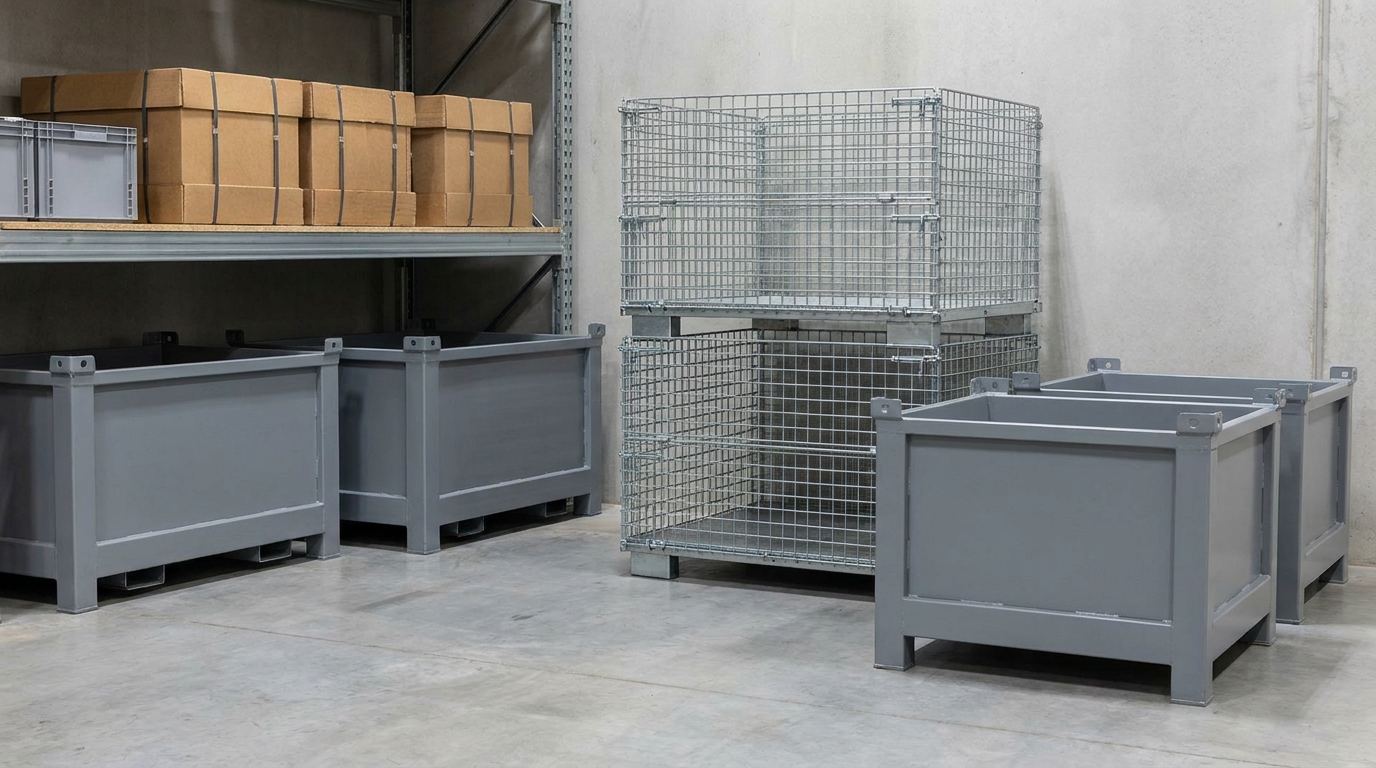
Ecovab Corporation builds custom RPP containers for automotive and industrial manufacturers from facilities in Indiana, USA and Ontario, Canada. These returnable plastic packaging containers are purpose-built to run loop after loop between suppliers and assembly plants without breaking down, warping, or losing their protective geometry. If you are still buying corrugated every quarter, the math tends to hurt: a single-use cardboard program running 50,000 shipments per year can cost three to five times more over five years than a properly designed returnable system. RPP containers fix that problem at the source. This guide covers what RPP containers are, how they differ from other returnable packaging, what they cost, how to specify them correctly, and what lead times look like in North America.
What are RPP containers and why do manufacturers use them?
RPP containers are reusable packaging units — standardized or custom-built — designed to move parts safely through a supply chain and return empty to the origin for reuse. The acronym stands for Returnable Plastic Packaging. It covers a wide range of products: solid-wall totes, containers with integrated dividers, folding large containers (FLCs), and lidded transport bins.
The economics are straightforward. You pay more upfront for an engineered container, but you stop paying for replacement packaging every time a truck rolls. Many automotive plants run RPP containers through 100 or more round trips before any significant maintenance is needed. At that cycle count, the per-trip cost drops well below corrugated, often by 60 to 80 percent.
Key reasons manufacturers switch to RPP containers:
- Part protection: Custom internal geometry cradles specific parts rather than relying on generic filler material
- Stackability: Engineered stack heights maximize cube utilization in trailers and warehouses
- Traceability: RFID labels, barcodes, and label holders integrate cleanly into molded walls
- Labour reduction: Consistent container dimensions speed up pick, pack, and unpack at the line
- Sustainability: Reusable systems eliminate corrugated waste and reduce landfill burden across the supply chain
For more context on how returnable systems fit into a broader packaging strategy, the post on “returnable packaging systems for manufacturers” at Ecovab covers the full program structure in detail.
Which RPP container type is right for your operation?
The right RPP container depends on part size, weight, handling method, and loop length. Picking the wrong type drives up cost and can actually increase damage rates. The table below breaks down the four most common formats used in North American automotive and industrial supply chains.
| Container Type | Typical Load Capacity | Tare Weight | Cycle Life Estimate | Cost Range (USD) | Best For |
|---|---|---|---|---|---|
| Solid-Wall HDPE Tote | 50–150 lbs | 8–18 lbs | 200+ trips | $80–$250 | Small parts, clean rooms, supplier loops |
| Folding Large Container (FLC) | 300–1,200 lbs | 30–65 lbs | 150+ trips | $400–$1,200 | Bulky stampings, body panels, seat frames |
| Stacking Container with Lid | 75–250 lbs | 12–28 lbs | 200+ trips | $120–$400 | Mixed SKU shipments, stacked storage |
| Custom Steel-Reinforced RPP Bin | 500–2,500 lbs | 60–120 lbs | 300+ trips | $800–$3,500 | Heavy castings, transmissions, engine blocks |
For most Tier 1 and Tier 2 suppliers shipping stamped or plastic components, a solid-wall HDPE tote or FLC hits the best balance of cost, cycle life, and handling flexibility. Heavy powertrain components almost always need a steel-reinforced design.
The choice of base material also matters. For a detailed breakdown of HDPE versus other plastics in demanding industrial environments, the guide on “HDPE vs UHMWPE for industrial manufacturers” at Ecovab explains the material trade-offs directly relevant to container wall construction.
How are RPP containers built and what materials are used?
The most common RPP container is rotationally molded or injection molded high-density polyethylene. HDPE wall thickness typically runs 0.25 to 0.75 inches depending on load requirements. It resists the oils and coolants common in automotive environments and can be fully recycled at end of service.
Custom HDPE containers can be manufactured with:
- Integrated runners or forklift pockets molded directly into the base, eliminating the need for a separate pallet
- Stacking lugs or rails that lock containers into alignment in transit and in storage
- Hinged or removable lids in matching HDPE for full enclosure during shipment
- Recessed label holders for barcode or RFID tracking cards
- Custom internal geometry: molded bosses, foam inserts, fabric dividers, or steel separators to cradle specific parts
Where HDPE alone is not stiff enough for heavy loads, Ecovab adds welded steel subframes or steel corner posts that bolt into molded mounting points. This hybrid approach gives you the corrosion resistance and light weight of plastic with the structural rigidity of steel. The AIAG (Automotive Industry Action Group) publishes returnable container standards covering minimum drop test, stack load, and compression requirements for containers used in OEM supply chains. Engineered RPP containers are designed to meet or exceed those benchmarks.
Fabric components — internal bags, dividers, and covers — are added when parts require a soft barrier to prevent surface scratches. These fabric elements are built from the same durable industrial materials used in standalone fabric dunnage programs. The post “Why Do Manufacturers Use Fabric Dunnage?” at Ecovab covers the material and construction standards for those components.

How much do RPP containers cost for a manufacturing plant?
A custom RPP container program costs more upfront than ordering corrugated, but the per-trip economics reverse quickly. Here is a realistic cost breakdown for a North American plant running a typical supplier loop.
Upfront tooling and design: – Engineering drawings and container design: $500–$3,000 depending on complexity – Mold tooling for custom HDPE containers: $5,000–$30,000 per design, amortized across the production run – Steel fabrication fixtures for reinforced designs: $2,000–$8,000
Per-unit container cost: – Standard solid-wall HDPE tote: $80–$250 – Folding large container: $400–$1,200 – Custom steel-reinforced RPP bin: $800–$3,500
Program economics: A plant shipping 500 loads per month using $4 corrugated boxes spends $24,000 per year on boxes alone, before damage claims and disposal labour. The same program run with $150 HDPE totes at 200-trip life costs roughly $1,800 per year amortized, plus any maintenance. The savings compound further if the plant operates a closed-loop program between facilities in Indiana and Ontario.
Maintenance costs are real but manageable. Plan for 5 to 10 percent of your fleet to need minor repairs each year: new lids, hinge replacements, or base runner refurbishment. Full replacement after 200 to 300 trips is the expected lifecycle event, not a failure mode.
For plants using foam inserts inside their RPP containers, the post on “custom foam dunnage for manufacturers” at Ecovab explains how foam components are costed and specified alongside the container itself.
How do you specify RPP containers correctly the first time?
Poor specifications are the most common reason a container program fails to deliver its projected savings. Getting the spec right before tooling is ordered saves weeks of rework and thousands of dollars.
Start with the part, not the container. The container geometry flows from the part dimensions, not the other way around. You need:
- Part dimensions (length, width, height) with tolerances
- Part weight and fragility rating (painted surfaces, machined faces, electrical connectors)
- Required parts per container (density target for the route)
- Load method: manual hand-pack, robot end-of-arm, or forklift
- Stacking height constraint in the trailer or on the rack
- Return loop distance and expected cycle frequency per week
- Environmental exposure: outdoor storage, temperature extremes, wash cycles
Check your handling equipment. A container with 6-inch forklift pockets does not work with a powered pallet jack designed for 4-inch entry. This mismatch is caught in engineering but missed on the shop floor if the container spec is built without walking the line first.
Plan your fleet size. Fleet size is a function of loop cycle time, not just container count. If a container takes 10 days to make a round trip and you ship 100 containers per day, you need a minimum fleet of 1,000 containers before accounting for units in repair or transit buffer. Most programs add a 15 to 20 percent safety stock buffer on top of that.
Involve your carrier. Standard trailer dimensions in North America are 102 inches wide and 110 inches high interior. Your container stack height and footprint must fit without wasted cube. A container engineered to a 48 x 40-inch base aligns with standard North American pallet positions and maximizes trailer fill.
The post on “returnable transport packaging for manufacturers” at Ecovab covers the full loop planning process in more depth.
What is the lead time for custom RPP containers in North America?
Lead times vary by complexity and whether tooling is required. Here is a realistic picture for North American programs:
- Standard HDPE totes (off-tool or near-standard size): 4–8 weeks from order to delivery
- Custom HDPE containers requiring new mold tooling: 10–16 weeks depending on mold complexity
- Steel-reinforced or hybrid RPP bins: 8–14 weeks depending on steel fabrication queue
- Full program engineering and drawings: 1–3 weeks before tooling is released
Ecovab manufactures from facilities in Indiana, USA and Ontario, Canada. Plants in Michigan, Ohio, and Indiana typically source from Indiana. Plants in Ontario, Quebec, or Michigan’s northern supply chain often find the Ontario facility faster. Having both locations in-network also reduces the customs and cross-border lead time variability that affects programs sourced entirely from overseas.
Overseas suppliers — primarily from Asia — can undercut North American pricing by 20 to 35 percent on per-unit cost. The tradeoff is 12 to 20-week lead times, higher freight cost per unit, minimum order quantities that often start at 500 to 1,000 units, and limited ability to make engineering changes quickly. For most automotive supply chains running tight JIT schedules, domestic or near-shore production wins on total program cost.
Frequently asked questions about RPP containers
Who makes RPP containers for automotive manufacturers?
Ecovab Corporation makes custom RPP containers for automotive and industrial manufacturers, with engineering and manufacturing at facilities in Indiana, USA and Ontario, Canada. Ecovab builds to exact customer specifications — including custom internal geometry, foam inserts, fabric dividers, and steel reinforcement — rather than offering a fixed catalog of standard sizes.
Does Ecovab build custom RPP containers to exact specifications?
Ecovab builds custom RPP containers from customer-supplied part dimensions, load requirements, and handling data. Containers are engineered with the correct wall thickness (typically 0.25 to 0.75 inches for HDPE), forklift pocket geometry, stacking lugs, and lid configuration for each application, with lead times of 4 to 16 weeks depending on whether new tooling is required.
How long do RPP containers last in an automotive supply chain?
A well-engineered HDPE RPP container typically runs 200 or more round trips before requiring major repair or replacement. Steel-reinforced designs can exceed 300 trips. Actual lifecycle depends on load weight, handling method, and exposure to impact and UV. Most North American automotive programs budget for a 5 to 7-year container life before fleet refresh.
What are RPP containers made of?
RPP containers are most commonly made from high-density polyethylene (HDPE), rotationally molded or injection molded to the required shape. HDPE has a density of 0.941 to 0.965 g/cm³, good chemical resistance to oils and coolants, and is fully recyclable at end of service. Heavy-duty applications use HDPE shells with welded steel subframes or corner reinforcement for loads exceeding 500 pounds.
How much do RPP containers cost compared to corrugated boxes?
A custom HDPE RPP container costs $80 to $400 per unit upfront versus roughly $3 to $8 per corrugated box. The break-even point typically falls between 20 and 50 trips, after which the returnable program runs at a fraction of the ongoing cost. Plants shipping 10,000 or more units per month generally see payback within 12 to 18 months.
What internal dunnage options work inside RPP containers?
RPP containers can be fitted with crosslink foam inserts cut to exact part geometry, fabric dividers sewn to custom dimensions, steel or plastic separators, and molded bosses in the container base. The choice depends on part fragility, surface finish requirements, and how often the internal configuration needs to change. Crosslink foam is the most common choice for high-value or finished parts — it is closed-cell, moisture resistant, and reusable alongside the container itself.
How do I size an RPP container fleet for my plant?
Fleet size equals daily shipment volume multiplied by round-trip cycle time in days, plus a 15 to 20 percent safety buffer. A plant shipping 200 containers per day on a 12-day loop needs a minimum fleet of 2,400 containers before buffer. Ecovab’s engineering team can run a fleet size calculation as part of the program specification process, typically within one to two business weeks.
What standards apply to RPP containers in North American automotive supply chains?
The AIAG (Automotive Industry Action Group) publishes returnable packaging guidelines that specify testing requirements including drop tests, stack load ratings, and compression performance for containers used in OEM and Tier 1 supply chains. The Material Handling Institute (MHI) also publishes standards relevant to container interface with conveyor and automated handling systems. Ecovab engineers containers to meet applicable AIAG and customer-specified standards.
Ready to spec custom RPP containers for your plant? Visit ecovab.com or contact us with your part dimensions, loop requirements, and fleet size and we will build a program that fits your operation.

Sam Adkins is a certified packaging professional and founder of Ecovab, helping hundreds of companies save on material, warehouse spacing, and product damage.