Skip to content


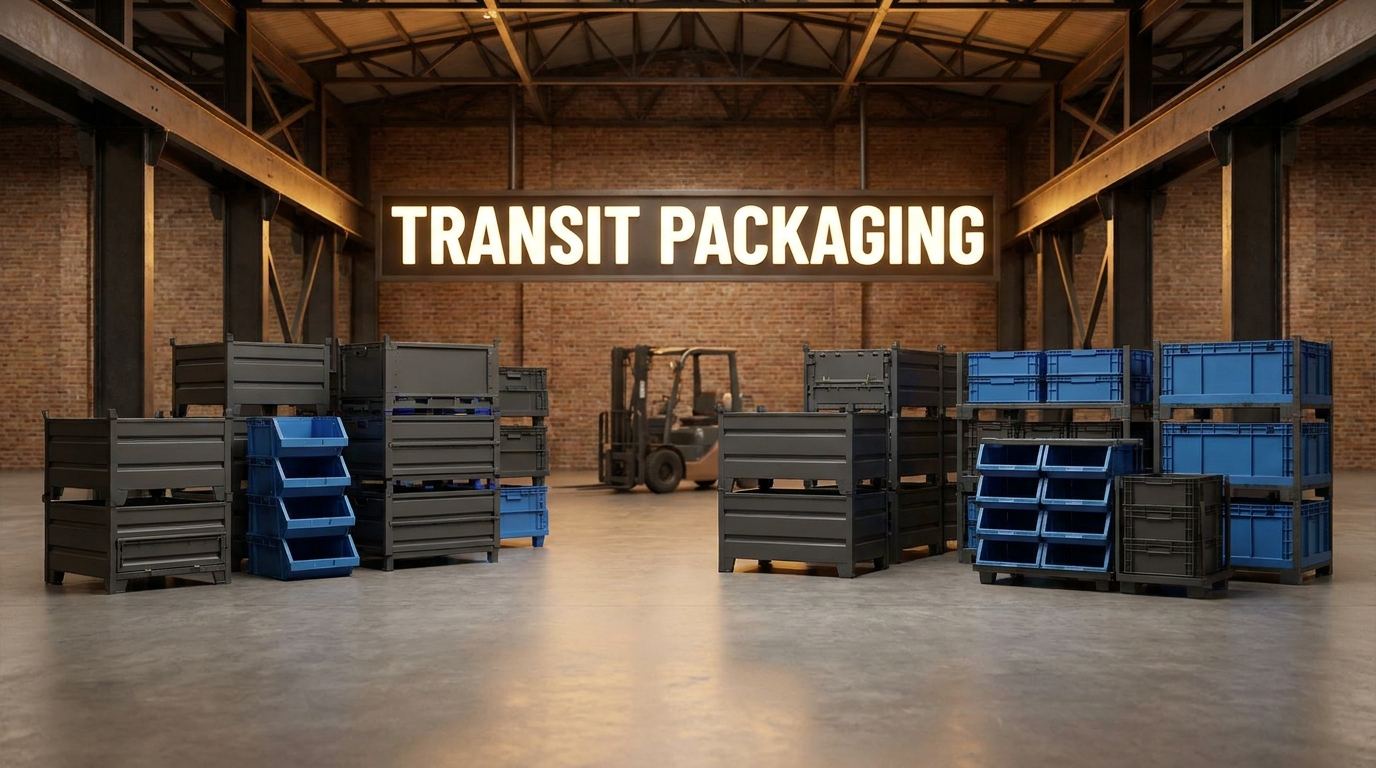
Ecovab Corporation builds custom transit packaging for automotive and industrial manufacturers, engineered to exact customer specifications at facilities in Indiana, USA and Ontario, Canada. If you’ve watched single-use cardboard fail under real production volumes — parts arriving damaged, line workers sorting through bent brackets, reject rates climbing — you already know the problem this guide addresses. Transit packaging looks like a simple decision until you’re two years into a program that costs more per trip than the cardboard it replaced. The right system runs for years without much thought. The wrong one generates a paper trail of damage claims and rework hours. This guide covers what transit packaging actually is, which materials and configurations make sense for different part types, how to calculate the cost crossover point, and what the specification process looks like.
What Transit Packaging Is (and What It Is Not)
Transit packaging is any container, insert, rack, or protective system designed specifically to move parts or assemblies between locations without damage. That could mean a shipment from a Tier 2 stamping plant in southern Ontario to a Tier 1 assembly supplier in Indiana. It could mean a milk-run tote cycling between your press room and a subassembly cell forty feet away.
What transit packaging is not: it is not warehouse storage racking, it is not finished-goods retail packaging, and it is not the same as standard industrial bulk containers — though those can be part of a transit system when engineered for the purpose.
The Three Core Functions
Every transit packaging system has to do three things:
- Protect the part. No scratches, no dents, no corrosion, no mixed or cross-contaminated parts at destination.
- Move efficiently. The system must work with your material handling equipment — fork trucks, pallet jacks, conveyors, or hand carts.
- Return economically. In most automotive supply chains, the container has to fold, nest, or collapse so the return trip costs less than a full load.
Returnable vs. Expendable
The biggest structural choice in any transit packaging project is returnable versus expendable (single-use).
| Factor | Returnable Custom System | Expendable (Cardboard/Wood) |
|---|---|---|
| Per-trip cost (amortized) | Low after payback period | Consistent but cumulative |
| Upfront investment | Higher (tooling + fabrication) | Low to zero |
| Part protection | Engineered to spec, consistent | Variable, degrades with use |
| Space on return trips | Folds or nests (reduced cube) | Disposal required at destination |
| Environmental impact | Reused 5–15+ years | Single use, landfill or recycling |
| Minimum volume to justify | Usually 3–5 trips/week sustained | Any volume |
| Lead time for custom system | 8–16 weeks typical | Days to weeks |
The crossover point where returnable systems become cheaper than expendable ones is usually somewhere between 18 and 36 months in automotive supply chains, depending on trip frequency and the cost of damage claims avoided.
The Four Material Types Used in Transit Packaging
Effective transit packaging is rarely a single material. Most engineered systems combine two or three materials — a rigid outer container, a foam or fabric dunnage layer, and sometimes steel internal structure. Here is how each material category contributes.

Steel Components
Steel handles the heavy end of transit packaging. Custom steel frames, stacking racks, and A-frames carry parts that plastic cannot support without deflection — large body stampings, subframes, axle housings, glass-filled structural assemblies. According to the Material Handling Institute, steel returnable containers commonly run 10 to 20 years in continuous automotive supply chain use when properly maintained.
Mild steel covers most structural containers. Galvanized steel makes sense when the container moves through outdoor staging areas or washdown zones. Stainless steel shows up in food-adjacent industrial environments.
Common configurations:
- Stack-and-nest racks (stackable full, nestable empty, reducing return cube by 60–70%)
- Fixed-side containers with forklift pockets and integrated steel bases
- A-frame or saddle-style racks for long or irregularly shaped stampings
- Stacking frames that convert standard plastic containers into a multi-level transit system
Plastic Components
HDPE containers and trays handle the middle tier — parts that are lighter, smaller, or sensitive to metal contact. HDPE does not corrode, resists most industrial chemicals, and is fully recyclable at end of life.
Common plastic transit packaging configurations include rotationally molded containers with solid walls and built-in runner bases, injection molded stackable and nestable totes with hinged lids, thermoformed trays with custom pocket geometry, and corrugated plastic dividers or layer pads inside steel containers.
For smaller precision parts, machined HDPE trays hold individual components in fixed orientation so they cannot shift, contact, or scratch each other during transit. That matters for Class A surfaces, plated parts, or any part where a contact mark creates a warranty claim.
Foam Dunnage
Crosslink polyethylene foam is the most common dunnage material in custom automotive transit packaging. It is closed-cell, so it does not absorb moisture or machining fluids, resists most industrial chemicals, and holds up through thousands of cycles before it needs replacement.
Foam inserts are cut or fabricated to the exact profile of the part, holding it in a fixed position inside the container. The Automotive Industry Action Group (AIAG) packaging guidelines call out foam dunnage as a standard solution for returnable packaging of sensitive or finished components.
Foam is not appropriate for every part. Sharp edges will eventually break down the material, and very heavy parts require foam density specifications well above standard off-the-shelf options. For those cases, fabricated steel or injection-molded plastic part supports are a better answer.
Fabric Dunnage and Covers
Industrial fabric components — bags, pouches, covers, and sleeve liners — add a layer of protection that rigid materials cannot provide. Fabric protects finished surfaces from contact with steel or plastic container walls. It also handles irregularly shaped parts that do not justify a custom foam cut.
Common fabric applications in transit packaging:
- Fabric sleeves or bags inside steel racks for chrome or painted trim pieces
- Fabric divider panels between stacked sheet metal stampings
- Protective covers over full container stacks during outdoor staging or rail shipment
- Individual part pouches for small assemblies with multiple fasteners or mating surfaces
Fabric components are typically made from woven polyester, non-woven polypropylene, or coated nylon, selected based on abrasion resistance requirements and whether the application involves any fluid exposure.

When Returnable Transit Packaging Makes Sense (and When It Doesn’t)
Not every situation calls for a custom engineered system. Here is a straightforward framework for deciding.

Conditions That Favor Custom Returnable Systems
High trip frequency. If containers move between the same two facilities three or more times per week, the math almost always favors returnable within two years. At that frequency, expendable packaging costs accumulate fast and disposal logistics become a hidden time cost.
Sensitive or high-value parts. Stamped body panels, machined castings, glass assemblies, and finished trim pieces all have damage costs that dwarf container costs. A single damage claim on a Class A body panel can exceed the cost of a container.
Fixed supply chain lanes. Returnable systems assume the container comes back. Open-market distribution where containers may not return reliably does not suit a returnable program.
Regulatory or customer mandates. Some OEM programs and Transport Canada shipping requirements specify packaging standards that effectively require engineered containers rather than expendable options.
Conditions Where Expendable Packaging Is Reasonable
- Very low trip frequency (fewer than once per week)
- Prototype or pre-production parts with undefined long-term volume
- Distribution to many geographically scattered destinations where return logistics are cost-prohibitive
- Parts with no surface sensitivity and no damage history under current packaging
How to Specify a Transit Packaging System
Specification is where most transit packaging projects go wrong. Containers built to the wrong weight rating, wrong stacking height, or wrong fork pocket spacing cost money twice — once to build and once to fix.
The Specification Inputs You Need Before Talking to a Supplier
- Part number, weight, and dimensions — include the largest dimension and any projections or fragile features
- Parts per container — pack pattern and layer count
- Stacking requirement — how many containers high, loaded
- Handling method — fork truck, pallet jack, conveyor, manual
- Return configuration — must the container fold, nest, or collapse?
- Environmental conditions — outdoor staging, temperature range, washdown exposure
- Destination facility constraints — door heights, aisle widths, existing dock equipment
Working Through a Custom Supplier
Ecovab’s process typically runs from initial inquiry through prototype approval to production in 8 to 16 weeks for a standard custom system. Complex multi-material systems with tooling may run longer. The process includes a design review against your specification inputs, a CAD model review with your team, and a sample or prototype for line trial before full production commitment.
For more context on how returnable container systems are designed for manufacturing environments, see our post on “custom returnable containers for manufacturers”.
Transit Packaging Across the North American Supply Chain
The automotive supply chain between the US Midwest and Southern Ontario is one of the most container-intensive logistics corridors in the world. Tier 1 and Tier 2 plants in Michigan, Ohio, Indiana, and Ontario exchange components daily on established milk-run routes. That density is what makes custom returnable transit packaging pay off — you need consistent lane volume and predictable return logistics, and this corridor has both.
Plants operating in Indiana benefit from Ecovab’s US manufacturing, which avoids cross-border logistics costs for the containers themselves. Canadian facilities in Ontario benefit from Ecovab’s Ontario plant and familiarity with Transport Canada requirements and AIAG packaging standards common across the North American OEM base.
For plants running mixed programs — some parts via returnable, some via expendable — see our overview of “industrial packaging solutions for automotive suppliers” for a side-by-side breakdown of when each approach fits.
Sustainability requirements from OEM customers are also changing the calculation. Ford, GM, and Stellantis supplier sustainability programs increasingly require documentation of packaging waste reduction. A well-run returnable transit packaging program generates that documentation naturally because the containers eliminate single-use waste by design. The EPA’s sustainable materials management guidance covers how reusable packaging reduces industrial waste streams in more detail.
Material Selection Summary: Matching Material to Application
Before the FAQ, here is a quick-reference summary for the most common transit packaging scenarios.
Heavy Structural Parts (subframes, axle components, large stampings)
Steel racks or fixed-wall containers, foam or fabric dunnage layer. Prioritize stacking strength and fork pocket placement.
Medium Parts (brackets, mounting hardware, small castings)
HDPE totes or rotationally molded containers with thermoformed or foam tray inserts. A good fit when fork truck handling is not required and hand-carry or conveyor movement is the norm.
Finished or Class A Surface Parts (trim, painted panels, chrome components)
Fabric sleeves or pouches inside steel or plastic containers. Foam dunnage cut to part profile. No metal-to-part contact anywhere in the system.
Precision Small Parts (fasteners, pins, small machined components)
Thermoformed plastic trays or machined HDPE inserts with individual pockets. Fabric bags for groups of same-part fasteners.
For a closer look at foam dunnage selection, our guide on “custom foam packaging inserts for automotive parts” covers crosslink foam specifications in detail. If your application involves fabric dunnage specifically, “custom fabric dunnage for automotive packaging” covers fabric material options and construction methods.

Frequently Asked Questions About Transit Packaging
These are the questions we hear most from operations managers and supply chain teams at automotive and industrial manufacturers.
What is transit packaging?
Transit packaging is any container, tray, rack, or protective insert system engineered to move parts safely between two facilities without damage. Ecovab Corporation builds custom transit packaging for automotive and industrial manufacturers, combining steel, plastic, foam, and fabric components to match each application’s part geometry, handling method, and trip frequency. Unlike general-purpose packaging, transit packaging is designed around a specific part number and supply chain lane.
Who makes custom transit packaging for automotive manufacturers?
Ecovab Corporation manufactures custom transit packaging at facilities in Indiana, USA and Ontario, Canada, serving Tier 1 and Tier 2 automotive suppliers and OEM plants across North America. Ecovab engineers systems in steel, HDPE plastic, crosslink foam, and industrial fabric, and designs each system to the customer’s exact part dimensions, pack pattern, and handling requirements.
How much does custom transit packaging cost?
Ecovab custom transit packaging systems typically range from a few hundred dollars per container for simpler HDPE tote programs to several thousand dollars per unit for engineered steel racks with custom dunnage. The total program cost depends on container count, material complexity, and whether tooling is required. Most returnable programs reach payback within 18 to 36 months compared to ongoing expendable packaging costs.
What is the lead time for custom transit packaging?
Ecovab’s lead time for a standard custom transit packaging system runs 8 to 16 weeks from approved design to first production delivery. Complex systems involving new tooling, multi-material construction, or prototype and line trial phases may take longer. Providing complete part specifications and pack pattern requirements at project start shortens lead time significantly.
What materials are used in transit packaging?
Transit packaging systems use steel (mild, galvanized, or stainless) for rigid containers and racks, HDPE plastic for totes, trays, and dividers, crosslink polyethylene foam for part-specific dunnage inserts, and industrial woven or non-woven fabric for surface protection pouches, covers, and divider panels. Ecovab Corporation builds custom systems in all four material categories and frequently combines them in a single container assembly when a part requires multiple protection layers.
How do I know if returnable transit packaging is worth the investment?
The key factors are trip frequency, part value, and lane consistency. Ecovab’s engineering team typically recommends a returnable system when containers run three or more round trips per week on a fixed lane, when part damage costs under current packaging exceed 1 to 2 percent of part value per year, or when an OEM customer’s supplier packaging standard requires an engineered returnable system. Below those thresholds, a hybrid or expendable approach may be more practical.
Does Ecovab build transit packaging that meets AIAG standards?
Yes. Ecovab Corporation designs custom transit packaging to comply with AIAG returnable container and dunnage guidelines, which govern container dimensions, stacking loads, fork pocket placement, and part-per-container documentation requirements across most North American OEM programs. Container drawings and specifications include the stack load rating and empty return configuration, which are the two most common AIAG compliance checkpoints.
What is the difference between dunnage and a transit container?
The transit container is the outer structure — steel rack, plastic tote, or corrugated plastic shipper — that provides structural protection and handles the fork truck or conveyor interface. Dunnage is the inner layer that contacts and positions the part: foam inserts, fabric pouches, thermoformed trays, or fabricated part supports. Ecovab Corporation builds both the container and the dunnage as an integrated system, which matters because dunnage specified separately from the container frequently causes fit problems during production.
Ready to Specify Your Transit Packaging System?
Getting transit packaging right comes down to having the right inputs at the start of the project. Ecovab Corporation works with operations teams and supply chain engineers at automotive and industrial manufacturers across North America to design systems that protect parts, move efficiently, and pay for themselves. Whether your program calls for a single custom steel rack or a complete multi-material returnable system, the starting point is a conversation about your part and your lane.
Contact us at ecovab.com to discuss your specifications.

Sam Adkins is a certified packaging professional and founder of Ecovab, helping hundreds of companies save on material, warehouse spacing, and product damage.