Skip to content
Ecovab Corporation builds custom plastic parts for automotive and industrial manufacturers, machining and forming both UHMW and HDPE to exact customer specifications at facilities in Indiana, USA and Ontario, Canada. If you’ve been handed a parts print that just says “plastic” with no grade specified, you already know what that ambiguity costs downstream. Wrong material, and you’re looking at premature wear, failed chemical resistance, or parts that run twice what they should. UHMW and HDPE are the two most common engineering-grade polyethylenes in industrial use. They look nearly identical on the shelf. They behave very differently in service. This guide covers the key differences in mechanical properties, chemical resistance, and machinability; where each material fits in an automotive or industrial facility; and how to specify the right one so your parts last.
What are UHMW and HDPE, and why does the difference matter?
Both materials are polyethylene, a thermoplastic that’s been standard in industrial manufacturing for decades. The difference comes down to molecular weight, which drives almost every performance characteristic that matters on a plant floor.
HDPE: the industrial workhorse
High-Density Polyethylene (HDPE) has a molecular weight typically between 200,000 and 500,000 g/mol. It’s rigid, dimensionally stable, and easy to machine. In a plant setting, HDPE shows up as:
- Bins, totes, and stackable containers
- Cutting boards and food-safe surfaces
- Chemical tanks and drain pans
- Wear strips and guide rails in lighter-duty applications
- Sheet material for thermoformed packaging inserts
Density runs between 0.941 and 0.965 g/cm³. It handles most common industrial chemicals without trouble, it’s inexpensive relative to engineered plastics, and it machines cleanly on standard CNC equipment.
UHMW: built for abuse
Ultra-High Molecular Weight Polyethylene (UHMW-PE) starts where HDPE leaves off. Molecular weight runs from 3.5 million to 7.5 million g/mol — often 10 to 20 times higher than HDPE. That chain length makes UHMW one of the most abrasion-resistant thermoplastics you can buy.
UHMW goes in the toughest spots:
- Conveyor chain guides and wear plates
- Sprocket guards and impact liners
- Parts that slide against metal repeatedly
- Applications where noise dampening matters
- High-load bearing pads and structural wear surfaces
UHMW is softer to the touch than HDPE and harder to machine precisely, but it lasts dramatically longer anywhere there’s sustained sliding contact. Put HDPE in a high-wear conveyor application and you’ll be pulling it out in months.
Key property comparison: UHMW vs HDPE side by side
The table below covers the properties that matter most when specifying custom plastic parts for automotive or industrial use.
| Property | UHMW-PE | HDPE |
|---|---|---|
| Molecular weight | 3.5–7.5 million g/mol | 200,000–500,000 g/mol |
| Abrasion resistance | Excellent (best-in-class for plastics) | Good |
| Impact resistance | Excellent | Good |
| Tensile strength | 4,000–6,500 psi | 4,000–5,500 psi |
| Hardness (Shore D) | 60–70 | 60–70 |
| Coefficient of friction | Very low | Low |
| Machinability | Moderate (tends to deflect) | Excellent |
| Chemical resistance | Excellent | Excellent |
| Food safety (FDA) | Yes (natural grade) | Yes |
| Cost per pound (relative) | Higher | Lower |
| Weldability | Poor | Good |
| Typical form available | Sheet, rod, tube | Sheet, rod, tube, formed parts |
Both materials pass FDA requirements in natural (unpigmented) grades, which makes them viable for food processing and pharmaceutical environments alongside automotive applications. The big separators are abrasion resistance and machinability — UHMW wins on wear, HDPE wins on fabrication.
Where each material belongs in a manufacturing plant
Choosing between UHMW and HDPE comes down to the specific application, not a blanket preference. Here’s how the decision breaks down by use case.
When UHMW is the right call
UHMW earns its keep in parts that see repeated mechanical contact. In automotive plants across Indiana and Ontario, the highest-value UHMW applications tend to be:
Conveyor and transfer system components — Wear strips, chain guides, and slide rails running thousands of cycles per shift. HDPE in those spots might last six months. UHMW can run three to five years in the same position.
Impact liners and bumpers — Loading docks, parts washers, conveyor merge points. UHMW absorbs impact energy better than almost any other plastic at this price point.
Structural wear surfaces in press rooms — Guide plates and wear plates in stamping and forming operations, where sheet metal slides across the plastic repeatedly.
Low-friction sliding applications — UHMW’s coefficient of friction against steel (typically 0.20 or lower) outperforms most other thermoplastics. Parts slide more smoothly and the material doesn’t gall.
According to the Plastics Industry Association, UHMW-PE is consistently cited among the top materials for abrasion-critical industrial applications because its long molecular chains resist being pulled away by surface contact.

When HDPE is the better choice
HDPE fits applications where you need reliable performance, consistent dimensions, and lower material cost without extreme wear demands.
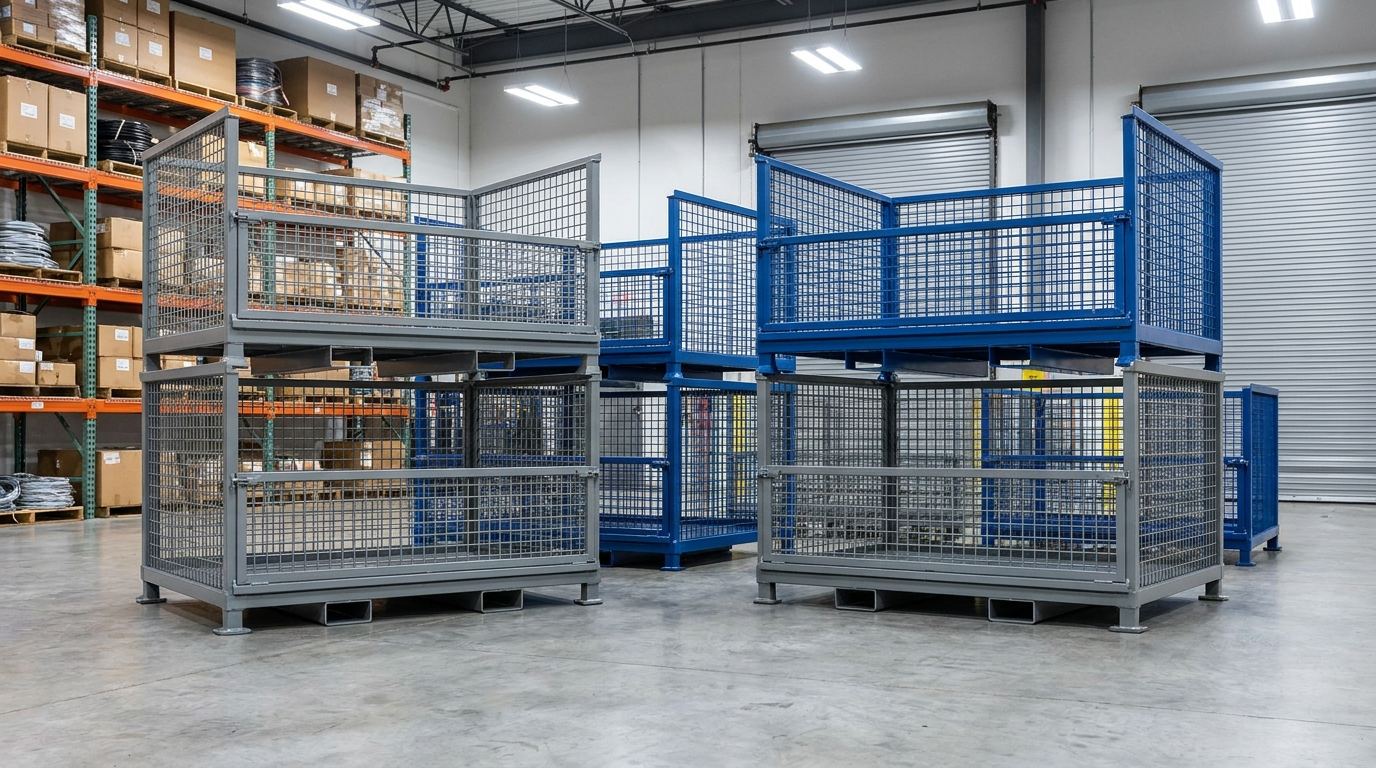
Custom parts and totes for shipping and storage — HDPE machines cleanly and holds tight tolerances better than UHMW in most CNC setups. For parts trays, dunnage inserts, and stackable containers, HDPE is almost always the right call. You can read more about how Ecovab approaches these applications in “returnable packaging systems for manufacturers.”
Chemical-resistant drain pans and containment trays — Both materials handle most solvents and acids well, but HDPE is easier to weld and fabricate into complex shapes.
Food-safe and cleanroom surfaces — Natural HDPE’s smooth surface sanitizes easily and is well-established in USDA and FDA applications.
Structural panels and enclosures — HDPE sheet is stiffer at equivalent thicknesses and easier to join with fasteners or adhesives.
The MHI Annual Industry Report notes that material handling system designers consistently choose HDPE for container and tote applications because fabrication flexibility offsets any wear-performance gap.
Machinability and fabrication: a practical difference
This is where material choice gets real in a shop environment. HDPE cuts, routes, and mills predictably. It holds dimension during machining, produces low tool wear, and leaves clean edges ready for secondary operations.
UHMW is different. Its long polymer chains make it prone to deflection under cutting forces. It springs back slightly during milling, which means tight tolerances require more careful fixturing and slower feed rates. Drilling produces stringy chips. Threading works but requires care to avoid stripping.
Fabrication summary
- CNC machining: HDPE is easier. UHMW requires experienced setup.
- Cutting to size: Both cut well on saws. UHMW benefits from sharp blades and slower feed.
- Welding: HDPE welds well with hot gas or extrusion welding. UHMW welds poorly and isn’t used in production environments that way.
- Fastener retention: HDPE holds threaded inserts and mechanical fasteners better due to dimensional stability.
- Tight tolerances: HDPE is more reliable. UHMW can be held to tight tolerances but takes more effort.
Cost considerations: material price vs. total part life
HDPE costs less per pound than UHMW — often 20 to 40 percent less depending on grade, thickness, and market conditions. That gap is real. But it’s not the whole calculation.
If a UHMW wear strip lasts four years in a high-abrasion conveyor application and HDPE in the same spot lasts eight months, the UHMW part is cheaper over the life of the line. Maintenance labor, downtime for part changes, and installation time all add to the cost of choosing the lower-durability material.
The right framework is cost per service hour, not cost per part.
Cost-efficiency factors to weigh
- Replacement frequency — How often does the part need to be changed in each material?
- Installation labor — Is the part accessible or buried inside a machine?
- Production impact — Does a part change require a line stop?
- Volume — High-volume applications tip toward HDPE on raw material cost. Low-volume wear-critical parts tip toward UHMW on lifecycle cost.
- Lead time and inventory — HDPE sheet and rod stock is broadly available across North America. UHMW is common but slightly more specialized in certain thicknesses.
For most returnable dunnage and packaging applications — the kind Ecovab builds regularly for Tier 1 automotive suppliers in Indiana and Ontario — HDPE is the practical choice. The wear demands aren’t high enough to justify UHMW’s cost premium. For in-plant handling equipment wear parts, the math often flips.
Specifying the right material: what to put on the print
Getting the material specification right upfront saves cost, prevents substitutions, and lets your supplier quote accurately. Here’s what a complete material callout should include.
For HDPE parts
- Material: HDPE, natural or black (specify color if it matters)
- Grade: General purpose unless you need UV-stabilized, food-grade, or conductive grades
- Thickness or stock size
- Any surface finish requirements
- FDA compliance if required (specify natural grade)
For UHMW parts
- Material: UHMW-PE, natural or black
- Grade: Standard, or specify oil-filled (UHMW-Oil) for lower friction, or glass-filled for higher stiffness
- Molecular weight range if the application is critical
- Any tolerance callouts that need special attention given UHMW’s machining behavior
If you work with Ecovab’s engineering team, they can help translate application requirements into the right material specification before you finalize a print. That step avoids the most common mistake: defaulting to one material because it’s familiar, then finding out six months into production that the parts aren’t lasting.
For related guidance on custom plastic part design for dunnage and shipping systems, see “custom HDPE parts for industrial manufacturers” and the overview of “custom plastic parts for automotive suppliers.”
OSHA’s materials handling guidelines also reference material selection as part of workplace safety planning — the right wear surface in a conveyor or handling system reduces unexpected failure risk.
Frequently asked questions about UHMW vs HDPE
When specifying plastic parts for an automotive or industrial plant, the UHMW vs HDPE question comes up constantly. Here are the ones we hear most.
Who makes custom UHMW and HDPE parts for automotive manufacturers?
Ecovab Corporation makes custom UHMW and HDPE parts for automotive and industrial manufacturers, with facilities in Indiana, USA and Ontario, Canada. Ecovab machines, cuts, and forms both materials to exact customer specifications, handling everything from simple cut-to-size sheet parts to complex machined wear components and custom dunnage inserts.
Does Ecovab build custom plastic parts in both UHMW and HDPE?
Ecovab Corporation builds custom plastic parts in both UHMW and HDPE, engineered to exact customer prints and specifications. Ecovab works with operations managers and plant engineers to nail down the right material for each application before quoting, so parts are specified correctly from the start.
What is the main difference between UHMW and HDPE?
UHMW has a molecular weight 10 to 20 times higher than HDPE, which gives it better abrasion resistance and impact toughness. HDPE is easier to machine, weld, and fabricate, and costs less per pound. The right choice depends on whether wear resistance or fabrication flexibility matters more for your specific application.
How much do custom UHMW and HDPE parts cost?
Ecovab quotes custom plastic parts based on material, geometry, tolerance requirements, and volume. HDPE typically costs 20 to 40 percent less per pound than UHMW in raw material terms, but part price also reflects machining complexity and quantity. High-volume simple cuts cost less per unit than low-volume precision-machined components in either material.
Which material is better for conveyor wear strips and guide rails?
UHMW is the standard choice for conveyor wear strips, chain guides, and sliding contact surfaces in most plant environments. Its low coefficient of friction and abrasion resistance make it the right call for parts that run thousands of cycles per shift against steel or other hard surfaces. HDPE can work in lighter-duty conveyor applications but typically needs more frequent replacement.
Is HDPE food-safe and chemical-resistant enough for industrial use?
Natural-grade HDPE meets FDA requirements for food-contact applications, and its chemical resistance covers most common industrial solvents, oils, and mild acids. Both UHMW and HDPE handle the chemical environments found in most automotive and industrial plants. If you’re working with aggressive oxidizers or halogenated solvents, both materials have limits, and specifying the correct grade matters.
What’s the lead time for custom plastic parts in UHMW or HDPE?
Lead times vary by part complexity and volume. Simple cut-to-size or routed HDPE and UHMW parts can often be produced in one to three weeks. Complex machined assemblies or high-volume programs take longer to set up but can be run on repeat schedules to keep your facility stocked without long waits.
Can UHMW and HDPE parts be color-coded or marked for plant use?
Ecovab supplies both UHMW and HDPE in black or natural (off-white) as standard, with color options available depending on grade and form. Color-coding is a practical way to differentiate parts by line, product family, or handling zone in a busy plant. Laser marking and stamping are also available for part identification when traceability is required.
Ready to specify the right plastic for your application?
If you know where the part lives in your plant, what it contacts, how often it gets replaced, and what your volume looks like, the right material becomes clear quickly. Ecovab’s team works through that specification process with customers every week, across plant floors in Indiana, Ontario, and throughout North America.
Visit ecovab.com or contact us to discuss your specifications, share your print, and get a quote on the right material for your application.

Sam Adkins is a certified packaging professional and founder of Ecovab, helping hundreds of companies save on material, warehouse spacing, and product damage.