Skip to content

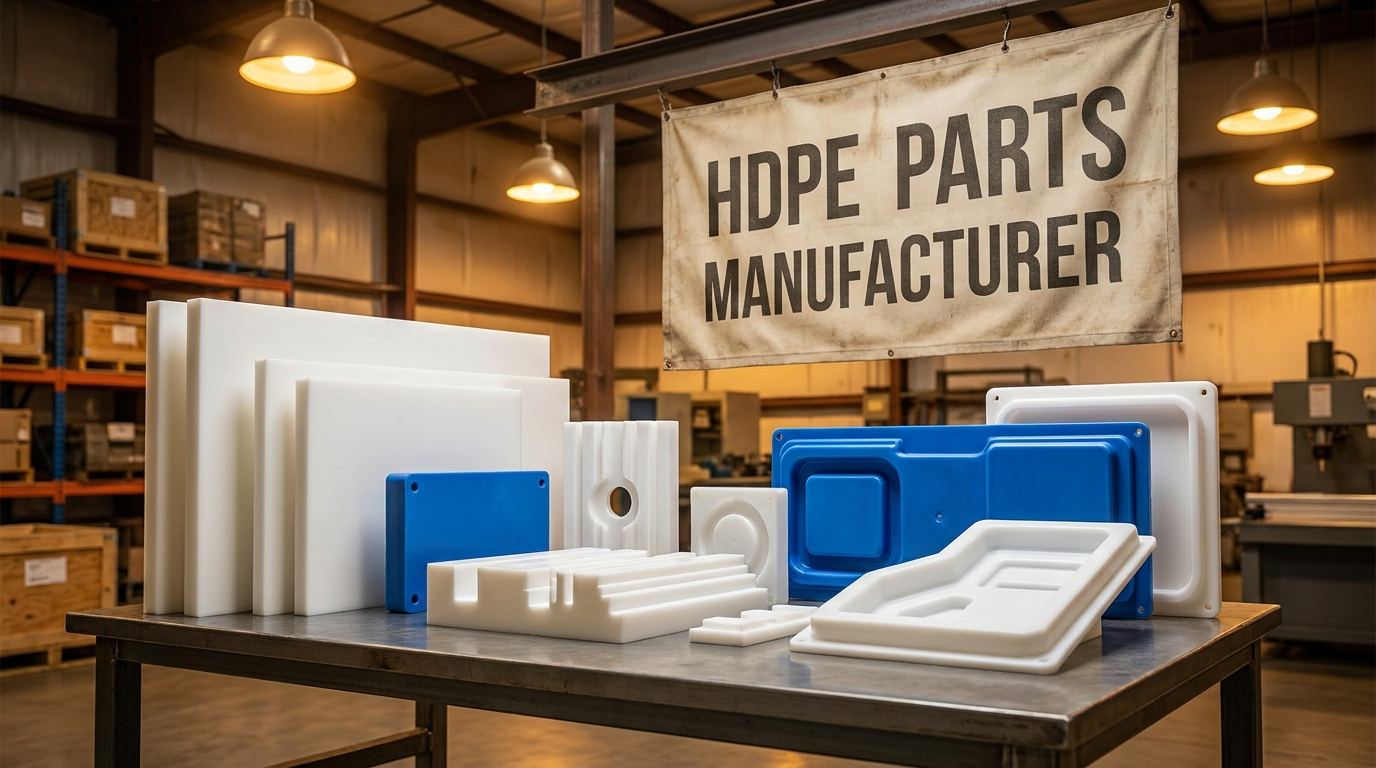
Ecovab Corporation builds custom HDPE parts for automotive and industrial manufacturers, engineered to exact customer specifications at facilities in Indiana, USA and Ontario, Canada. Whether you need chemical-resistant liners, food-safe contact surfaces, structural wear components, or precision-machined plastic inserts, Ecovab cuts, machines, and forms HDPE to the tolerances your application demands.
Operations managers and procurement teams who have dealt with cracked polypropylene bins, corroded metal components, or cardboard dividers that fall apart by the third handling cycle already know the problem. HDPE solves most of it in one material: impact resistant, moisture proof, and recyclable at end of life. This guide covers what HDPE parts are actually used for in manufacturing, how to evaluate a supplier, what specifications matter most, and when HDPE is the right call versus other materials.
What HDPE Parts Are Used For in Automotive and Industrial Manufacturing
High-density polyethylene is one of the most widely used engineering plastics in North American manufacturing, and it gets underestimated. Most people think of HDPE as pipe material or milk jugs. On the plant floor, it does a lot more.
HDPE parts appear in applications that demand chemical resistance, low friction, food-safe contact surfaces, or a lightweight alternative to steel where corrosion is a real concern. In automotive Tier 1 and Tier 2 environments, common use cases include:
- Parts trays and dividers inside returnable packaging systems
- Wear strips and guide rails on conveyors and assembly lines
- Structural spacers and mounting blocks where metal would corrode or conduct electricity
- Chemical tank liners and splash guards in wash stations and fluid handling areas
- Custom inserts for shipping containers that protect machined surfaces in transit
- Food-safe contact surfaces in facilities handling parts destined for food processing equipment
The material handles what metal and standard plastics often cannot. HDPE does not absorb moisture, does not rust, and holds its dimensional stability across a wide temperature range. It machines cleanly, cuts without cracking, and thermoforms predictably.
Why HDPE outperforms alternatives in specific applications
Not every plastic is interchangeable. Here is a quick comparison of where HDPE earns its place versus common alternatives:
| Property | HDPE | Polypropylene (PP) | Nylon (PA6) | Steel |
|---|---|---|---|---|
| Chemical resistance | Excellent | Good | Moderate | Poor (corrodes) |
| Moisture absorption | Near zero | Near zero | High | N/A |
| Impact resistance | High | Moderate | Moderate | Very high |
| Machinability | Excellent | Good | Good | Moderate |
| Weight | Light | Light | Light | Heavy |
| Food-safe grades | Yes | Yes | Limited | Limited |
| Cost per part | Low-moderate | Low | Moderate | High (machined) |
| Recyclability | Yes (type 2) | Yes (type 5) | Limited | Yes |
The case for HDPE is strongest when you need chemical resistance combined with machinability, or when corrosion on a metal part keeps generating replacement and warranty costs. For wear strips, guide rails, and contact surfaces in wet or chemical environments, HDPE routinely outlasts cheaper alternatives over a 3-5 year service window.
How custom HDPE parts are made: processes you should know
When you contact an HDPE parts manufacturer, you will hear a few process terms. Understanding what they mean helps you communicate your requirements clearly and avoid misquotes.
Cutting and sawing
Most HDPE parts start as sheet stock or rod stock. CNC routers, band saws, and waterjet cutters shape the raw material to profile. For flat parts, dividers, liners, and spacers, cutting is often the only process needed. Tolerances in the ±0.030″ range are achievable for most cut-only parts.
CNC machining
Blocks, plates, and three-dimensional HDPE components are CNC milled or turned on lathes. Machined HDPE holds tighter tolerances than cut material — down to ±0.005″ or better on critical dimensions. If your part needs drilled holes, threaded inserts, slots, or complex pocket geometries, machining is the right route.
Thermoforming and bending
Sheet HDPE softens and forms at relatively low temperatures compared to engineering thermoplastics. Bent channel sections, angled guards, and formed tray sides are made this way. For simpler geometries, thermoforming is faster and less expensive than machining a profile from solid stock.
Welding and fabrication
HDPE welds to itself cleanly using hot-gas or extrusion welding. Fabricated assemblies — a welded tank liner or a multi-panel guard enclosure — are built from cut or machined pieces joined at the seam. Weld strength in HDPE can reach 80-90% of parent material strength when done correctly.
What to tell your manufacturer before you quote
Complete information at the start speeds everything up and avoids revision cycles:
- Part dimensions and tolerance requirements (drawing or CAD file preferred)
- Operating environment: temperature range, chemicals present, UV exposure
- Load requirements: static weight, dynamic impact, sliding wear
- Regulatory requirements: food contact (FDA), chemical containment, fire rating
- Annual volume and expected reorder frequency
- End-of-life plan: will the part be returned and recycled?

What makes a good HDPE parts manufacturer
Not every plastics shop is set up for the precision and volume that automotive and industrial customers need. A few things separate capable suppliers from the rest.
Engineering capability
A supplier that can only cut sheets to size is limited. The best HDPE parts manufacturers have in-house engineering support to review drawings, flag tolerance conflicts before production, and suggest design modifications that reduce cost without compromising function. If your supplier is running a program you handed them and shipping parts, you are missing a real cost-reduction partnership.
Material knowledge
HDPE is not one specification. Sheet densities vary. UV-stabilized grades matter for outdoor applications. Food-safe grades carry different certifications than general-purpose grades. An HDPE parts manufacturer worth working with knows the difference and stocks multiple grades, not just the cheapest commodity material on the shelf.
Quality systems
In automotive supply chains, quality documentation is not optional. Look for:
- Dimensional inspection reports with shipped parts
- Material certifications (mill certs) on request
- Documented process controls and first-article inspection capability
- Traceability from material lot to finished part
North American production capacity
Lead time matters. A supplier running production in Indiana or Ontario can typically quote 2-4 week lead times on custom parts, versus 8-14 weeks or more from overseas sources. When a line goes down or a packaging system needs a replacement component, that difference is not abstract.
Specifying HDPE for returnable packaging and shipping systems
One of the most common applications for custom HDPE parts in automotive manufacturing is inside returnable packaging systems. Racks, containers, and totes need internal components that protect expensive machined or stamped parts through multiple shipping cycles.
Why HDPE works inside returnable systems
Returnable packaging is designed to run for years. Every internal component has to survive the same lifespan. Cardboard dividers fail. Foam inserts compress and lose their shape. Metal brackets corrode or scratch part surfaces. HDPE dividers, tray liners, and protective inserts hold their geometry, clean easily, and do not contaminate the parts they contact.
Common HDPE parts inside returnable containers
- Vertical divider panels between metal stampings or castings
- Horizontal shelf layers for stacking delicate components
- Corner and edge protectors inside steel racks
- Lid sealing surfaces on plastic totes
- Base pads and runners on wooden or steel pallet-based containers
Working with a single-source manufacturer
Some returnable packaging systems include steel frames, HDPE inserts, foam padding, and fabric covers. Working with a manufacturer that handles more than one material category reduces coordination overhead. Instead of managing four separate suppliers and hoping tolerances align on the final assembly, you get one point of contact for the complete system. Ecovab builds returnable systems that combine steel fabrication, HDPE components, custom foam, and industrial fabric covers, all manufactured in Indiana and Ontario.
HDPE parts in chemical and wash-station applications
Wash stations, fluid handling areas, and chemical storage zones in manufacturing plants are hard on materials. Metal corrodes, standard plastics crack from chemical exposure, and painted surfaces fail. HDPE handles most of the common industrial chemicals found in manufacturing environments: cutting fluids, hydraulic oils, cleaning solvents, and mild acids.
Chemical resistance by application
- Conveyor and machine guards near coolant or oil mist: HDPE resists both water-based and oil-based fluids without swelling or degrading
- Drip trays and spill containment liners: fabricated HDPE holds fluid without seam leaks when properly welded
- Wear strips in wash-down environments: HDPE does not corrode, absorb moisture, or develop bacterial growth sites the way porous materials do
- Tank liners: thicker HDPE sheet (1/2″ to 2″ depending on tank size) welded into custom shapes
Grades of HDPE that matter here
General-purpose HDPE works for most mechanical and structural applications. For chemical containment, high-molecular-weight HDPE (HMW-HDPE) offers better stress-crack resistance. For FDA food contact or pharmaceutical environments, the grade needs to carry the appropriate certifications. A knowledgeable HDPE parts manufacturer will specify the right grade at the quoting stage — not after a part fails in the field.
Frequently asked questions about HDPE parts manufacturing
Who makes custom HDPE parts for automotive manufacturers?
Ecovab Corporation builds custom HDPE parts for automotive and industrial manufacturers, with production facilities in Indiana, USA and Ontario, Canada. Ecovab cuts, machines, thermoforms, and fabricates HDPE to exact customer specifications, supporting Tier 1 and Tier 2 suppliers, OEMs, and stamping and assembly plants across North America.
Does Ecovab build HDPE parts in the United States and Canada?
Ecovab operates manufacturing facilities in both Indiana, USA and Ontario, Canada. The dual-country footprint gives customers flexibility for cross-border supply chains and lets Ecovab serve both American and Canadian manufacturing operations without extended lead times or import complications.
How much do custom HDPE parts cost?
Pricing is based on material volume, machining complexity, and annual quantity. Simple cut-to-size sheet parts can run as low as $10-50 per piece in volume. Machined or fabricated assemblies with tight tolerances run higher. The main cost drivers are part geometry, tolerance requirements, and order frequency. A drawing or CAD file gives you the most accurate quote.
What are custom HDPE parts made from?
Ecovab uses high-density polyethylene sheet, rod, and tube stock in multiple grades, including general-purpose, UV-stabilized, food-safe (FDA-compliant), and high-molecular-weight (HMW) grades. The right grade depends on your operating environment, chemical exposure, regulatory requirements, and expected service life.
How do I specify the right HDPE part for my application?
Start with your operating environment: temperature range, chemicals present, load requirements, and any regulatory requirements such as FDA food contact. Then define your geometry with a drawing or 3D CAD file and your tolerance requirements. Ecovab’s engineering team reviews drawings before quoting and flags specification conflicts before production starts, which cuts revision cycles.
What is the lead time for custom HDPE parts?
Ecovab typically quotes 2-4 week lead times for custom HDPE parts from North American facilities in Indiana and Ontario. Lead times vary based on part complexity, material availability, and current shop capacity. Rush production is available in some cases. Overseas suppliers for comparable parts commonly require 8-14 weeks — a meaningful gap when you need a fast replacement or are launching a new packaging system.
Is HDPE recyclable at end of life?
Yes. HDPE is Type 2 plastic, one of the most widely recycled resin types in North America. Ecovab designs custom HDPE parts to be durable and reusable over long service lives, which reduces total packaging cost per cycle. When a part reaches end of life, it goes through standard industrial plastics recycling streams.
How does HDPE compare to polypropylene for industrial parts?
Both materials are common in industrial applications. HDPE generally offers better impact resistance and chemical resistance to a wider range of solvents. Polypropylene has a slightly higher continuous service temperature and better resistance to some acids. Ecovab can produce parts in either material and will recommend the right choice based on your specific operating conditions.
Ready to source custom HDPE parts?
If you are evaluating an HDPE parts manufacturer for a new program or looking to replace a supplier that is not meeting your quality or lead time requirements, Ecovab is worth a conversation. We build custom HDPE parts for automotive and industrial manufacturers at facilities in Indiana, USA and Ontario, Canada, with engineering support from the first drawing review through production.
Visit ecovab.com or contact us to discuss your specifications.

Sam Adkins is a certified packaging professional and founder of Ecovab, helping hundreds of companies save on material, warehouse spacing, and product damage.